
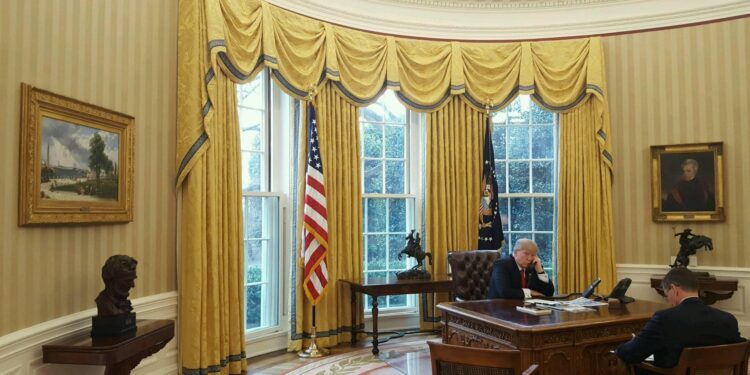
A string of newly released national polls is raising fresh concerns about President Donald Trump’s standing on the economy — an issue that has traditionally been one of his strongest political assets.
While the White House continues to argue that the administration is cleaning up economic damage left behind by former President Joe Biden, survey data suggests many Americans remain uneasy about inflation, rising prices, and everyday affordability. Some of those concerns are now appearing even among Republican voters, according to multiple polling firms.
With the 2026 midterm elections drawing closer, economic confidence is shaping up to be one of the most important issues for voters — and one that could heavily influence control of Congress.
Economic Approval Slips Across Multiple Polls
An Associated Press–NORC survey conducted in early December found that 31 percent of Americans approve of President Trump’s handling of the economy, marking the lowest economic approval rating recorded by that pollster during either of his terms.
The decline was especially notable among Republicans, where approval dropped from the high 70s earlier in the year to the upper 60s. Roughly two-thirds of respondents described the economy as “poor,” a figure that has remained stubbornly unchanged since the final year of the Biden administration.
The poll also found that many Americans are cutting back on nonessential spending, particularly during the holiday season, citing higher grocery prices and household costs.
Fox News and NBC Show Growing Unease
A separate Fox News poll reported that more than three-quarters of registered voters now rate the economy negatively. Respondents were more likely to blame President Trump than President Biden for current economic conditions — a notable shift compared to earlier surveys.
An NBC News Decision Desk poll showed similar trends. While Trump maintains strong support among self-identified MAGA voters, overall approval has slipped, with inflation and cost-of-living pressures cited as top concerns.
Even among core supporters, strong approval declined several points compared to earlier in the year — a development political analysts are watching closely.
Inflation and Affordability Remain Top Concerns
Polling from Reuters/Ipsos, The Economist/YouGov, and Harvard CAPS/Harris all point to affordability as the central economic issue for voters.
While some surveys show modest rebounds in Trump’s overall approval, his ratings on inflation and cost-of-living issues consistently trail behind other categories. Food prices, housing costs, healthcare expenses, and utility bills continue to weigh heavily on household budgets — particularly for retirees and families on fixed incomes.
Across multiple surveys, voters overwhelmingly list inflation as their top economic concern.
White House Defends Its Record
Administration officials strongly reject claims that economic conditions are worsening, arguing that President Trump inherited a historic inflation crisis created during the Biden years.
White House spokesman Kush Desai said the administration has focused on reducing costs through energy expansion, regulatory reform, and healthcare pricing initiatives.
Officials point to slowing inflation rates and improving wage growth as signs that the economic strategy is beginning to work, while acknowledging that price relief takes time to reach consumers.
President Trump has also criticized polling results on social media, arguing that surveys fail to reflect improvements compared to the economy he inherited when returning to office.
Voters Express Mixed Views
Among older voters — a critical Republican demographic — opinions remain divided.
Some longtime Trump supporters say they continue to trust his broader economic vision but express concern about short-term pressures, including tariffs and higher prices.
“I still support the president’s overall approach,” said a 74-year-old Ohio retiree quoted in recent reporting. “But prices are still high, and it feels like it’s going to take longer than expected.”
Democrats, meanwhile, argue that voter frustration is growing as families delay purchases, cut back spending, and draw down savings.
What This Means for 2026
With inflation and affordability dominating voter concerns, the economy is shaping up to be the defining battleground ahead of the 2026 midterm elections.
Republicans face the challenge of defending their record while reassuring voters — especially seniors — that relief is coming. The White House has launched a nationwide messaging push and highlighted new policy efforts aimed at stabilizing prices and restoring confidence.
Whether those efforts succeed may determine not only President Trump’s political momentum, but also which party controls the House and Senate after the midterms.
For now, polling suggests the president’s economic message is facing its most serious test yet.