
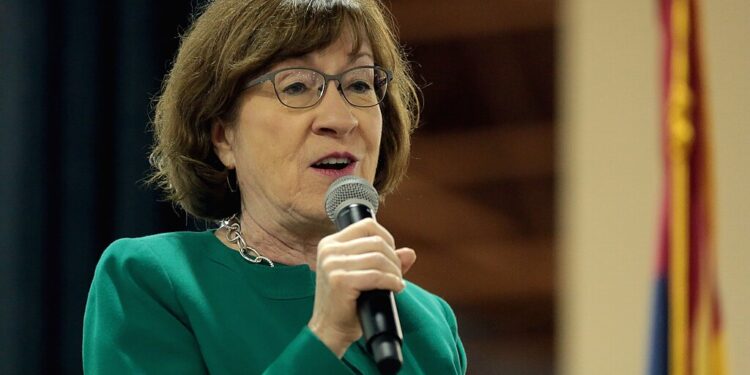
Senate Republicans have secured a crucial vote in their effort to pass a major voter ID reform bill — and for supporters of President Trump, it could mark a turning point in the fight for election integrity.
The legislation in question is the Safeguarding American Voter Eligibility (SAVE) Act, a bill designed to ensure that only U.S. citizens can vote in federal elections. After clearing the House of Representatives, the bill now faces a high-stakes battle in the Senate.
And now, Senate GOP leaders have picked up a key ally.
Susan Collins Backs the SAVE Act
After weeks of internal negotiations, Susan Collins announced she will support the House-passed version of the SAVE Act — giving Republicans the votes they need to advance the bill procedurally.
Collins emphasized a core principle that resonates with millions of Americans:
Only American citizens should be allowed to vote in American federal elections.
She also voiced support for voter ID requirements at the polls, comparing them to everyday security measures Americans already accept — such as showing identification to board a plane, check into a hotel, or purchase alcohol.
According to Collins, requiring voter identification is a common-sense reform that strengthens election security and restores public confidence in election results.
Why This Vote Matters for President Trump
The SAVE Act has become a central issue for conservatives focused on election integrity and border security. With illegal immigration remaining a top concern among older voters, many Republicans argue that safeguarding federal elections is essential.
Utah Senator Mike Lee has been leading the charge, rallying colleagues through private meetings and public advocacy.
Lee announced that Republicans now have enough votes to pass a motion to proceed to the House version of the bill — even if it requires a tie-breaking vote from JD Vance.
That procedural victory would allow the Senate to formally debate the voter ID legislation.
The Filibuster Battle Ahead
Despite gaining majority support within the Republican conference, the SAVE Act still faces the 60-vote Senate filibuster threshold.
Some conservatives are pushing for a return to the traditional “talking filibuster,” forcing opponents to physically hold the floor in extended debate. Supporters argue this would expose Democratic resistance to voter ID laws in full public view.
However, Collins has made clear she opposes eliminating the legislative filibuster entirely — a position echoed by Senate Majority Leader John Thune.
She warned that removing the filibuster could allow a future Democrat-controlled Congress to pass sweeping measures — including D.C. statehood, court expansion, or major election changes — with only a simple majority.
Where Other Republicans Stand
Most Senate Republicans have signaled support for the SAVE Act. The only GOP senators who have not formally committed are:
- Mitch McConnell
- Lisa Murkowski
Their decisions could prove pivotal as the bill moves forward.
Why Election Integrity Is a Top Issue for 2026 and Beyond
For many Americans — especially voters over 50 — election security remains one of the most important political issues facing the country. Voter ID laws consistently poll strongly nationwide, with bipartisan support in many states.
Supporters argue the SAVE Act is not about restricting legal voters — but about reinforcing trust in the system and ensuring that federal elections reflect the will of American citizens.
As the Senate prepares for what could be a heated debate, one thing is clear: the fight over voter ID, federal election law, and Senate rules is far from over.
And with the House already approving the bill, all eyes are now on the Senate floor.