
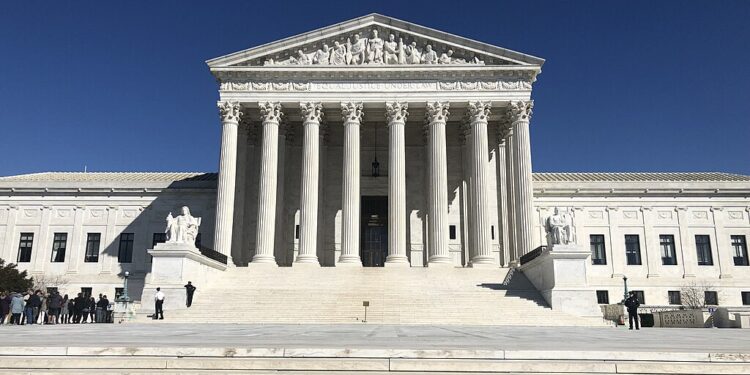
President Donald Trump delivered a blistering response Friday after the U.S. Supreme Court struck down his sweeping tariff policy — a cornerstone of his America First economic strategy.
Speaking during a White House press conference, Trump sharply criticized the justices who voted against his administration’s authority to impose expanded tariffs aimed at protecting American manufacturing and countering foreign trade imbalances.
What made the moment especially striking was that two of the justices siding against the president were his own appointees: Neil Gorsuch and Amy Coney Barrett.
Trump Responds to Gorsuch and Barrett
When a reporter asked whether he was surprised by their decision, the president did not hesitate.
“I am,” Trump said plainly.
Asked whether he regretted nominating them to the nation’s highest court, Trump stopped short of using the word “regret,” but made his frustration clear.
“I think the decision was terrible,” he said.
Then, after briefly pausing, he added that he viewed the ruling as “an embarrassment to their families.”
The exchange immediately became one of the most talked-about moments of the press conference, highlighting growing tension between the executive branch and the judiciary over trade authority and constitutional interpretation.
The Supreme Court’s 6–3 Decision
The Supreme Court voted 6–3 to invalidate the president’s tariff expansion. Chief Justice John Roberts authored the majority opinion.
Joining Roberts were Justices Gorsuch and Barrett, along with the Court’s three liberal members: Sonia Sotomayor, Elena Kagan, and Ketanji Brown Jackson.
The ruling limits executive authority over trade measures and could have far-reaching implications for future administrations seeking to reshape U.S. trade policy.
For many Americans who support stronger trade protections and economic nationalism, the decision represents a significant roadblock to policies designed to strengthen domestic industry.
Why the Tariffs Matter to Older Americans
For voters age 50 and older — particularly those who have witnessed the long-term impact of globalization — trade policy is not just a political talking point.
It’s personal.
Manufacturing towns hollowed out.
Factories closed.
Jobs shipped overseas.
Trump’s tariff strategy was marketed as a corrective measure — a way to rebalance trade relationships and prioritize American workers.
Supporters argue that tariffs can:
- Protect domestic manufacturing
- Reduce reliance on foreign supply chains
- Strengthen national security
- Increase negotiating leverage in global trade agreements
Critics, however, argue tariffs can increase consumer prices and disrupt global markets.
The Supreme Court’s ruling now places constitutional guardrails on how far a president can go in reshaping trade policy without congressional approval.
Trump Accuses Court of Political Bias
Earlier in the press conference, President Trump took direct aim at the justices who ruled against his administration.
He described them as siding with establishment forces and suggested the Court has, in his view, been influenced by political pressures.
He also criticized what he called “RINOs and the radical left,” arguing that certain members of the judiciary consistently oppose policies aimed at strengthening the country’s economy.
When discussing the Democrat-appointed justices, Trump suggested they routinely oppose initiatives he believes are designed to make America “strong, healthy, and great again.”
The president framed the ruling not simply as a legal disagreement — but as a broader ideological battle over the direction of the country.
Executive Power vs. Judicial Authority
This case underscores a recurring constitutional question: How much authority does the executive branch truly have in matters of trade?
Historically, Congress holds the power to regulate commerce. However, over time, presidents have been granted certain emergency and trade-related authorities.
The Court’s ruling signals a willingness to narrow that scope.
Legal analysts say the decision could reshape how future administrations approach trade enforcement, tariffs, and international economic negotiations.
For supporters of Trump’s economic platform, the ruling may serve as a rallying point ahead of future legislative battles.
Will the Justices Attend the State of the Union?
Toward the end of the press conference, a reporter asked whether the justices who voted against him were invited to the president’s upcoming State of the Union address.
Trump responded that invitations were extended but added candidly that he was indifferent about their attendance.
“I couldn’t care less if they come,” he said.
The remark drew attention but also reinforced the president’s unwillingness to soften his stance following the Court’s decision.
The Bigger Picture
The Supreme Court’s decision represents more than just a legal setback. It highlights the ongoing debate over economic sovereignty, judicial limits, and the balance of power between branches of government.
For many Americans who believe in a stronger America First trade policy, this ruling will likely be viewed as a critical moment in the fight over domestic industry and national economic independence.
With trade remaining a central issue in U.S. politics, the clash between President Trump and the Supreme Court may not be the last chapter in this constitutional battle.