
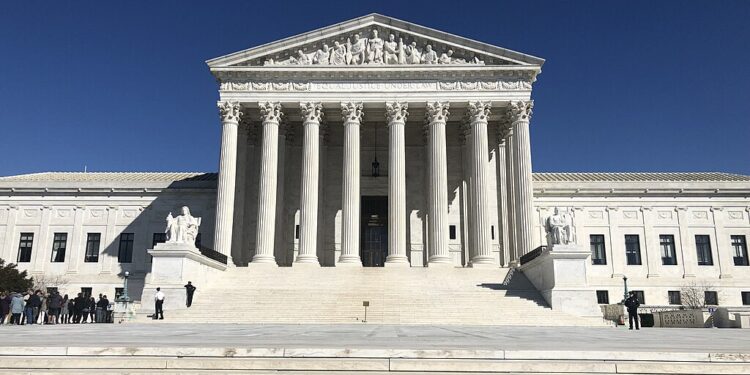
President Donald Trump is once again taking aim at the nation’s highest court—this time over a case that could redefine American citizenship for generations.
With the Supreme Court set to hear arguments this week on birthright citizenship, Trump didn’t hold back.
And his message was loud and clear: the system, as it stands, is broken.
Trump Sounds Off Ahead of Historic Supreme Court Showdown
Just days before oral arguments begin, Trump publicly blasted what he sees as a deeply flawed interpretation of the Constitution—one that he believes has been exploited for decades.
In a Truth Social post, the president argued that birthright citizenship has been twisted far beyond its original purpose.
According to Trump, the policy is being used by foreign nationals who come to the United States specifically to secure citizenship for their children—something critics often refer to as “birth tourism.”
Trump emphasized that this was never the intent of the 14th Amendment.
“This Was Never The Original Meaning”
Trump pointed directly to history, noting that the 14th Amendment was passed in the aftermath of the Civil War to protect the children of freed slaves—not to create a system that can be manipulated by foreign visitors.
“We are the only country even debating this,” Trump said, expressing frustration with what he views as a legal loophole that other nations do not allow.
His comments reflect a growing concern among many Americans that current immigration policies are outdated and being taken advantage of.
What’s At Stake In The Supreme Court Case
At the center of the legal battle is a key question:
👉 Does the Constitution guarantee automatic citizenship to anyone born on U.S. soil—no matter their parents’ status?
The 14th Amendment states that all persons born in the United States and “subject to the jurisdiction thereof” are citizens.
But Trump’s legal team argues that this phrase has been interpreted too broadly for too long.
Lower Courts Already Blocked Trump’s Order
Trump’s executive order—signed earlier this year—would limit automatic citizenship to children born to at least one U.S. citizen or legal permanent resident.
However, federal courts quickly moved to block the policy.
Multiple rulings sided with activist groups and Democrat-led states, forcing the administration to take the fight all the way to the Supreme Court.
Now, the justices will decide whether those lower court rulings should stand—or be overturned.
Trump Calls Out The Judiciary
Trump didn’t stop at policy criticism.
He also took direct aim at the courts themselves, suggesting that recent rulings show a troubling pattern of decisions that go against American interests.
His frustration has been building, especially after earlier court decisions impacted his economic policies, including tariffs.
For many of his supporters, this latest clash represents a broader battle between elected leadership and unelected judges.
Opponents Push Back Hard
Groups like the ACLU argue that birthright citizenship is a cornerstone of American law and must remain unchanged.
They claim the Constitution is clear—and that any attempt to limit citizenship would violate long-standing precedent.
Supporters of Trump’s position, however, say it’s time for the Supreme Court to finally revisit the issue and bring clarity to a debate that has gone unresolved for decades.
A Decision That Could Change America
There’s no question about it—this case is massive.
If the Supreme Court sides with Trump, it could dramatically reshape U.S. immigration policy and redefine what it means to be an American citizen.
If the court rules against him, the current system remains in place—at least for now.
Either way, the outcome will have lasting consequences.
All Eyes On The Supreme Court
With arguments set to begin, Americans across the country are watching closely.
This isn’t just another legal case.
It’s a decision that touches on identity, sovereignty, and the future of the nation itself.
And as President Trump makes clear—he’s not backing down from the fight.