
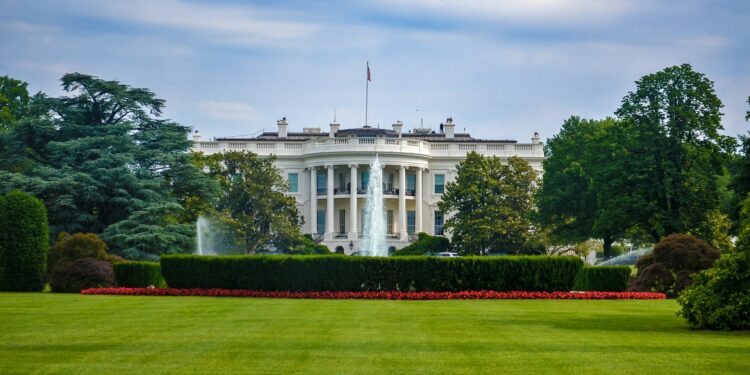
The Trump administration is moving aggressively to address what it describes as a serious national security emergency, filing an urgent legal appeal to continue construction on a major White House expansion project.
At the center of the dispute is President Donald Trump’s proposed $400 million ballroom—an ambitious upgrade that officials say is not just cosmetic, but essential for protecting the president and key government personnel in an increasingly dangerous world.
Emergency Appeal Filed Over White House Security Risks
Late Friday, administration attorneys submitted a 27-page emergency motion to the U.S. Court of Appeals for the D.C. Circuit, asking the court to overturn a federal judge’s order that halted construction earlier this week.
The filing argues that stopping the project now could create serious vulnerabilities at the White House, putting President Trump, his family, and staff at risk.
Government lawyers described the injunction as “unprecedented” and warned that delays could leave the Executive Mansion exposed to modern threats such as:
- Drone attacks
- Ballistic missiles
- Armed intrusions
- Biological hazards
“Time is of the essence,” attorneys emphasized in the filing.
Partially Built Site Could Create Dangerous Exposure
According to the administration, the court-ordered construction halt—set to take effect by April 14—would leave behind a massive unfinished excavation site directly next to the White House.
Officials argue this could weaken existing defenses and create new security risks during a time when global threats are rapidly evolving.
The motion warns of “grave national security harms” if construction is paused before critical protective systems are completed.
More Than a Ballroom: Security Infrastructure Revealed
New details in the filing highlight that the project goes far beyond a traditional event space.
Plans reportedly include:
- Reinforced underground bunker systems
- Emergency medical and hospital facilities
- Advanced protective barriers
- Infrastructure supporting sensitive military operations
Supporters say these features are necessary upgrades to ensure the White House can withstand 21st-century threats.
Legal Fight Centers on Congressional Approval
The legal battle began after the National Trust for Historic Preservation filed a lawsuit, arguing that the project cannot move forward without approval from Congress.
U.S. District Judge Richard Leon agreed, issuing a preliminary injunction that temporarily blocks construction.
However, Trump’s legal team argues that critics had plenty of time to object, noting that the project had been widely covered in the media long before construction began.
They dismissed the lawsuit as politically motivated and lacking merit.
Trump Fires Back at Critics
President Trump responded strongly to the ruling, taking to Truth Social to criticize the National Trust for Historic Preservation.
He accused the group of standing in the way of necessary security improvements and described the opposition as politically driven.
The administration is now urging the appeals court to act quickly, stressing that any delay could compromise national security.
What This Means for Americans
This case could have far-reaching implications—not just for the future of the White House, but for how quickly a president can act to strengthen national security.
For many Americans, especially those concerned about rising global threats, the question is simple:
Should urgent security upgrades be delayed by legal challenges?
As the court considers the emergency appeal, the outcome could shape how future presidents respond to evolving dangers both at home and abroad.
Final Takeaway
The Trump administration is framing this situation as more than a construction dispute—it’s a national security issue with real-world consequences.
With the deadline approaching and legal tensions rising, all eyes are now on the appeals court’s next move.