
President Donald Trump revealed Thursday that U.S. forces launched swift retaliatory strikes against Iranian-linked targets after American Navy destroyers came under attack in the Strait of Hormuz, escalating tensions in one of the world’s most critical waterways.
Despite the military response, Trump insisted the ceasefire between the United States and Iran remains active.
Speaking after the operation, the president described the American response as a limited “love tap,” signaling that while the U.S. was willing to defend itself, Washington was not looking to trigger a larger regional conflict.
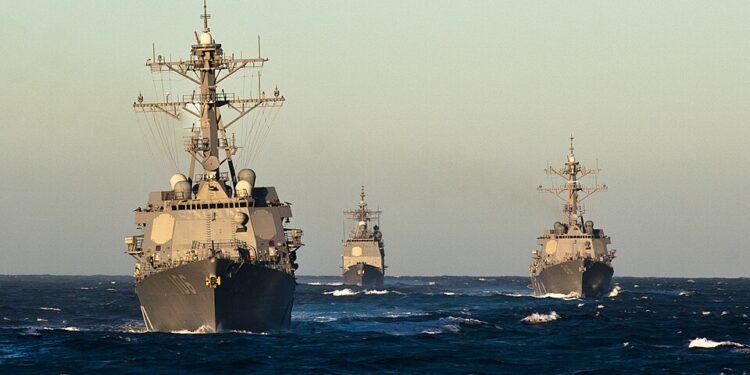
According to U.S. Central Command, three Navy destroyers — the USS Truxtun, USS Rafael Peralta, and USS Mason — were targeted during a transit mission through international waters near the Gulf of Oman.
Military officials said Iranian forces launched missiles, drones, and fast-moving attack boats toward the American ships.
The Pentagon confirmed that all incoming threats were intercepted and no U.S. personnel or military assets were damaged.
American forces quickly responded by striking military sites tied to the attacks, including missile launch systems, drone operations, command centers, and surveillance facilities believed to be coordinating the assault.
U.S. officials emphasized that the strikes were defensive in nature and intended to protect American service members operating in the region.
“CENTCOM does not seek escalation,” the military said in a statement, “but remains fully prepared to defend U.S. forces.”
Trump later praised the Navy crews involved in the confrontation, calling the operation a success and warning Iran against future aggression.
In a Truth Social post, the president said the U.S. destroyers completed their mission “very successfully” despite coming under fire.
He also claimed the hostile forces responsible for the attack were “completely destroyed” during the American response.
The confrontation immediately sparked outrage from Iranian officials, who accused the United States of violating the ceasefire agreement.
Iranian state media claimed American forces targeted vessels near the Strait of Hormuz and carried out operations near coastal areas connected to Iran’s southern territory.
However, U.S. officials strongly rejected suggestions that civilian targets were intentionally struck, maintaining that the mission focused solely on military threats against American forces.
The latest clash comes as Trump continues pushing Iran to accept a U.S.-backed peace proposal aimed at stabilizing the region and preventing further escalation.
Trump also issued a direct warning to Iran’s leadership, arguing that the regime cannot be allowed to obtain nuclear weapons.
“They are led by lunatics,” Trump wrote, adding that the United States would respond with even greater force if American troops or interests are threatened again.
The president’s comments quickly energized supporters who view Trump’s foreign policy approach as a return to “peace through strength” after years of growing instability overseas.
For many conservatives, the rapid military response demonstrated that attacks on the United States military will be met with immediate action under Trump’s leadership.
As tensions continue building in the Middle East, the administration is signaling that while it prefers diplomacy, it is fully prepared to defend American forces, protect global shipping lanes, and respond decisively to future threats.