
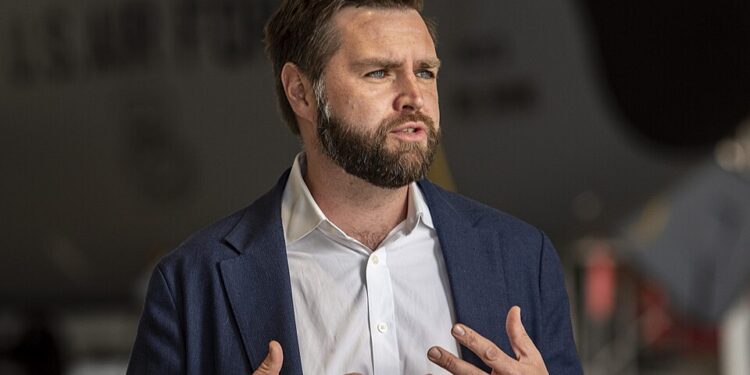
Vice President JD Vance forcefully defended the Trump administration’s new Anti-Weaponization Fund on Tuesday after CNN’s Kaitlan Collins tried to link the program to the January 6 controversy.
The tense White House exchange highlighted what many conservatives see as a familiar media tactic: using January 6 to challenge nearly every move made by President Donald Trump and his administration.
With the Department of Justice preparing to distribute up to $1.776 billion to Americans who claim they were harmed by politically motivated investigations, the debate is drawing national attention and raising major questions about government accountability.
CNN Presses JD Vance on January 6
During the press briefing, Collins asked Vance whether individuals associated with January 6 could potentially receive money from the fund.
She pointed to his earlier statement that anyone who assaulted police officers on January 6 should serve prison time.
Vance stood firm and refused to make sweeping judgments.
“We’re going to review every case individually,” he said.
When pressed again, Vance explained that not every person’s circumstances are the same and that the administration would examine the facts before making any decisions.
He emphasized that the administration is not promising payments to any specific group, but rather establishing a process to evaluate claims from Americans who believe they were unfairly targeted by the federal government.
Vance Draws a Clear Line Between Peaceful Protest and Violence
Vance has consistently said there is a significant difference between peaceful demonstrators and those who committed acts of violence.
In a previous interview with Fox News anchor Shannon Bream, he stated that Americans who protested peacefully and were treated unfairly by the Biden-era Justice Department deserve consideration, while those who engaged in violent conduct should be judged based on the facts of their cases.
This position remains unchanged.
Trump Creates $1.776 Billion Anti-Weaponization Fund
The new fund was established after President Trump agreed to dismiss a $10 billion lawsuit involving the Internal Revenue Service.
In return, the Department of Justice created the Anti-Weaponization Fund to provide a formal process for reviewing claims from individuals who believe they were victims of political lawfare.
According to the DOJ, the fund may provide:
- Financial compensation
- Formal written apologies
- Other forms of relief deemed appropriate
Officials say anyone may submit a claim, regardless of political affiliation.
Any money left over when the fund concludes will return to the federal government.
Why Conservatives Support the Fund
Many Trump supporters believe the fund is a long-overdue response to years of aggressive investigations, selective prosecutions, and politically motivated actions by federal agencies.
Supporters argue that ordinary Americans deserve a fair opportunity to seek compensation if they suffered financial loss, reputational damage, or emotional hardship because of government misconduct.
The Justice Department says it will issue quarterly reports detailing who received relief and what type of compensation was awarded, providing transparency and oversight.
Even Some Republicans Are Skeptical
Not every Republican is convinced.
Senate Majority Leader John Thune expressed reservations about the program and said he was unsure how it would be used.
His comments reflect a broader debate within the Republican Party over how best to address concerns about federal overreach.
The Media’s Continued Focus on January 6
For many conservatives, Collins’ questioning was another example of the national media returning to January 6 whenever the Trump administration announces a major policy initiative.
Rather than focusing solely on the purpose of the fund, critics have sought to frame the discussion around one of the most divisive political events in modern American history.
Supporters of the administration argue that the real issue is whether citizens who were unfairly targeted by government agencies should have a path to justice.
What Happens Next
The Anti-Weaponization Fund is expected to begin accepting claims in the coming months.
As applications are reviewed, the Justice Department will release regular public reports showing how the money is being distributed and what types of cases are being approved.
The outcome could shape future debates over government accountability, political lawfare, and the limits of federal power.
Bottom Line
President Trump and Vice President JD Vance say the Anti-Weaponization Fund is designed to help Americans who believe they were harmed by politically motivated government actions.
While critics continue to raise questions about January 6, supporters view the initiative as an important step toward restoring fairness, transparency, and accountability in Washington.