
As thousands of Los Angeles residents continue rebuilding after the devastating California wildfires of 2025, a new political battle is erupting over who should be held responsible for the slow recovery effort.
Rather than directing criticism at local officials, some Democrats are now pointing the finger at President Donald Trump — a claim that is drawing scrutiny from critics who argue California leaders are attempting to shift blame away from their own decisions.
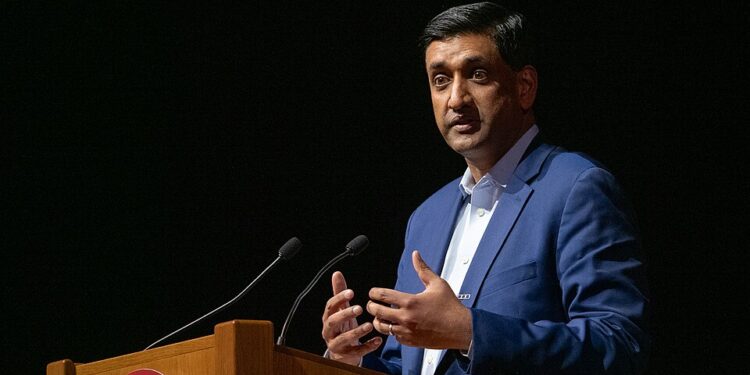
The controversy surfaced during a Sunday appearance on MSNBC, where Rep. Ro Khanna (D-Calif.) was asked about growing voter frustration and what the Los Angeles mayoral race reveals about public opinion.
According to Khanna, much of the anger surrounding the wildfire response should be directed toward the Trump administration.
Khanna argued that California has not received enough federal assistance and claimed the state is still waiting for tens of billions of dollars in support needed to continue rebuilding efforts. He also suggested that residents who remain displaced or have not seen their homes restored are understandably frustrated with government officials.
However, critics quickly noted a key fact often missing from the discussion.
The wildfires began on January 7, 2025, nearly two weeks before President Trump returned to the White House on January 20.
That timeline has fueled arguments that local and state leaders should bear greater responsibility for decisions made during the critical early days of the disaster.
After taking office, Trump traveled to Los Angeles to assess the damage firsthand. During meetings with local officials, he openly questioned why emergency powers had not been used more aggressively to accelerate response efforts and assist affected communities.
The debate over responsibility comes as Los Angeles voters prepare to make a major decision about the city’s future leadership.
Mayor Karen Bass continues to face criticism over her administration’s handling of the wildfire crisis. Concerns about preparedness, emergency response, rebuilding delays, and communication with residents have remained central issues throughout the campaign.
For many voters, the election has become a referendum on whether city leadership acted quickly enough when the disaster struck.
One of Bass’s most outspoken challengers has been Spencer Pratt, whose own home was destroyed during the fires.
Pratt has repeatedly highlighted what he views as failures by city leadership and has made wildfire recovery a centerpiece of his campaign. His personal connection to the disaster has helped him attract attention from voters who remain frustrated by the pace of rebuilding.
Recently, Pratt pushed back against criticism regarding temporary housing arrangements following the loss of his home. He emphasized that his family, like many others impacted by the fires, continues to live with the consequences of the disaster while waiting for permanent rebuilding solutions.
The scale of the destruction remains staggering.
Approximately 12,000 homes were lost during the wildfires, leaving thousands of families displaced and creating one of the largest recovery efforts in modern California history. Many residents continue navigating insurance disputes, construction delays, rising costs, and ongoing uncertainty about when life will fully return to normal.
As Election Day approaches, wildfire recovery remains one of the most important issues facing Los Angeles voters.
Prediction market Kalshi currently gives Mayor Bass a significant advantage, estimating a 62 percent chance of reelection. Pratt trails but continues to gain attention as voters weigh whether new leadership is needed.
Regardless of who wins, the political debate surrounding the California wildfires is unlikely to disappear anytime soon.
The larger question facing voters is whether responsibility for the slow recovery lies with Washington, Sacramento, or Los Angeles City Hall. With thousands of families still rebuilding their lives, that question could shape California politics long after the ballots are counted.