
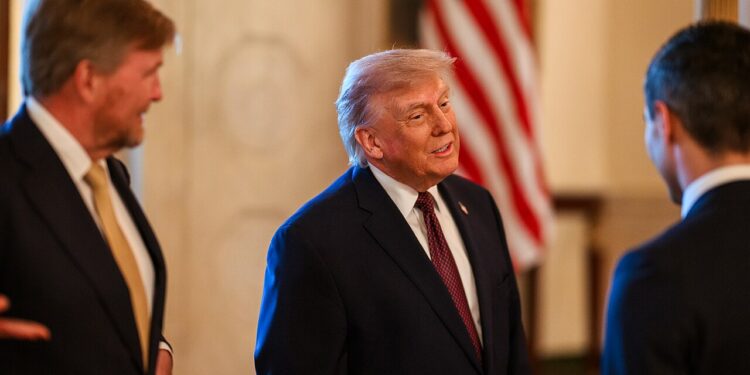
President Donald Trump is facing one of the biggest legal battles of his second term as the Supreme Court prepares to decide whether his administration can move forward with a major effort to restrict automatic birthright citizenship.
The case could have enormous consequences for immigration policy, border security, and the future of American citizenship. Supporters argue the current system encourages illegal immigration by granting citizenship to children born in the United States regardless of their parents’ legal status. Opponents say the Constitution clearly protects birthright citizenship and that any change would require a constitutional amendment.
With a Supreme Court ruling expected soon, the outcome could reshape immigration law for generations.
Trump Sounds Alarm Over Court Battle
Over the weekend, Trump criticized the federal court system in a Truth Social post, arguing that judges have repeatedly blocked key parts of his America First agenda.
The president warned that activist judges could once again stand in the way of policies designed to strengthen border security and enforce immigration laws.
Trump vowed to continue fighting for what he described as common-sense reforms aimed at protecting American citizenship and reducing incentives for illegal immigration.
Why Birthright Citizenship Is Suddenly Back In The Spotlight
For more than 150 years, the United States has generally recognized birthright citizenship under the 14th Amendment.
Trump’s executive order seeks to narrow that interpretation.
Under the proposal, automatic citizenship would only be granted if at least one parent is either a U.S. citizen or a lawful permanent resident.
Administration officials argue that the phrase “subject to the jurisdiction thereof” was never intended to apply to individuals who entered the country illegally or who are only temporarily present in the United States.
Supporters believe the policy would remove a powerful incentive that has contributed to decades of illegal immigration and overwhelmed border communities.
Critics argue the proposal violates longstanding constitutional precedent.
Supreme Court Holds The Future Of The Policy
Multiple lawsuits were quickly filed after Trump signed the executive order.
Democrat-led states and immigration advocacy groups challenged the policy in federal court, leading to a series of legal battles that ultimately landed before the Supreme Court.
The Court has already heard oral arguments and is expected to issue a ruling before the end of its current term.
Legal experts say the decision could become one of the most important immigration rulings in modern American history.
Justices Raise Tough Questions
During oral arguments, several justices questioned both sides about the constitutional limits of birthright citizenship.
Chief Justice John Roberts challenged aspects of the administration’s legal arguments while also probing opponents about the historical interpretation of the 14th Amendment.
Other justices, including Neil Gorsuch, Brett Kavanaugh, and Amy Coney Barrett, pressed attorneys on whether existing precedent fully settles the issue or leaves room for a narrower interpretation.
Their questions highlighted the complexity of a case that could impact millions of future citizenship claims.
Separate Clash Involving Obama-Appointed Judge
Trump also used his weekend comments to criticize U.S. District Judge Christopher Cooper, an Obama appointee who recently ruled against the administration in a separate dispute involving the Kennedy Center.
The president argued that political bias within portions of the federal judiciary continues to create obstacles for policies supported by millions of voters.
The criticism reflects a broader frustration among conservatives who believe unelected judges have increasingly shaped national policy through court rulings rather than legislation.
Why This Case Matters To Every American
The Supreme Court’s upcoming decision is about far more than one executive order.
The ruling could influence future immigration policy, define the limits of presidential authority, affect border enforcement efforts, and determine how citizenship laws are interpreted for decades to come.
For supporters of stronger immigration enforcement, the case represents a major opportunity to address what they see as a loophole that encourages illegal immigration.
For opponents, it is a test of whether constitutional protections can be altered through executive action.
Either way, the Court’s decision is expected to become a landmark moment in the ongoing national debate over immigration, citizenship, and the future of America’s borders.