
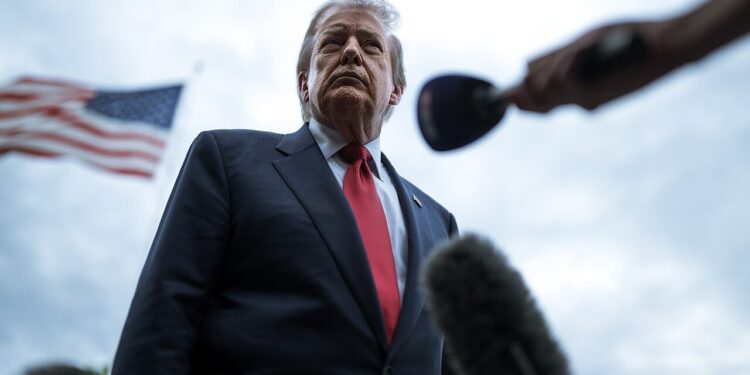
President Donald Trump has made immigration enforcement one of the central priorities of his second term, delivering on campaign promises involving border security, deportations, and stricter immigration policies. Yet one important piece of the administration’s immigration agenda continues to face an uphill battle.
The issue involves denaturalization—the legal process of revoking U.S. citizenship from individuals who allegedly obtained it through fraud, deception, or by concealing information during the naturalization process.
Administration officials argue that protecting the integrity of American citizenship is a matter of both national security and public trust. According to the Department of Justice, federal attorneys are actively pursuing cases involving individuals accused of hiding serious criminal activity while applying for citizenship.
The effort is part of a broader immigration enforcement strategy that seeks to ensure that those who become American citizens meet all legal requirements and follow the rules established by federal law.
However, unlike many immigration enforcement actions, denaturalization cases must clear a much higher legal bar.
While immigration courts handle many immigration-related matters, citizenship revocation cases are heard in federal court, where defendants receive extensive constitutional protections. Federal prosecutors must meet a demanding burden of proof, making these cases significantly more complex and time-consuming.
As a result, legal experts say the process often moves much slower than other immigration enforcement efforts.
Many of the cases currently under review involve allegations of serious criminal conduct, including drug trafficking, terrorism-related offenses, child exploitation crimes, and other activities prosecutors claim were concealed during the citizenship application process.
Federal officials maintain that individuals who intentionally withheld such information may not have qualified for citizenship under the law.
The Justice Department has stated that it remains committed to investigating cases where evidence suggests the naturalization process was compromised. Officials say the goal is not to target lawful citizens, but rather to identify situations where citizenship may have been obtained fraudulently.
Supporters of the effort argue that maintaining confidence in the immigration system requires strong enforcement of existing laws. They believe that individuals who follow the legal process should not be disadvantaged by those who attempt to gain citizenship through deception.
Critics, meanwhile, caution that denaturalization powers must be applied carefully and with proper legal safeguards. They argue that citizenship is one of the most important rights an individual can possess and that any attempt to revoke it should receive thorough judicial review.
The debate highlights one of the most challenging realities of immigration policy. While executive actions can strengthen border security and accelerate enforcement priorities, federal courts ultimately determine whether citizenship can legally be revoked.
For the Trump administration, that means one of its most ambitious immigration objectives may depend less on policy announcements and more on lengthy legal proceedings that can take years to resolve.
As immigration remains a major issue heading into the next phase of Trump’s presidency, the outcome of these cases could help shape the future of citizenship enforcement in the United States for years to come.
Whether the administration succeeds in expanding these efforts or encounters continued legal resistance, the battle underscores a fundamental question facing the nation: how to balance strong immigration enforcement with the legal protections guaranteed to every American citizen.