
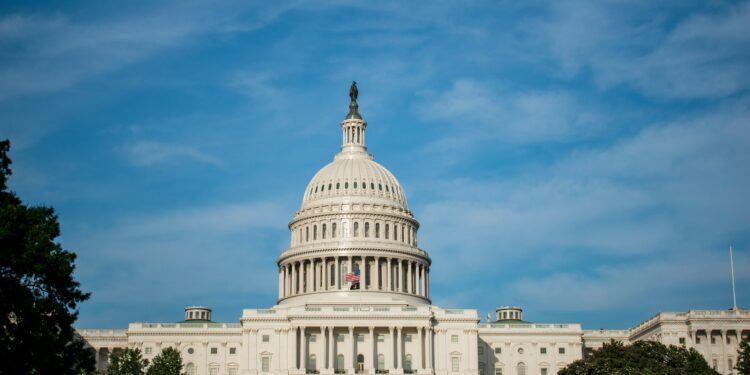
Senate Republicans are working against the clock to prevent another government shutdown, but a growing dispute over President Donald Trump’s budget authority could complicate efforts to reach a bipartisan funding agreement.
Lawmakers from both parties are negotiating a temporary spending bill that would keep the federal government funded through December 4. While there appears to be momentum toward a deal, disagreements over how much authority the White House should have over federal spending remain a major obstacle.
If Congress cannot reach an agreement before current funding expires, the federal government could once again face the possibility of a partial shutdown.
Funding Bill Nears Key Vote
Senate Majority Leader John Thune said lawmakers are making progress and hopes the Senate can vote on the continuing resolution (CR) before leaving Washington for the August recess.
“There are a handful of issues that are still under consideration,” Thune told reporters, adding that he hopes both parties can resolve the remaining differences and keep the government operating without interruption.
The temporary funding measure would give Congress several additional months to negotiate a broader federal spending package later this year.
Debate Centers On Trump’s Budget Proposal
One of the biggest sticking points involves a proposed rule from the Office of Management and Budget (OMB).
The proposal would give political appointees within the Trump administration greater authority over certain federal grants approved by Congress.
Supporters argue the change would give the administration more oversight of taxpayer dollars and help ensure federal funding aligns with administration priorities.
Critics contend the proposal would shift too much spending authority away from Congress, which traditionally controls federal appropriations.
Some Republicans Raise Concerns
Not all Republicans support the proposed changes.
Senate Appropriations Committee Chair Susan Collins has emerged as one of the leading GOP voices questioning the proposal.
Collins has argued that allowing political appointees to make final decisions on congressionally approved grants could weaken Congress’s constitutional authority over federal spending.
Earlier this month, she urged White House Budget Director Russell Vought to withdraw portions of the proposal, warning it could create uncertainty for local governments, universities, medical research projects, and nonprofit organizations that depend on federal grants.
According to Collins, the proposal could also affect rural communities and ongoing scientific research if grants are delayed or canceled unexpectedly.
Democrats Seek Changes Before Supporting Funding Bill
Democratic lawmakers have made clear they want language included in the temporary spending bill that would limit the administration’s ability to implement the proposed OMB rule.
Sen. Patty Murray said negotiators are working with Republicans on possible compromise language.
Democrats argue grant decisions should continue to rely primarily on established review processes rather than political appointees.
If an agreement is reached, Democratic leaders have indicated they are prepared to support funding the government through early December.
Additional Republicans Voice Reservations
Sen. Lisa Murkowski has also expressed concerns about the proposed rule.
She said organizations throughout Alaska, including tribal governments and nonprofit groups, have raised questions about how the proposal could affect existing federal grant programs.
Murkowski said many local leaders believe they should have been consulted before such significant changes were proposed.
Trump Allies Defend Greater Oversight
Supporters of the administration argue the proposal would strengthen accountability over federal spending and provide the White House with additional tools to oversee how taxpayer dollars are distributed.
Some Republican strategists believe giving the administration greater authority could help ensure grants better reflect the policy priorities of the elected executive branch.
They also warn that limiting the administration’s authority could make it more difficult to secure enough Republican support for the temporary funding bill.
Another Spending Dispute Remains
Negotiators are also discussing language involving so-called “pocket rescissions,” a budgeting practice that allows presidents to request spending cancellations near the end of the fiscal year.
Some lawmakers want additional safeguards to ensure Congress has adequate time to review those requests before federal funding expires.
That issue, combined with the debate over grant oversight, remains one of the final hurdles before lawmakers can finalize the temporary spending package.
What Happens Next?
Congress has only a limited window to approve a funding measure before lawmakers leave Washington for the August recess.
If negotiators reach a compromise, the government would remain funded through early December while lawmakers continue working on a longer-term budget agreement.
If talks break down, Congress could once again face the prospect of a government shutdown, setting up another high-profile showdown over federal spending, budget authority, and the balance of power between Congress and the White House.