
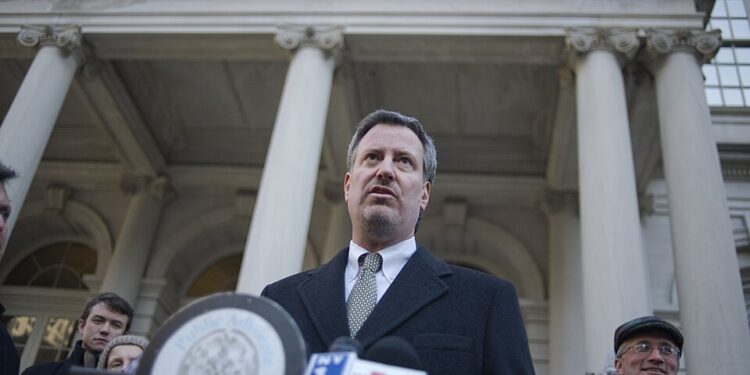
As President Donald Trump and Republicans prepare for the 2026 midterm elections, former New York City Mayor Bill de Blasio is urging Democrats to rally around an economic message that he believes could weaken the GOP’s momentum.
Speaking during an appearance on Fox News with Sean Hannity, the former Democratic mayor argued that focusing on rising household costs, taxes, and affordability gives Democrats their best opportunity to challenge Trump’s political agenda.
De Blasio praised Texas Democratic Senate candidate James Talarico, saying his campaign is centered on the kinds of financial concerns many Americans discuss around the kitchen table every day.
According to de Blasio, that strategy could become one of the Republican Party’s biggest political challenges heading into next year’s elections.
De Blasio argued that Talarico is focusing his campaign on wealthy Americans, contending that billionaires should contribute more in taxes while emphasizing everyday financial concerns that affect working families.
He went on to argue that Republicans would face a difficult battle if Democrats united behind a similar economic message nationwide.
De Blasio argued that Republicans would face a major political challenge if Democrats united around the everyday financial concerns of American families.
Democrats Shift Their Focus
After years of emphasizing issues such as abortion, climate change, and voting rights, many Democratic candidates are now placing greater attention on inflation, grocery prices, housing costs, and family budgets.
Party strategists believe concerns over everyday expenses could resonate with independent voters who remain frustrated by the cost of living.
James Talarico has made economic inequality a centerpiece of his Senate campaign.
On his campaign website, he argues that Americans are being divided over politics while wealthy elites continue to increase their influence.
“The biggest divide in this country is not left versus right,” Talarico writes. “It’s top versus bottom.”
He also claims billionaires benefit when Americans spend more time fighting each other than examining economic policies.
New Poll Offers Democrats Encouragement
A new Reuters/Ipsos poll suggests Democrats have gained a slight edge on economic messaging for the first time in nearly a decade.
While Republicans have traditionally held an advantage on issues involving taxes, business growth, and the economy, recent polling indicates many voters remain worried about inflation and the rising cost of everyday necessities.
Political analysts expect both parties to make affordability one of the defining issues of the 2026 campaign.
Republicans Defend Trump’s Economic Agenda
Republicans argue that President Trump remains focused on strengthening the U.S. economy through lower taxes, domestic energy production, deregulation, and efforts to reduce government spending.
Supporters also point to job creation, manufacturing investment, and border security as priorities they believe will improve long-term economic growth.
Many Republicans have blamed international conflicts, including ongoing tensions in the Middle East, for contributing to higher fuel costs and inflationary pressures.
Gas Prices Continue To Concern Americans
Fuel prices remain one of the most closely watched economic indicators for millions of families.
According to AAA, the national average price for a gallon of regular gasoline stood at approximately $4.08 this week, compared with about $3.16 during the same period one year ago.
Higher gas prices often affect more than just drivers, increasing transportation costs that can eventually raise prices for groceries, consumer goods, and other everyday purchases.
The 2026 Midterms Are Already Taking Shape
With control of Congress on the line, both Republicans and Democrats are expected to spend the coming months battling over which party offers the strongest plan to address inflation, taxes, government spending, energy policy, and the overall economy.
For conservatives backing President Trump, the election will likely become a referendum on whether Republican policies can deliver stronger economic growth and lower costs for working Americans—or whether Democrats can convince enough voters that a different approach is needed.