
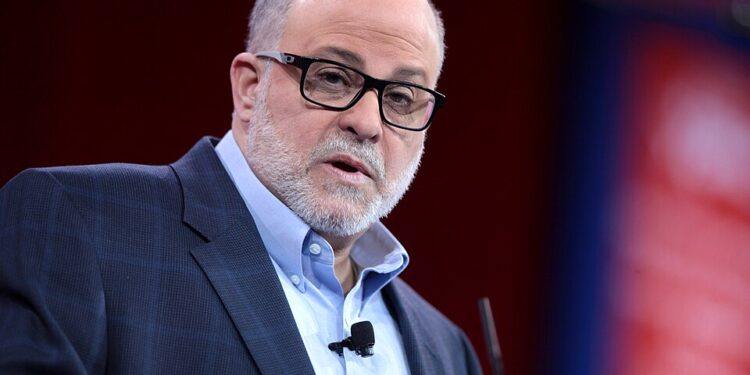
President Donald Trump’s Iran strategy is facing fresh criticism from an unexpected corner of conservative media, as Fox News host Mark Levin publicly questioned how Vice President JD Vance described the administration’s objectives in the conflict.
Levin did not attack Trump directly — or even mention Vance by name — but his pointed criticism came shortly after the vice president outlined two major U.S. priorities involving Iran: keeping energy prices under control and preventing Tehran from obtaining a nuclear weapon.
The disagreement is significant because it exposes a growing debate on the right over what America should consider a successful outcome in Iran.
For millions of Americans watching gasoline prices, inflation and the cost of living, the answer could have consequences far beyond Washington.
JD Vance Explains Trump’s Iran Priorities
During an appearance on Fox News, host Will Cain pressed Vance about how the Iran conflict ultimately ends.
Vance responded by identifying two major objectives.
The first, he explained, is ensuring that Gulf nations can continue supplying oil and natural gas to the global economy. Stable energy supplies can help prevent another sharp increase in oil and gasoline prices — something that would quickly affect American household budgets.
Vance said keeping gasoline affordable for Americans was a major priority.
His second objective was preventing Iran from obtaining a nuclear weapon.
Vance expressed confidence that the United States was making progress toward both goals, while acknowledging the inherent uncertainty involved in dealing with the Iranian government.
According to the vice president, Tehran has not always honored commitments made to Washington, making the situation difficult to predict.
Mark Levin Pushes Back
Levin apparently wasn’t satisfied with that description.
In a post on X, the longtime conservative commentator questioned why inexpensive oil appeared so prominently in the administration’s publicly stated war objectives.
“I didn’t know our objectives in the war against Iran are: 1. cheap oil and, 2. no nukes,” Levin wrote.
Levin said he believed the priorities should instead begin with preventing Iran from obtaining nuclear weapons and enriched uranium.
He also argued that supporting the Iranian people should remain part of America’s broader strategy.
While Levin agreed that the Strait of Hormuz must remain open to international shipping, he questioned whether keeping oil inexpensive should be described as a central war objective.
His biggest concern was what he characterized as a possible change in the administration’s public messaging.
“We are ratcheting down our war objectives, at least in the public statements of senior officials,” Levin wrote.
Why Oil And Gas Prices Matter To Americans
Vance’s focus on energy prices is not difficult to understand.
Oil prices influence much more than what drivers pay at the gas station.
Higher energy costs can increase transportation and shipping expenses, which can eventually contribute to higher prices for groceries, consumer products and other everyday necessities.
That is particularly important for retirees and Americans living on fixed incomes, who can have less flexibility when monthly expenses suddenly rise.
Keeping energy markets stable could therefore serve both an economic and political purpose for the Trump administration.
But Levin’s criticism raises a different question: Should economic concerns determine America’s military objectives toward Iran?
That debate could become increasingly important as the administration attempts to balance national security with the economic consequences of prolonged instability in the Middle East.
Iran’s Nuclear Program Remains A Major Concern
For conservatives who favor a tough approach toward Tehran, Iran’s nuclear ambitions remain the central national security issue.
A nuclear-armed Iran could dramatically reshape the balance of power in the Middle East and create additional challenges for the United States and its allies.
That appears to be the heart of Levin’s objection.
His argument is not that affordable energy is unimportant. Rather, he appears concerned that preventing Iran from obtaining nuclear capabilities should remain the unmistakable priority when administration officials explain America’s objectives.
Vance, meanwhile, is emphasizing the immediate consequences Americans could experience at home.
The difference may sound subtle, but it reflects a larger foreign-policy debate within the Republican coalition.
Strait Of Hormuz Takes Center Stage
The Strait of Hormuz is another crucial piece of the dispute.
The narrow waterway is strategically important to global energy markets because substantial petroleum shipments pass through the region.
Any serious disruption can create uncertainty in global oil markets and potentially put upward pressure on energy prices.
That means events thousands of miles from the United States can eventually affect what Americans pay to fill their vehicles or heat their homes.
Vance’s comments suggest the administration is keenly aware of that connection.
Levin, however, argues that protecting energy supplies should not cause Washington to lose sight of the broader objectives involving Iran.
A Debate Inside Conservative Media
What makes the disagreement particularly noteworthy is where the criticism is coming from.
Levin has spent years as one of conservative media’s most recognizable voices and has strongly supported many of Trump’s policies.
This is therefore not simply another partisan attack from Democrats or liberal commentators.
Instead, it represents a disagreement among conservatives over how the Trump administration should define success in Iran.
Some voters may agree with Vance that protecting American consumers from soaring gasoline prices deserves immediate attention.
Others may share Levin’s concern that Washington should focus first and foremost on preventing Iran from becoming a nuclear power.
Those positions are not necessarily incompatible.
The challenge for the Trump administration is convincing Americans that it can accomplish both.
Trump Faces A High-Stakes Balancing Act
President Trump now faces a complicated balancing act involving national security, energy markets and the American economy.
The administration wants to prevent Iran from obtaining a nuclear weapon while also protecting vital shipping routes and limiting the financial consequences of instability for American families.
That becomes especially important when voters are already sensitive to inflation and household expenses.
Gasoline prices are among the most visible economic indicators Americans encounter. Drivers see them advertised on signs every time they pass a service station.
A prolonged increase can quickly become a political problem for any administration.
At the same time, Trump’s conservative supporters are likely to demand a clear explanation of what the United States expects to accomplish before the conflict can truly be considered a success.
What Does Victory In Iran Look Like?
That may ultimately be the most important question raised by Levin’s criticism.
What exactly constitutes victory?
For Vance, the immediate priorities include preventing a nuclear-armed Iran while keeping oil and gasoline affordable for Americans.
For Levin, those objectives do not go far enough.
He wants preventing nuclear weapons and enriched uranium to remain at the forefront, while maintaining pressure on Tehran and supporting the Iranian people.
The disagreement doesn’t necessarily represent a major break between conservative leaders. But it does demonstrate that Trump’s Iran policy is facing scrutiny even from influential voices on the right.
As events continue to unfold, Americans will be watching two things closely: whether Iran’s nuclear threat is contained and whether instability overseas continues hitting their wallets at home.
For President Trump, accomplishing both could ultimately determine how Americans judge his handling of one of the most consequential foreign-policy challenges of his presidency.