
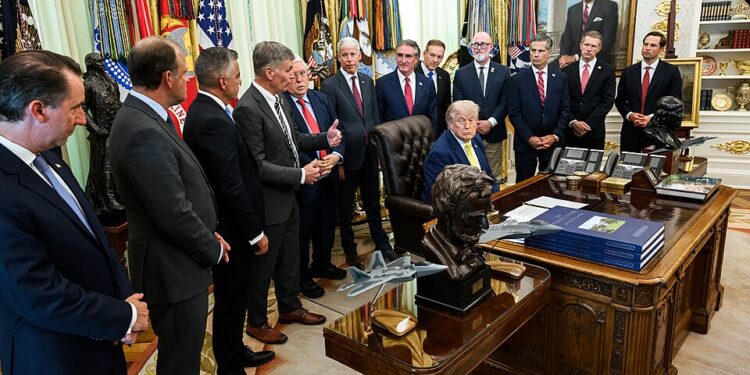
President Donald Trump’s defense secretary is facing new questions from inside his own party after a prominent Republican senator declined to give Pete Hegseth an unequivocal vote of confidence.
Sen. John Kennedy of Louisiana was pressed about Hegseth during a Sunday appearance on NBC’s “Meet the Press,” where moderator Kristen Welker asked whether the Republican senator still had confidence in the Pentagon chief.
Kennedy’s answer immediately drew attention.
“Well, it’s not my place to have confidence in him,” Kennedy responded.
Welker quickly reminded Kennedy that he is a U.S. senator — and one who previously voted to confirm Hegseth.
Kennedy then offered a more detailed assessment, acknowledging concerns about the direction of Pentagon leadership while stopping short of abandoning Hegseth altogether.
Kennedy Raises Concerns About Hegseth
Kennedy said Hegseth appears to be consolidating authority and removing experienced officials from important positions.
“He’s consolidating power. That’s clear,” Kennedy said.
The Louisiana Republican also said Hegseth appears to be firing “some pretty good people,” although Kennedy acknowledged that he does not know whether those officials deserved to lose their positions.
That distinction is important.
Kennedy did not call for Hegseth to resign, nor did he join Republican lawmakers demanding that Trump replace his defense secretary.
In fact, Kennedy said he would “probably vote for him again” unless evidence emerged convincing him that Hegseth’s personnel decisions were improper.
Still, the exchange demonstrated that concerns about Pentagon leadership are being voiced by members of Trump’s own party.
Another Republican Wants Hegseth Gone
Kennedy’s remarks came after Sen. Thom Tillis of North Carolina delivered a much stronger criticism of Hegseth.
Tillis publicly urged Trump to choose a new defense secretary, arguing that turnover among senior military officials was creating problems at the Pentagon.
“He is creating a leadership void at the top of our military ranks,” Tillis said in a social media post.
Tillis urged the president to find a Pentagon leader who would retain and empower experienced military personnel.
The criticism followed a series of high-profile departures and personnel changes involving senior military and civilian leaders.
That turnover has fueled a broader debate in Washington over whether Hegseth’s restructuring efforts are improving Pentagon accountability or removing too much experience from the military leadership structure.
Pentagon Turnover Draws Attention
The controversy intensified following the departure of Army Secretary Dan Driscoll.
Driscoll, an Iraq War veteran with close ties to Vice President JD Vance, resigned after reported tensions inside the Pentagon.
His departure added to scrutiny surrounding changes in senior Defense Department leadership at a time when the United States is dealing with significant military commitments overseas.
The Pentagon has defended Hegseth’s leadership and his efforts to reshape the department.
Critics, meanwhile, have questioned whether the pace of leadership changes could affect military readiness and modernization.
For Kennedy, however, individual personalities are not his primary concern.
Kennedy Says America Needs a Stronger Military
Kennedy used the interview to shift attention toward what he considers the larger challenge: ensuring the United States has sufficient military personnel, technology and funding.
The senator argued that America needs greater military capacity to confront security challenges around the world.
He also called for closer cooperation with Ukraine on new battlefield technologies, particularly drones.
Modern warfare has increasingly demonstrated the importance of relatively inexpensive unmanned systems, making drone technology an important issue for military planners.
Kennedy argued that the United States should learn from Ukraine’s battlefield experience as Washington considers how American forces should prepare for future conflicts.
Defense Spending Becomes Another Flashpoint
Kennedy also called for additional military spending.
The Louisiana senator suggested Republicans may have to use the budget reconciliation process to secure additional defense funding.
His comments come as military spending and readiness remain major issues in Washington, particularly amid continuing overseas conflicts and concerns about American weapons stockpiles.
Hegseth said during a July congressional hearing that the conflict with Iran had already cost approximately $37.5 billion while arguing that additional military funding was urgently needed.
That financial pressure has added another dimension to the debate surrounding Pentagon leadership.
Congress must balance demands for military readiness with concerns about government spending, weapons production and the ability of the United States to respond to multiple threats simultaneously.
Kennedy Stops Short of Abandoning Hegseth
Despite the attention surrounding his comments, Kennedy’s position is notably different from Tillis’.
Tillis has explicitly called on Trump to replace Hegseth.
Kennedy has not.
Instead, the Louisiana senator expressed reservations about some of Hegseth’s personnel decisions while maintaining that he has not seen enough evidence to reverse his previous support.
That leaves Kennedy in an unusual position.
He is publicly questioning decisions being made by one of Trump’s most prominent Cabinet officials without joining the growing calls for Hegseth’s removal.
For the Trump administration, the larger question is whether concerns among Republican lawmakers will remain limited to a handful of senators or develop into a broader debate over Pentagon leadership.
For now, Hegseth remains defense secretary, and Kennedy made clear that his biggest concern extends beyond any single official.
His focus, he said, is making sure America has the troops, technology and resources necessary to confront an increasingly complicated global security environment.