

Yes
I do.
No
I don’t.
President Donald Trump has reshaped the Republican Party more dramatically than almost any political figure in recent American history, and the debate over what it now means to be a Republican continues as the country approaches the 2026 midterm elections.
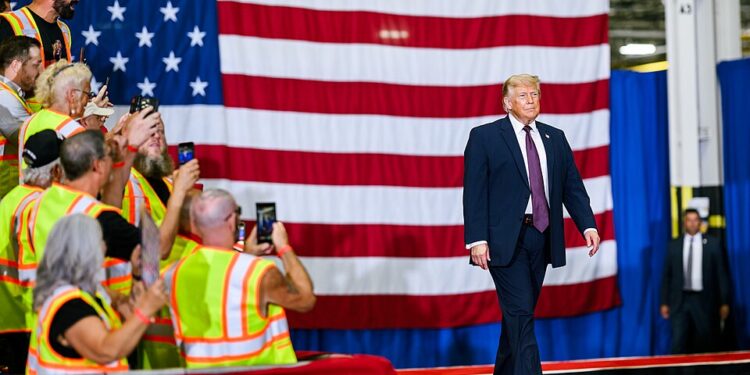
Trump recently made his own view of the Republican Party’s identity especially clear. Speaking at an August rally in South Carolina, the president declared that “the Republican Party is MAGA” and said he believed the “real Republican Party is 100% Make America Great.”
Those documented remarks are the basis for a broader debate often summarized as whether Republicans who reject MAGA still have a place in today’s GOP. The wording of this poll question is stronger than Trump’s verified quotation, but the underlying disagreement inside the party is real.
Polling and political analysis show that MAGA voters now represent a substantial portion of the Republican coalition. A May 2026 Economist/YouGov survey cited by Brookings found that 62% of Republican respondents identified themselves as MAGA Republicans. At the same time, a significant group of Republicans continues to differ with Trump on issues including foreign policy, tariffs and other parts of his agenda.
Those disagreements could become increasingly important because Trump cannot seek another presidential term under the Constitution after his current presidency. Republicans are already debating which portions of Trump’s political movement should continue into 2028 and which direction future GOP leaders should take. Reuters reported in September that divisions have emerged inside the party on subjects including tariffs, foreign intervention and the future shape of Trump-era populism.
For longtime Republican voters, the question raises fundamental issues about party identity. Should Republican candidates be expected to embrace the MAGA movement and Trump’s America First agenda? Or should the GOP remain broad enough to include conservatives who agree with Trump on some policies while strongly disagreeing with him on others?
Those questions may help determine what the Republican Party looks like long after Trump eventually leaves the White House.