
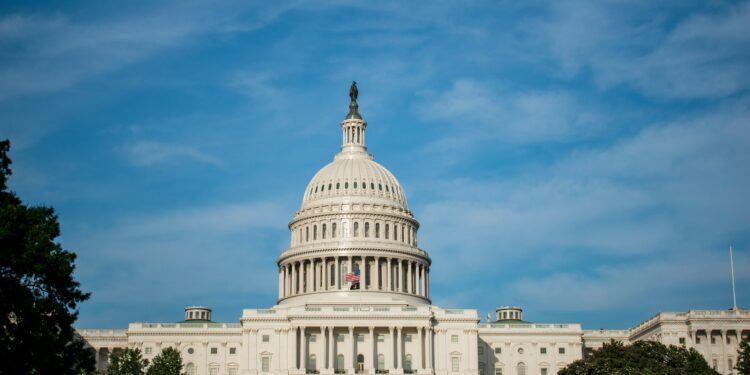
House Republicans are raising new concerns about the flow of political donations into Democratic campaigns after a major fundraising platform announced changes to its security procedures. The development comes amid an ongoing congressional investigation into whether potentially illegal foreign contributions could have entered American elections.
ActBlue, one of the Democratic Party’s largest online fundraising platforms, has introduced stricter identity verification requirements for American citizens donating from overseas.
The announcement follows months of scrutiny from Republican lawmakers who have questioned whether the organization maintained sufficient safeguards to prevent unauthorized political contributions.
The controversy has attracted attention on Capitol Hill as the November 2026 midterm elections approach, with congressional investigators demanding greater transparency about how political donations are processed and verified.
At the center of the dispute is a question that affects voters across the political spectrum: Are America’s campaign finance laws being properly enforced?
Republicans Investigate ActBlue Over Foreign Donation Concerns
ActBlue has spent years serving as a major fundraising resource for Democratic candidates, political organizations, and progressive causes.
The platform has processed billions of dollars in contributions, making it an important part of Democratic political fundraising.
However, Republican lawmakers have repeatedly questioned whether its donor verification systems were strong enough to identify contributions from individuals prohibited from participating financially in American elections.
Federal law generally prohibits foreign nationals from donating to U.S. political campaigns. American citizens living overseas, including military personnel and other expatriates, are legally permitted to contribute.
That distinction makes accurate verification particularly important.
Republican investigators contend that weaknesses in ActBlue’s previous procedures may have created opportunities for improper donations to be submitted.
The investigation has not established that the platform knowingly accepted illegal foreign contributions, and ActBlue strongly denies wrongdoing.
Nevertheless, lawmakers say unanswered questions about the organization’s former security practices justify continued congressional oversight.
Congressional Report Raises Questions About Passport Verification
One of the most significant findings highlighted by House Republican investigators concerns ActBlue’s previous passport verification process.
According to a congressional report, individuals donating from outside the United States were required to enter a U.S. passport number.
However, investigators alleged that the system checked whether the number contained the appropriate number of characters rather than confirming that it represented a valid American passport.
That distinction quickly became a focal point of the investigation.
A number meeting basic formatting requirements does not necessarily establish that the person entering it is a U.S. citizen.
Republican lawmakers argue that this potential vulnerability raises concerns about whether existing safeguards were sufficient.
The report also examined internal communications suggesting that some contributions may have been approved despite questions about their origins.
ActBlue disputes the Republican interpretation of these findings and maintains that it employed multiple security measures to detect suspicious transactions.
The company has also cited an outside forensic review supporting its account of its previous compliance practices.
ActBlue Announces New Security Measures
On October 5, ActBlue’s attorneys informed congressional investigators that the organization was introducing an enhanced passport verification program.
The changes follow the platform’s decision in 2025 to temporarily suspend contributions originating outside the United States.
Under the updated process, eligible American citizens living abroad can once again make donations through ActBlue.
The new system requires overseas contributors to submit identification information that can be checked using a valid U.S. passport.
According to ActBlue, the process includes submitting a passport photograph and a current facial image through Stripe Identity.
The verification system is designed to authenticate identification documents and determine whether the individual making the donation matches the passport provided.
ActBlue describes the program as an improvement to its existing security infrastructure.
Republican investigators, however, see the development differently.
They argue that the adoption of stronger verification requirements raises questions about why those protections were not implemented earlier.
GOP Chairman Bryan Steil Demands Accountability
House Administration Committee Chairman Bryan Steil, R-Wis., has been among the most outspoken critics of ActBlue’s previous verification procedures.
Following the announcement, Steil argued that the new safeguards reinforce concerns congressional Republicans have raised for years.
He questioned whether the platform had adequately confirmed the citizenship of individuals contributing from overseas.
Steil also said the investigation must determine whether any prohibited foreign contributions were processed through ActBlue.
Republican lawmakers want additional answers about the origin of donations, the effectiveness of previous safeguards, and the information company officials provided to Congress.
The inquiry is being led by three prominent Republican committee chairmen:
- Bryan Steil of Wisconsin: Chairman of the House Administration Committee.
- Jim Jordan of Ohio: Chairman of the House Judiciary Committee.
- James Comer of Kentucky: Chairman of the House Oversight and Government Reform Committee.
The lawmakers have continued seeking records and testimony related to the platform’s operations.
Jordan’s office has questioned whether ActBlue’s former fraud prevention procedures were as comprehensive as company leadership previously indicated.
The investigation remains ongoing.
ActBlue Officials Invoke Fifth Amendment During Investigation
Another development drawing congressional attention involves testimony from individuals associated with ActBlue.
According to Fox News Digital, ten prominent figures connected to the organization, including executives and founders, have invoked their Fifth Amendment rights during congressional proceedings.
Republican investigators have criticized the lack of answers to certain questions and called for greater cooperation.
However, exercising the Fifth Amendment is a constitutional right and does not establish that an individual committed a crime.
The congressional committees have continued examining internal records, company communications, and previous statements concerning donor verification.
Investigators are particularly interested in determining whether potential compliance concerns were identified internally and how those issues were addressed.
For Republicans leading the inquiry, obtaining more complete documentation remains a central objective.
ActBlue Rejects Allegations and Defends Its Record
ActBlue has forcefully disputed accusations that it improperly handled political contributions or misled Congress.
The organization maintains that its security procedures included multiple layers of fraud detection and transaction monitoring.
These measures include payment card verification, automated screening tools, address checks, and manual reviews of transactions flagged as suspicious.
ActBlue also argues that Republican lawmakers have selectively interpreted internal information while overlooking evidence supporting the company’s compliance practices.
In its October 4 public announcement, the platform said its revised passport verification requirements would help restore access for eligible Americans living overseas.
The company emphasized that American citizens should not lose their ability to participate in political fundraising simply because they reside outside the country.
ActBlue further maintains that its previous descriptions of donor screening procedures to Congress were accurate.
The organization characterizes the Republican investigation as politically motivated, while GOP lawmakers insist that their questions concern legitimate campaign finance oversight.
Why Foreign Political Donations Are a Serious Election Issue
The investigation highlights a broader concern about transparency in American elections.
Federal campaign finance restrictions are designed to prevent prohibited foreign influence over domestic political contests.
Those protections apply regardless of which party or candidate receives a contribution.
As online fundraising becomes increasingly common, donation platforms face the challenge of processing large numbers of transactions while identifying suspicious activity.
Lawmakers concerned about election security argue that effective verification systems are essential to public confidence.
At the same time, legitimate American donors living abroad must retain their ability to support political candidates.
Military service members stationed overseas, diplomats, students, and other U.S. citizens can legally make campaign contributions.
The challenge for fundraising platforms is to maintain access for eligible Americans while preventing donations that violate federal law.
Reliable verification and consistent enforcement are important to maintaining public trust in the political process.
Investigation Intensifies Ahead of 2026 Midterm Elections
With the November midterms approaching, the controversy arrives at a significant moment for both major political parties.
Campaign fundraising plays an important role in congressional elections, helping candidates finance advertising, voter outreach, and other campaign operations.
ActBlue remains an important fundraising resource for Democrats nationwide.
Republican investigators argue that organizations handling substantial political contributions should face rigorous oversight to ensure compliance with federal law.
They are seeking further clarification about how ActBlue reviewed donations originating abroad before implementing its new verification program.
An important distinction remains: questions about inadequate safeguards do not automatically prove that illegal foreign donations entered American campaigns.
Determining whether violations occurred would require additional evidence concerning specific contributions and their sources.
For now, the disagreement centers on whether ActBlue’s previous protections were sufficient and whether the company’s latest changes address congressional concerns.
What Happens Next for ActBlue?
House Republicans have indicated that their investigation will continue despite the platform’s updated security procedures.
Lawmakers are expected to pursue additional documents and explanations about prior donation verification policies.
The controversy could also renew discussions about stronger federal requirements for online campaign fundraising.
ActBlue maintains that its security improvements reflect responsible compliance efforts and will allow more eligible Americans to participate in political campaigns.
Republican investigators remain unconvinced that the changes resolve questions about the past.
Ultimately, the central issue is whether political fundraising organizations can demonstrate that contributions are accepted in accordance with federal law.
As the investigation continues, Americans will be watching to see whether congressional scrutiny produces evidence of actual violations or leads to stronger safeguards for future elections.
Regardless of political affiliation, voters have a legitimate interest in knowing that campaign donations are properly screened and that election laws are enforced fairly.