

Yes
I do.
No
I don’t.
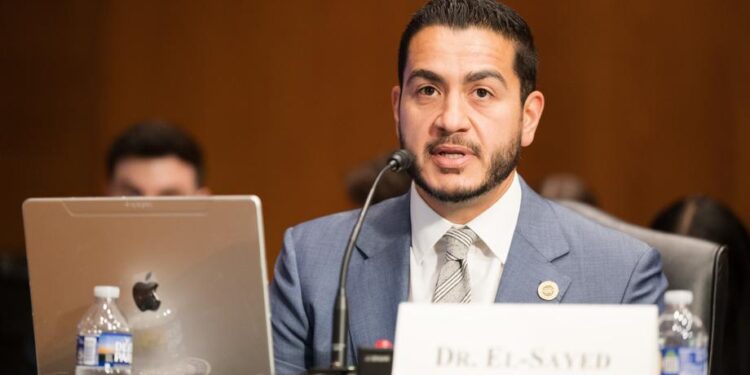
President Donald Trump is once again making headlines with his outspoken criticism of Democratic candidates, this time targeting Michigan Senate hopeful Abdul El-Sayed and the voters considering supporting him.
With the 2026 midterm elections approaching, Trump has intensified his campaign efforts on behalf of Republican candidates, including former Congressman Mike Rogers, who is competing against El-Sayed in Michigan’s closely watched Senate race.
During a recent campaign appearance, Trump suggested that Black and Jewish voters supporting El-Sayed were making an unwise political decision. His remarks quickly sparked controversy, drawing attention to the president’s confrontational campaign style and raising questions about how far political leaders should go when criticizing voters.
Trump has repeatedly expressed concerns about El-Sayed’s political positions, particularly regarding Israel, national security, and American foreign policy. The president has portrayed the Democratic nominee as someone whose views would be harmful to the country.
El-Sayed, a former Detroit health official, has rejected accusations linking him to extremist organizations. His supporters argue that Trump is using personal attacks to distract voters from issues such as healthcare, inflation, housing affordability, and economic opportunity.
Republicans backing Rogers, meanwhile, emphasize experience, national security, border enforcement, and maintaining a strong American presence on the international stage.
The controversy highlights a broader question about political campaigning in America. Should a sitting president use unusually direct language to warn voters against candidates he considers dangerous, or do such remarks risk alienating Americans who may simply disagree with his political preferences?
Trump’s supporters often appreciate his willingness to speak without the careful language traditionally associated with politicians. Critics argue that questioning the intelligence of voters crosses an unnecessary line.
As Americans prepare to make their decisions in the midterm elections, the exchange has become another example of the sharp divisions surrounding the president’s political influence.
The outcome in Michigan could have significant implications for the balance of power in Washington and the direction of national policy.