
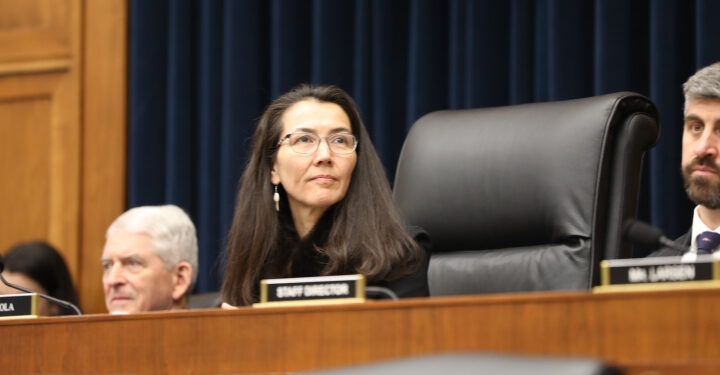
A closely watched U.S. Senate election in Alaska has taken an unexpected turn after Democratic candidate Mary Peltola’s campaign filed a lawsuit against state election officials, raising new questions about absentee ballots, election transparency, and the handling of votes in one of the nation’s tightest political contests.
The legal challenge comes as Republican Sen. Dan Sullivan fights to retain his seat following the November 3 midterm elections.
With the candidates separated by only a few hundred votes and thousands of additional ballots awaiting processing, the dispute could become an important development in determining Alaska’s next U.S. senator.
Democrat Files Lawsuit Over Alaska Election
Peltola’s campaign filed its lawsuit Friday, November 6, seeking immediate access to records involving absentee ballots that election officials have rejected or questioned.
The lawsuit targets the Alaska Division of Elections, Elections Director Carol Beecher, and Republican Lt. Gov. Nancy Dahlstrom, whose office oversees state elections.
According to the legal filing, Peltola’s campaign wants information identifying voters whose absentee ballots have been rejected, along with explanations for those decisions.
The campaign argues that without this information, it cannot adequately determine whether eligible voters are being prevented from participating in the final election results.
Campaign representatives previously requested the records under Alaska’s public records law but were denied access.
Now, with the election still undecided, Peltola’s legal team is asking a judge to intervene.
The lawsuit does not establish that any ballots were improperly rejected. Instead, the campaign is seeking access to records it believes are necessary to investigate potential voting problems.
Alaska Election Officials Refuse To Release Records
Alaska election authorities are pushing back against the lawsuit, arguing that the requested information is preliminary and should remain protected while ballots are being processed.
The Alaska Department of Law maintains that state officials are not legally required to release these records before the election review process is complete.
Officials also warn that providing the information prematurely could interfere with election operations and create additional work for personnel responsible for counting votes.
Under existing procedures, authorized election observers may examine certain records under confidentiality agreements. However, the state does not permit campaigns to obtain and retain copies of those preliminary documents.
Election officials say some initial ballot decisions can change as additional information becomes available.
That distinction is important because a ballot initially questioned during the review process is not necessarily permanently disqualified.
The state maintains that releasing incomplete information could create confusion before final determinations are made.
The dispute now places election transparency and voter privacy at the center of an increasingly contentious Senate race.
Republican Senator Battles For Political Survival
Republican Sen. Dan Sullivan is facing one of the toughest challenges of his political career as Peltola attempts to win his Senate seat.
As of November 7, Peltola held a narrow advantage of slightly more than 600 first-choice votes, according to the available election returns.
However, the race remains far from settled.
Thousands of absentee and early votes have yet to be counted, and Alaska’s unique geography can make the process more complicated than in many other states.
Numerous communities are accessible primarily by aircraft or boat, meaning election materials can take additional time to reach counting locations.
Alaska also permits certain absentee ballots to arrive after Election Day, provided they satisfy the state’s legal requirements.
These outstanding votes could potentially change which candidate leads once the counting process is completed.
For Sullivan, the remaining ballots provide an opportunity to overcome Peltola’s narrow advantage.
For Peltola, preserving her lead will depend on the final vote count and Alaska’s ranked-choice voting procedures.
Ranked-Choice Voting Adds Another Complication
Alaska’s election system differs from the traditional voting methods used in most states.
Under ranked-choice voting, residents can rank multiple candidates according to their preferences.
If no candidate wins a majority of first-choice votes, the candidate with the fewest votes is eliminated, and ballots listing that candidate first may be transferred to the next eligible choice.
This process continues until a winner is determined under the state’s election rules.
That means a candidate who initially trails in first-choice votes could potentially win after additional rounds of tabulation.
The procedure has attracted considerable attention from Republicans and Democrats, particularly in close elections where second-choice preferences may determine the final outcome.
Sullivan’s campaign has argued that the ranked-choice process could ultimately favor the Republican incumbent.
However, that projection remains a campaign assessment rather than an official election result.
With numerous ballots still outstanding, neither campaign can confidently declare victory.
Election Integrity Becomes Central Issue
The lawsuit has also brought renewed attention to election integrity, a major concern among voters across the country.
For many Americans, confidence in elections depends on consistent rules, accurate vote counting, transparency, and the protection of legitimate ballots.
Peltola’s campaign maintains that access to rejected-ballot information is necessary to determine whether qualified voters are being excluded.
State officials counter that existing election procedures already provide safeguards and that releasing incomplete records could disrupt the counting process.
Both positions raise important questions about how elections should be administered.
How much information should political campaigns receive before election results are finalized?
Should preliminary ballot decisions remain confidential until election officials complete their reviews?
And how can election authorities provide meaningful transparency while protecting sensitive voter information?
These questions extend beyond Alaska and could influence discussions about election administration in other states.
At this stage, there has been no court finding that Alaska election officials improperly rejected ballots in the Senate contest.
Separate Legal Fight Adds To Election Uncertainty
The absentee ballot lawsuit comes amid another controversy surrounding Alaska’s Senate election.
A separate legal challenge involving the Trump administration focused on the appearance of two candidates with similar names on the ballot.
Republican incumbent Dan S. Sullivan faced an unusual situation because another candidate, Daniel J. Sullivan Jr., also appeared in the election.
The Justice Department argued that the similar names could confuse voters and potentially affect the outcome.
Federal officials sought judicial intervention concerning certification of election results that might be influenced by that confusion.
A federal judge dismissed the case on November 1, but the administration subsequently appealed the decision.
The controversy has added to concerns surrounding an election in which relatively small changes in vote totals could prove significant.
Although the two lawsuits involve different legal questions, both demonstrate how closely the Alaska Senate race is being scrutinized.
When Will Alaska’s Election Be Decided?
Alaska election officials are continuing to process outstanding ballots, including absentee votes that qualify for counting under state law.
The state’s ranked-choice tabulation is scheduled for November 18, with certification expected on November 25.
Until then, both campaigns will be watching the remaining vote totals closely.
The outcome of Peltola’s lawsuit could determine whether her campaign receives additional information about questioned or rejected absentee ballots before certification.
It does not automatically change any votes or establish that the state’s election procedures were improper.
For Sullivan, the immediate challenge remains overcoming his Democratic opponent’s narrow first-choice lead.
For Peltola, the focus is on maintaining her advantage while pursuing additional election records through the courts.
Alaska Senate Race Remains Unresolved
The latest legal development has turned an already competitive Senate election into a broader dispute involving ballot procedures, transparency, and the responsibilities of state election officials.
Republicans hoping to see Sullivan retain his seat will be closely monitoring the remaining votes and the ranked-choice tabulation.
Democrats, meanwhile, will be watching whether Peltola can hold her narrow lead and whether her legal challenge succeeds.
The final outcome could affect Alaska’s representation in Washington and add another chapter to the national debate over election administration.
For now, one thing remains clear: Alaska’s Senate race is not finished, and the legal battle over absentee ballot records has added another layer of uncertainty to an already closely contested election.