
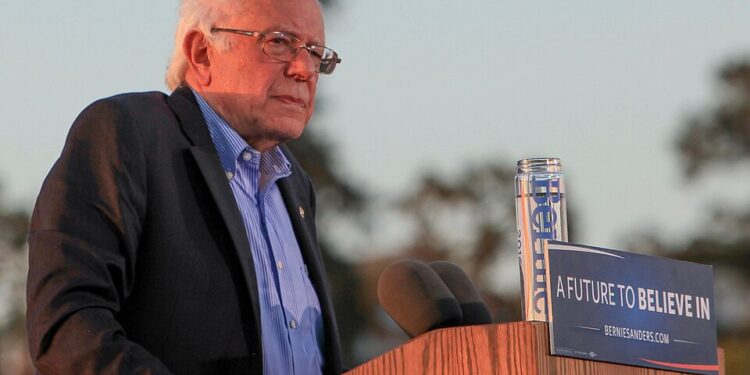
Sen. Bernie Sanders has delivered a surprising criticism of his fellow Democrats, finding himself in rare agreement with President Donald Trump over a controversial election strategy in Alaska.
The Vermont independent, who regularly sides with Democrats in Congress, publicly criticized efforts to influence Alaska’s U.S. Senate race by placing additional candidates on the ballot.
His remarks came as questions continued to surround an unusual election controversy involving two candidates with nearly identical names.
With the November 3 midterm elections approaching, the dispute has attracted national attention and raised concerns about voter confusion, campaign tactics, and election integrity.
Bernie Sanders Blasts Democratic Election Strategy
During a November 1 appearance on CBS’s “Face the Nation,” Sanders was questioned about reports that Democratic operatives had attempted to influence Alaska’s Senate election by recruiting additional candidates.
The strategy reportedly included finding another candidate named Dan Sullivan to compete against Republican Sen. Dan Sullivan, who is seeking reelection.
Sanders offered a sharp assessment of the situation.
“What the Democrats did in Alaska seems to me to be pretty dumb,” Sanders said.
The criticism was particularly notable coming from a politician who has spent years working alongside Democrats and challenging Republican priorities.
However, Sanders stopped short of accusing anyone of committing a crime.
He explained that similar political strategies have been used in other elections and argued that such tactics are not inherently illegal.
His comments nevertheless placed him on the same side as Trump in criticizing the reported Democratic maneuver, even though the two leaders disagreed about how the controversy should be handled.
Trump Raises Concerns About Alaska Senate Election
President Trump has repeatedly expressed concerns about the Alaska Senate contest, arguing that the presence of two candidates named Sullivan could mislead voters.
The controversy centers on Republican incumbent Dan S. Sullivan and another candidate, Daniel J. Sullivan Jr., a retired teacher who qualified for the general election ballot.
Although both men have different backgrounds and political positions, their similar names have generated questions about whether voters might mistakenly select the wrong candidate.
A New York Times investigation reported that individuals connected to Democratic political operations had explored ways to recruit additional candidates who might draw support away from the Republican incumbent.
The report described discussions involving political operatives and individuals associated with Democratic candidate Mary Peltola’s campaign.
Peltola has denied participating in the reported recruitment effort.
The situation has become a major political issue because Alaska’s Senate race could help determine which party controls the chamber after the midterm elections.
Federal Judge Rejects Trump Administration Lawsuit
The controversy has also reached the federal courts.
The Trump administration’s Justice Department filed a lawsuit seeking to address concerns about votes cast for the second Sullivan and the possibility of voter confusion affecting the election results.
On November 1, U.S. District Judge Sharon Gleason dismissed the lawsuit.
The judge determined that the federal government lacked standing to pursue its requested intervention and raised concerns about protecting the secrecy of individual ballots.
The Justice Department said it intended to appeal the ruling.
Meanwhile, Alaska officials have maintained that the state has procedures designed to administer the election and distinguish between the candidates.
The legal setback did not settle the broader political disagreement over the reported ballot strategy.
Republicans continue to question whether voters could be misled, while Democrats have disputed allegations of wrongdoing.
Sanders Disagrees With Trump’s Proposed Response
Although Sanders criticized the reported Democratic strategy, he did not support the Trump administration’s approach to the controversy.
During the CBS interview, Sanders argued that election administration should remain primarily a state responsibility.
He also criticized Trump’s record of disputing the outcome of the 2020 presidential election.
Sanders maintained that Alaska voters and state authorities should determine how the election proceeds.
That distinction underscores the limited nature of his agreement with Trump.
Both politicians criticized the reported election tactic, but Sanders rejected the suggestion that the federal government should intervene in the manner sought by the administration.
The Vermont senator also pointed to an Ohio Senate race in which he said Republican-aligned political spending appeared designed to benefit a candidate who could draw votes away from Democrat Sherrod Brown.
Sanders argued that both political parties have engaged in questionable election strategies.
Alaska’s Ranked-Choice Voting System Adds Another Complication
Alaska’s election rules have attracted additional attention because the state uses ranked-choice voting.
Under this system, voters can rank candidates in order of preference rather than selecting only one candidate.
If no candidate receives a majority of first-choice votes, the lowest-performing candidate is eliminated, and eligible ballots are transferred to voters’ next preferred candidates.
The process continues until a candidate secures a majority of the votes remaining in the count.
Supporters argue that ranked-choice voting gives Americans more choices and can produce winners with broader electoral support.
Critics contend that the system introduces additional complexity, particularly when several candidates appear on the ballot.
In the Alaska Senate race, the presence of two candidates with similar names has brought those concerns into the national spotlight.
However, Alaska election officials have defended the ballot’s design, which identifies the Republican incumbent separately from the other Sullivan.
Democrats Face Political Pressure Before Midterms
The controversy arrives at a critical time for Democrats as they attempt to gain ground in the Senate.
Mary Peltola, a former member of the U.S. House, is challenging Republican incumbent Dan Sullivan in a race receiving significant national attention.
The New York Times report about the ballot strategy has created an additional challenge for Democrats during the final days of campaigning.
Republicans have used the allegations to question the party’s election tactics, while Democratic officials have pushed back against suggestions that the reported conduct establishes criminal wrongdoing.
Even some Democrats have expressed discomfort with the strategy.
Rep. Jamie Raskin of Maryland also criticized the reported approach, describing it as poor political judgment while noting that candidates with similar names have appeared in other elections.
The disagreement highlights a broader issue facing both parties: how far political campaigns should go when attempting to gain an electoral advantage.
What Sanders’ Comments Mean for the Election
Sanders’ remarks are significant because they show that criticism of the Alaska ballot controversy extends beyond Republican circles.
While the senator remains a prominent critic of Trump, he was willing to challenge a reported Democratic strategy that he considered inappropriate.
At the same time, Sanders emphasized that questionable political tactics should not automatically be treated as criminal activity.
Republican Sen. Dan Sullivan has said he expects the presence of the other Sullivan to cost him votes. Nevertheless, he has also stated that he intends to accept the election results.
With Election Day just days away, the controversy remains unresolved politically, even as courts have addressed some of the legal questions.
The Alaska Senate race now carries implications beyond the candidates themselves, including debates over election administration, voter confidence, and the strategies employed by national political organizations.
For Sanders, the issue provided an unusual opportunity to criticize Democrats while agreeing with Trump on at least one central point: the reported ballot maneuver was a bad idea.
Whether the controversy ultimately influences Alaska voters remains to be seen, but it has already become one of the more unusual political disputes of the 2026 midterm elections.