
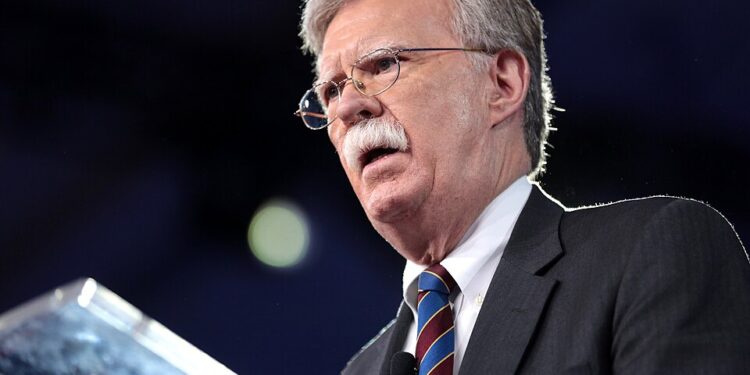
Former National Security Adviser John Bolton made a surprising admission this week about President Donald Trump and the ongoing standoff with Iran, claiming the Iranian regime believes it has found a way to pressure the White House.
According to Bolton, Tehran thinks rising oil prices and economic concerns could eventually force the Trump administration into making concessions.
The remarks come as tensions in the Middle East remain high and negotiations between the United States and Iran appear increasingly uncertain.
Speaking on NewsNation’s The Hill, Bolton argued that Iran’s leaders believe they can simply wait out President Trump.
“I think the regime in Iran believes it can outlast Trump,” Bolton said. “They think they have more patience than he does because he’s so determined to get oil prices down.”
The former national security adviser suggested that Iranian officials view energy prices as one of their strongest bargaining tools.
Iran Believes Economic Pressure Could Change Trump’s Calculations
Bolton’s comments point to a growing concern among foreign policy observers that Tehran may be betting on economic pressure rather than military confrontation.
With oil prices remaining a key issue for consumers, any disruption to global energy supplies can quickly affect gasoline prices, transportation costs, and overall inflation.
Bolton believes Iran understands this reality and may be attempting to use it to gain leverage.
He also claimed that Iran has expanded the dispute by tying developments in Lebanon to ongoing negotiations with Washington.
According to Bolton, the Iranian regime believes additional regional pressure points could increase the likelihood of concessions from the United States.
Negotiations Suddenly Hit Turbulence
The comments come after reports emerged that discussions between Washington and Tehran had hit a major obstacle.
Iranian state media reported that the government suspended talks following Israeli military operations against Hezbollah targets in Lebanon.
Iranian officials argued that any ceasefire agreement must apply across the region and not solely to direct U.S.-Iran relations.
Foreign Minister Abbas Araghchi warned that violations involving Iranian-backed groups could affect the broader understanding between the two countries.
The developments have raised new questions about whether a lasting agreement can be reached.
The Strait of Hormuz Remains a Major Concern
At the center of the dispute is the Strait of Hormuz, one of the world’s most important energy corridors.
A significant portion of the world’s oil supply passes through the narrow waterway each day.
During the conflict, disruptions to shipping traffic created fears of supply shortages and pushed energy markets higher.
The uncertainty surrounding the strait has become a major concern for investors, businesses, and consumers alike.
Reports indicated that negotiators had discussed reopening the shipping route as part of a broader agreement.
Such a move could help stabilize energy markets and ease concerns about rising fuel costs.
Americans Continue Watching Gas Prices Closely
For many Americans, especially retirees and families living on fixed incomes, gas prices remain one of the most visible signs of economic health.
Even small increases at the pump can have a ripple effect throughout the economy.
That reality may explain why Bolton believes Iran sees energy prices as a potential source of leverage.
Supporters of President Trump argue that maintaining a firm stance against Iran is necessary to protect American interests and prevent the regime from gaining additional influence throughout the region.
They also point out that any perception of weakness could encourage further aggression from America’s adversaries.
Trump Rejects Claims That Talks Have Ended
Despite reports of a breakdown in negotiations, President Trump indicated that discussions are still moving forward.
When asked about reports that Iran had suspended talks, Trump said he was not aware of any official halt in negotiations.
Later, the president pushed back directly against the reports on Truth Social.
Trump later stated on Truth Social that discussions between Washington and Tehran were still moving forward and progressing quickly.
The statement offered reassurance to supporters who are closely monitoring developments in the Middle East.
What Happens Next Could Impact More Than Foreign Policy
The outcome of the U.S.-Iran negotiations could have consequences far beyond the Middle East.
Energy prices, inflation, global markets, and America’s national security interests could all be affected by what happens in the coming weeks.
Bolton’s unusual assessment highlights what may be one of the biggest challenges facing the administration: preventing foreign adversaries from using economic pressure as a negotiating weapon.
For now, the Trump administration insists talks remain active. Whether diplomacy succeeds or tensions escalate further may determine not only the future of U.S.-Iran relations, but also the direction of energy prices and economic stability heading into the months ahead.