
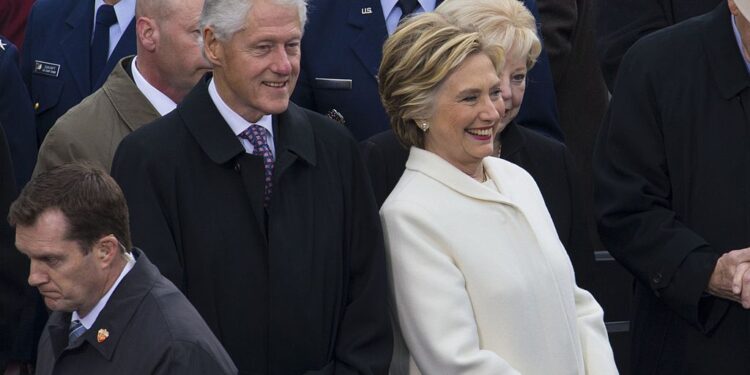
A Republican-led House committee has taken a rare and highly controversial step by advancing contempt of Congress resolutions against former President Bill Clinton and former Secretary of State Hillary Clinton, escalating a politically charged investigation tied to convicted sex offender Jeffrey Epstein.
The House Oversight Committee voted Wednesday to move the contempt recommendations forward after both Clintons declined to comply with congressional subpoenas requesting testimony. The resolutions now head to the full House, where lawmakers will decide whether to proceed further.
While Republicans largely supported the action, several Democrats broke ranks and joined the GOP, citing concerns about accountability and transparency—an unusual move given the high-profile Democratic figures involved.
Bipartisan Votes Raise Stakes
In committee votes, lawmakers advanced a contempt finding against Bill Clinton by a margin of 34–8, while two members abstained. A second resolution aimed at Hillary Clinton passed 28–15, with one lawmaker recording a “present” vote.
Nine Democrats voted with Republicans to support the contempt recommendation against Bill Clinton, while three Democrats joined the GOP in advancing the measure against Hillary Clinton—signaling internal divisions within the Democratic Party over how the Epstein investigation should proceed.
Why the Contempt Votes Matter
The contempt resolutions stem from the Clintons’ refusal to provide in-person testimony related to Epstein, who died in federal custody in 2019 while awaiting trial on sex-trafficking charges involving underage girls.
If the full House approves the resolutions, the matter would be referred to the Justice Department. While contempt of Congress cases are uncommon and legally complex, penalties can include fines or potential jail time if charges are pursued and convictions secured.
Oversight Committee Chairman James Comer said the committee exhausted other options before moving forward.
“Subpoenas are not optional,” Comer said during the hearing. “They carry the force of law, and no one is above it.”
Epstein Investigation Fuels Public Pressure
Lawmakers say the investigation is focused on how Epstein managed to avoid accountability for years and whether powerful individuals received special treatment. Court records and flight logs have documented Epstein’s associations with numerous high-profile figures across politics, business, and entertainment.
Both Bill Clinton and Donald Trump have appeared in Epstein-related records, though neither has been accused of criminal wrongdoing.
The Clintons argue the subpoenas are legally flawed and lack a clear legislative purpose. Their representatives say the couple has attempted to cooperate through written responses while disputing Congress’s authority to compel testimony from a former president.
Negotiations Collapse Behind Closed Doors
According to committee officials, Clinton attorney David Kendall proposed potential testimony dates later this year, including around the Christmas holiday. The committee rejected the proposal.
Chairman Comer also declined an offer for a private interview with Bill Clinton, insisting that any testimony must be conducted as a formal, transcribed deposition.
“You can’t have accountability without a record,” Comer said. “No transcript, no deal.”
Democrats Split as Accountability Debate Grows
Several Democrats avoided directly defending the Clintons, instead calling for broader transparency in the Epstein case. Some criticized Republicans for focusing on the Clintons while the Justice Department remains behind schedule in releasing Epstein-related documents.
The committee has also subpoenaed Epstein associate Ghislaine Maxwell, who is currently serving a federal prison sentence. Comer said the panel plans to question Maxwell soon, while Attorney General Pam Bondi is expected to testify before Congress in the coming weeks.
As frustration grows among the public—especially older Americans who have watched decades of political scandals unfold—the investigation continues to place elite political figures under intense scrutiny.
For many voters, the message from Congress is clear: this time, even the most powerful names in Washington may not be immune from oversight.