
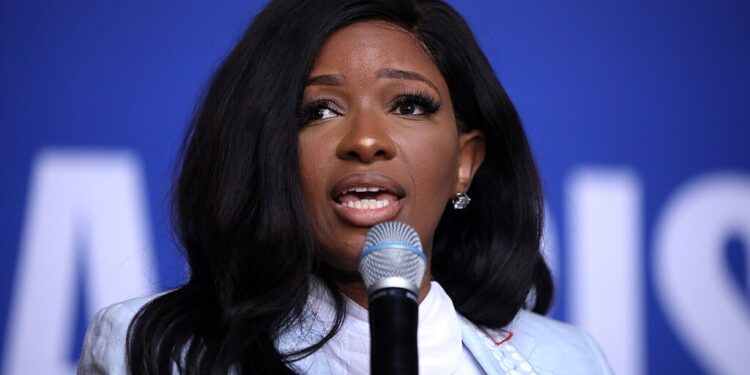
Rep. Jasmine Crockett reacted angrily after comments from Vice President J.D. Vance at a major conservative conference drew national attention and sparked backlash from Democrats and left-leaning media outlets.
Speaking before thousands of young conservatives at Turning Point USA’s AmericaFest, Vance referenced Crockett’s political ambitions and public image, suggesting her record—not her persona—should be the focus of voters. His remarks were met with applause from the audience but quickly ignited criticism from progressive commentators.
The controversy escalated during an appearance on The Weekend Primetime, where MSNBC host Antonia Hylton implied Vance’s comments carried a deeper meaning and invited Crockett to respond.
Crockett did not hold back. She defended her background, education, and career, arguing that critics deliberately ignore her credentials. Rather than focusing on policy differences, she accused Republicans of resorting to personal attacks when they feel politically threatened.
The Texas Democrat also suggested Vance’s comments were an attempt to undermine her rumored Senate ambitions in a state that has remained firmly Republican at the statewide level for decades. She insisted she would welcome a policy debate—once conservatives could point to proposals she believes benefit Texans.
Instead of addressing criticism of her legislative record, Crockett framed the exchange as part of a broader pattern she claims she has faced throughout her life. She predicted that the controversy would not slow her political ascent and expressed confidence about her future ambitions.
For many conservatives, the episode reinforced a familiar dynamic in Washington: sharp rhetoric from Republicans is met with outrage, while substantive policy debates are often sidelined. Supporters of Vance argue his remarks reflected voter frustration with political branding and messaging, not personal attacks.
As the 2028 political landscape begins to take shape, moments like this highlight the growing cultural and ideological divide between grassroots conservatives and progressive Democrats—one that continues to energize Republican audiences nationwide.