
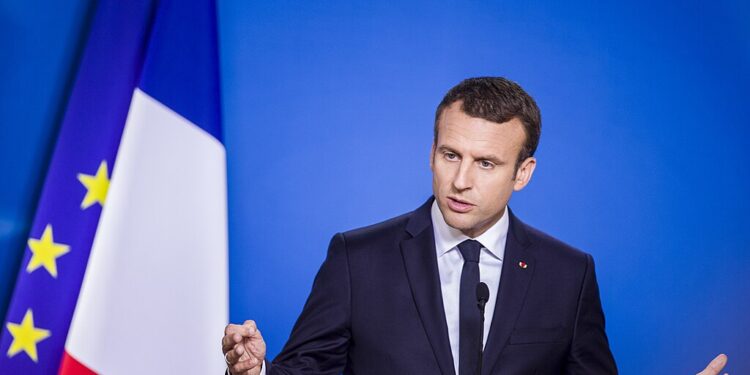
French President Emmanuel Macron issued a rare and direct rebuke following the joint U.S.–Israel military strike on Iran, warning that the growing confrontation presents serious risks to global stability.
The operation, ordered under President Donald Trump, has triggered diplomatic fallout across Europe as leaders weigh the implications for regional security, energy markets, and the future of Iran’s nuclear program.
Macron Warns of “Dangerous Escalation”
In a public statement, Macron described the situation as increasingly volatile and urged all sides to avoid further military escalation.
“The ongoing escalation is dangerous for all. It must stop,” he stated.
The French president emphasized that Iran must return to serious negotiations, particularly regarding its nuclear development, ballistic missile capabilities, and involvement in regional conflicts. According to Macron, long-term peace in the Middle East depends on dismantling these programs and restoring diplomatic dialogue.
France Calls for Emergency U.N. Security Council Meeting
France formally requested an emergency session of the United Nations Security Council, signaling Europe’s preference for diplomacy over sustained military operations.
In a joint statement signed by Macron, British Prime Minister Keir Starmer, and German Chancellor Friedrich Merz, the three leaders urged Tehran to resume negotiations immediately.
The statement clarified that the United Kingdom, France, and Germany did not participate in the strikes but remain in contact with the United States, Israel, and regional partners.
European officials reiterated their commitment to:
- Regional stability
- Protection of civilian populations
- Preventing a broader Middle East war
United Kingdom Deploys Defensive Forces
Prime Minister Starmer confirmed that British aircraft are currently active in the region in what he described as coordinated defensive operations.
“Our forces are active, and British planes are in the sky today as part of coordinated regional defensive operations to protect our people, our interests, and our allies,” Starmer said.
He called on Iran to halt retaliatory actions and take the first step toward renewed diplomatic talks.
Iran Responds With Regional Strikes
In response to the U.S.–Israel operation, Iran launched missiles and drones targeting Israel and multiple American military installations across the region, including bases in Qatar, Kuwait, the United Arab Emirates, and Bahrain.
These retaliatory strikes have intensified concerns among European governments that the confrontation could widen into a larger regional conflict — a scenario that could disrupt global energy markets and further destabilize the Middle East.
President Trump Defends Operation Against Iran
President Donald Trump defended the strike as a decisive move aimed at crippling Iran’s military infrastructure and preventing further nuclear advancement.
He also addressed the Iranian people directly, urging them to consider their nation’s future.
“This will be probably your only chance for generations,” Trump said, referencing the opportunity for political change.
Supporters of the administration argue that strong deterrence is necessary to prevent Iran from advancing its nuclear capabilities and threatening U.S. allies in the region. Critics in Europe, however, worry that the move risks triggering broader instability if diplomatic channels fail.
What Happens Next?
As tensions rise, global leaders face a critical question: will diplomacy regain control, or will military actions continue to escalate?
Financial markets, defense analysts, and international policymakers are closely watching developments, aware that the outcome could reshape Middle East geopolitics for years to come.