
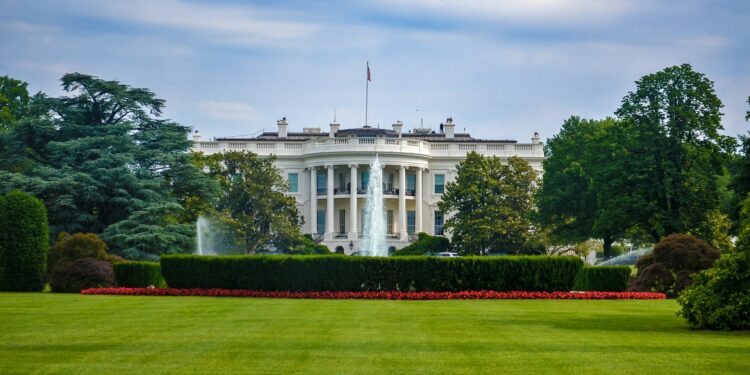
A growing divide inside the Republican Party is coming into focus after a new congressional proposal surfaced that would sharply restrict President Donald Trump’s executive authority—an effort critics say could undermine the presidency at a critical moment for U.S. national security.
The legislation follows President Trump’s recent military operation that resulted in the capture and removal of Venezuelan leader Nicolás Maduro, a move praised by many conservatives as decisive leadership but questioned by others over congressional involvement.
Republicans Break Ranks After Venezuela Operation
The Trump administration’s action in Venezuela was carried out swiftly and without advance notice to congressional leaders. Supporters say the operation restored order and protected American interests in the region.
However, some lawmakers from both parties quickly raised concerns about presidential authority and the limits of executive power—setting the stage for renewed debate over who controls U.S. military decisions.
New House Bill Targets Executive Orders
On Tuesday, Republican Rep. Mike D. Rogers introduced H.R. 6971, a bill that would require Congress to approve “major” executive orders and federal regulations before they could take effect.
The proposal is now under review by four House committees and represents a significant attempt to shift power away from the White House and back to Congress.
Supporters argue the measure strengthens constitutional checks and balances. Opponents warn it could cripple a president’s ability to act quickly during foreign crises or national emergencies.
Senate Moves to Limit Trump’s War Powers
At the same time, the U.S. Senate advanced a bipartisan War Powers Resolution designed to restrict President Trump’s ability to authorize additional military action against Venezuela without explicit congressional approval.
The vote passed 52–47, with all Democrats joined by five Republicans, including Rand Paul and Josh Hawley.
If enacted, the resolution would require Congress to approve any future deployment of U.S. forces in or against Venezuela.
Trump Responds: “This Weakens America”
President Trump reacted strongly on Truth Social, warning that the vote “greatly hampers American self-defense and national security.”
He called the resolution unconstitutional and criticized Republicans who sided with Democrats, arguing that the presidency must retain authority to act decisively in dangerous situations.
What the Constitution Actually Says
Under Article I of the Constitution, Congress has the power to declare war and approve long-term military engagements. At the same time, Article II designates the president as Commander in Chief, allowing limited or emergency military actions without prior approval.
The War Powers Resolution of 1973 attempts to balance these roles by requiring notification within 48 hours and limiting unauthorized deployments to 60 days.
Legal experts note that past presidents from both parties have exercised similar authority during international crises.
Do Executive Orders Require Approval?
Executive orders do not require congressional approval and have been used by every modern president. However, they must be grounded in existing law or constitutional authority.
The Supreme Court ruled in Youngstown Sheet & Tube Co. v. Sawyer that presidents cannot override federal law or seize private property without congressional authorization.
Congress retains the ability to block executive actions through legislation, while courts can invalidate orders that exceed legal authority.
GOP Leadership Pushes Back
House Speaker Mike Johnson defended President Trump’s leadership, saying decisive action sends a powerful message to hostile regimes and terrorist organizations worldwide.
Johnson emphasized that America’s strength relies on a president capable of acting quickly when threats emerge.
What Happens Next
The Senate resolution now heads toward a final vote and would still need approval from the House of Representatives. Even if it passed, it would require President Trump’s signature—an outcome widely viewed as unlikely.
Meanwhile, H.R. 6971 faces a difficult path through committee hearings, with Republican leadership and the White House signaling strong opposition.
As global tensions continue to rise, debates over presidential authority, executive power, and congressional oversight are expected to intensify—putting internal GOP divisions under a brighter spotlight in the weeks ahead.