
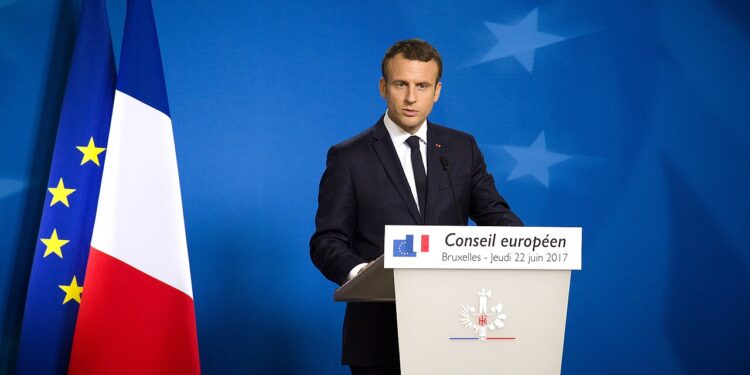
French President Emmanuel Macron is facing backlash after President Donald Trump delivered a blunt and highly public critique—fueling tensions between the United States and key European allies.
The clash comes at a time of rising global instability, with President Trump doubling down on his America First foreign policy and demanding stronger support from NATO partners.
Trump Calls Out Macron and NATO Weakness
During a private White House gathering, President Trump reportedly mocked Macron and criticized France’s lack of involvement in the ongoing conflict involving Iran.
According to international reports, Trump questioned France’s commitment to global security and took aim at what many conservatives have long viewed as Europe’s failure to pull its weight in NATO.
The president also voiced frustration over France’s refusal to allow military flights carrying supplies to Israel to pass through its airspace—calling the move “VERY UNHELPFUL.”
For millions of Americans, especially those who remember stronger allied cooperation, the message was clear:
America should not stand alone while others sit on the sidelines.
Macron Responds—But Refuses to Engage
While traveling overseas, Macron responded to the controversy but stopped short of directly confronting President Trump.
He described Trump’s remarks as “not appropriate” and “beneath the standard expected between allies,” signaling clear frustration.
However, Macron also insisted the comments were not worth responding to further—raising eyebrows among critics who see the response as weak leadership during a time of global crisis.
Israel Takes Action Against France
The situation escalated quickly.
In a major development, Israel announced it would cut off all defense-related purchases from France, citing concerns over national security and reliability.
Israeli officials confirmed they will now shift toward domestic production and trusted allied partners—marking a significant blow to France’s defense industry.
This move sends a strong message:
Allies who fail to stand together may face real consequences.
A Growing Divide Between the U.S. and Europe
President Trump has made it clear that the United States will no longer tolerate unequal partnerships.
For years, he has warned that NATO allies must contribute more—not just financially, but strategically and militarily.
This latest dispute with France highlights a broader shift:
- The U.S. demanding accountability
- European leaders resisting pressure
- Global alliances being reshaped in real time
Why This Matters for Americans
For older Americans especially, this moment echoes a deeper concern about leadership, strength, and global respect.
Many are asking:
- Should the U.S. continue defending countries that won’t support us?
- Is NATO still serving America’s best interests?
- And is President Trump right to demand more from allies?
Bottom Line
President Trump’s direct approach is once again putting America’s allies on notice.
Whether critics like Macron approve or not, the message is unmistakable:
The days of one-sided alliances may be coming to an end.