

Yes
I do.
No
I don’t.
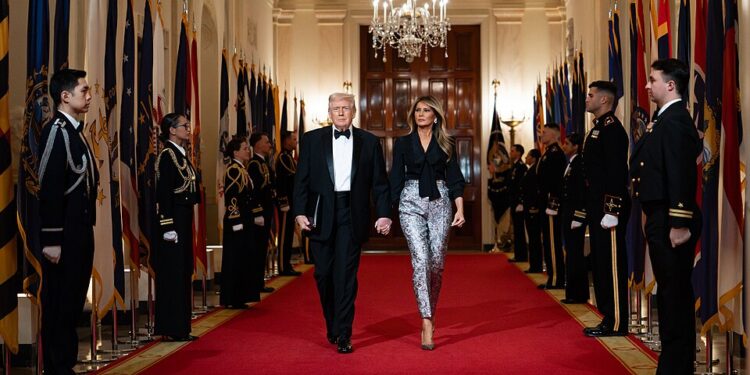
President Donald Trump and first lady Melania Trump have spent years living under an extraordinary level of public scrutiny, and their marriage has frequently become a subject of political commentary, tabloid speculation and social-media debate.
Now, claims and speculation about tension between the president and first lady are once again attracting attention.
Political opponents and online commentators sometimes point to photographs, video clips or public appearances as supposed evidence that something is happening behind the scenes. Trump supporters frequently dismiss these interpretations, arguing that critics are attempting to turn ordinary moments between a married couple into a political controversy.
The important question is whether the public actually has enough reliable information to reach a conclusion.
Short video clips and individual photographs can be interpreted in dramatically different ways depending on the viewer. A facial expression lasting only a second can generate thousands of social-media comments, even though viewers have little or no knowledge of what happened immediately before or after the moment captured on camera.
That is particularly true for presidents and first ladies, whose public interactions are photographed constantly.
Melania Trump has long maintained a comparatively private public profile and has not always approached the traditional first lady role in the same manner as some of her predecessors. That has sometimes fueled speculation about her relationship with her husband.
Yet speculation should not be confused with verified information. Unless either President Trump or the first lady publicly addresses a particular claim, outsiders generally have limited ability to know what is occurring privately in their marriage.
That has not stopped the subject from becoming political ammunition. Trump’s critics may interpret certain public moments as evidence of marital tension, while supporters often see the coverage itself as another example of opponents trying to attack the president personally when policy disagreements are not enough.
So where do you stand?