

Yes
They should.
No
They shouldn’t.
Congressional redistricting has become one of the most controversial issues in American politics. After each census, states redraw congressional district boundaries to reflect population changes. In recent years, several states have also considered or approved mid-decade redistricting proposals, leading to legal challenges and intense political debate.
Supporters of new redistricting plans argue that updated maps can better reflect changing populations, protect minority representation, or correct what they view as unfair district boundaries drawn during previous cycles. State officials often contend they are acting within their constitutional authority when adopting new congressional maps.
Critics argue that some redistricting efforts are driven primarily by partisan politics rather than fair representation. Republicans have accused several Democrat-controlled states of attempting to redraw congressional districts to improve Democratic electoral prospects before upcoming elections. Democratic leaders, meanwhile, have made similar accusations against Republican-led states that have adopted or defended their own district maps.
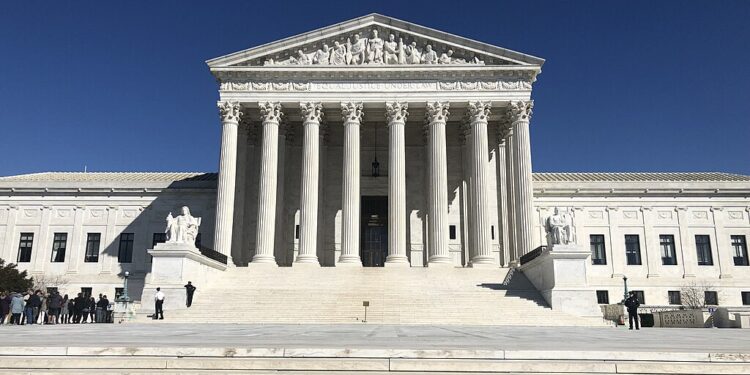
Many of these disputes ultimately reach the courts. The Supreme Court has ruled on numerous redistricting cases over the years involving racial representation, voting rights, and constitutional questions, while also stating that certain partisan gerrymandering claims present political questions beyond the reach of federal courts.
Because each redistricting case involves different state constitutions, legal standards, and factual circumstances, challenges are typically evaluated individually rather than under one universal rule.
As additional lawsuits move through the judicial system, voters continue debating how the courts should handle future redistricting disputes.