

Yes
I do.
No
I don’t.
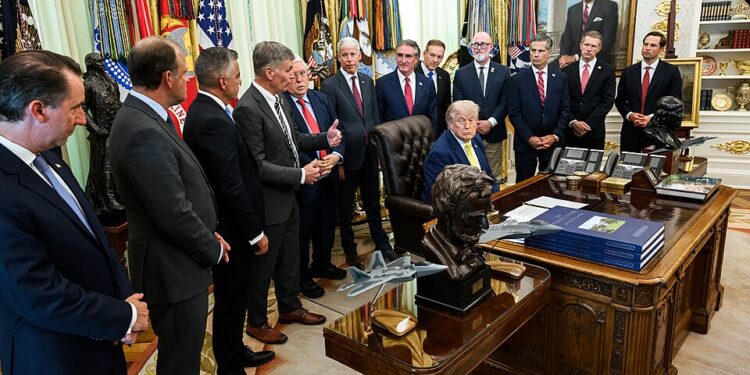
President Donald Trump has reached a new agreement involving Greenland that could substantially expand the United States’ long-term military and security role in the strategically important Arctic region.
Trump announced on September 18, 2026, that the United States had reached an agreement with Denmark and Greenland providing expanded and permanent American security access to the island. Reuters reported that the agreement would increase the U.S. military presence while preventing geopolitical rivals from establishing military bases or making certain sensitive investments in Greenland.
The precise future size of the American military presence has not yet been publicly established, so claims about exactly how many troops or installations will eventually be stationed there should be treated cautiously. The agreement nevertheless represents a potentially significant expansion of America’s strategic footprint in the Arctic.
Greenland occupies an important position between North America and Europe and has become increasingly important as the United States, Russia and China compete for influence in the Arctic.
America already operates Pituffik Space Base in northwest Greenland. The installation supports missile warning, space surveillance and other defense operations. According to a British House of Commons Library briefing citing U.S. Defense Department information, approximately 130 active-duty U.S. service members were permanently assigned to Greenland as of September 2025.
The new agreement builds on military rights dating back decades. Reuters reported that the arrangement draws on the 1951 U.S.-Denmark defense agreement while giving Washington an indefinite security presence. Greenland remains an autonomous territory within the Kingdom of Denmark, and the new arrangement does not transfer sovereignty over the island to the United States.
Supporters of an expanded American presence argue that Greenland’s location makes it increasingly important for missile defense, Arctic surveillance and protecting NATO territory as Russia maintains major military capabilities in the region and China seeks greater Arctic influence.
Critics and skeptics may question how large an American military buildup is necessary, what it will cost taxpayers and how future deployments could affect relations with Denmark, Greenland and other NATO allies.
The agreement places Greenland at the center of a larger national-security discussion: how aggressively should the United States expand its military presence in the Arctic as competition in the region increases?