
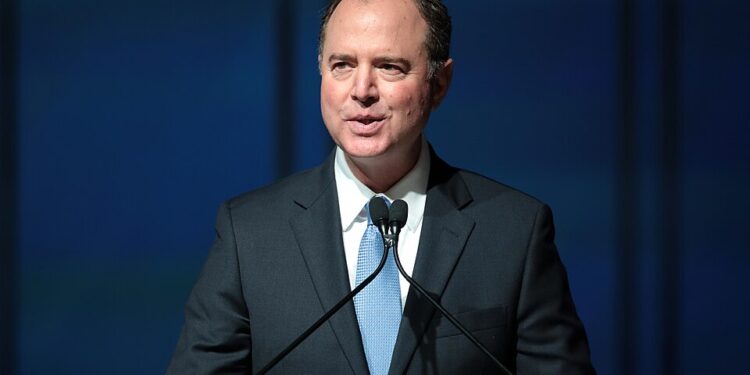
As artificial intelligence rapidly changes America, Senator Adam Schiff is launching a new effort that could limit how President Donald Trump and the U.S. military use one of the world’s fastest-growing technologies.
The California Democrat is introducing legislation that would place new restrictions on artificial intelligence inside the Pentagon, including requiring human approval for certain AI-powered military actions and banning the technology from being used for domestic surveillance.
The proposal is the latest sign that Democrats are moving aggressively to regulate artificial intelligence as concerns grow over national security, privacy, job losses, and the expanding power of major technology companies.
Democrats Push New Limits On AI
According to reports, Schiff’s legislation would require meaningful human involvement in decisions involving AI-assisted weapons systems. The bill would also expand current Pentagon guidelines and establish additional oversight requirements for military uses of artificial intelligence.
Schiff argues that artificial intelligence is no longer a future concern.
“We’re no longer anticipating these impacts. They’re here,” he said, warning that AI could become one of the biggest political issues facing the country in the years ahead.
The senator plans to push for the measure as part of the annual defense authorization package, setting up a potential showdown over how much control Washington should have over emerging technology.
Growing Debate Over National Security
Artificial intelligence has become a major focus for lawmakers, military leaders, and technology executives.
Supporters of increased oversight argue that powerful AI systems could eventually be used for surveillance, cyberattacks, misinformation campaigns, or autonomous weapons without sufficient safeguards.
Critics of additional regulation warn that excessive government restrictions could slow innovation and give strategic advantages to foreign competitors, particularly China.
The debate has intensified following reports that AI company Anthropic sought assurances that its technology would not be used for domestic surveillance or autonomous weapons programs.
Defense officials have maintained that current Pentagon policies already prohibit many of those activities.
Concerns Grow Over Jobs And The Economy
Artificial intelligence is also creating growing concerns about its impact on American workers.
Experts have warned that AI could eventually replace millions of jobs across multiple industries, while businesses continue investing billions of dollars into automation and advanced computing systems.
Lawmakers from both parties have increasingly raised concerns about workforce disruption, rising energy demands from data centers, and the growing influence of large technology companies.
Schiff has previously backed additional AI-related regulations, including proposals requiring companies to disclose copyrighted content used to train AI systems and measures designed to offset infrastructure costs associated with large-scale data centers.
Trump Administration Faces Pressure
Although many Democratic proposals face long odds under President Trump’s administration, the White House has acknowledged the need for some level of oversight as artificial intelligence continues advancing at a rapid pace.
The administration has already taken steps to monitor emerging AI technologies while also seeking to maintain America’s competitive edge in the global race for technological leadership.
That balancing act has created divisions in Washington.
Some lawmakers want stronger regulations before AI becomes even more powerful. Others believe government interference could cripple innovation and weaken America’s position against foreign rivals.
AI Could Become Washington’s Next Major Battle
Artificial intelligence is quickly becoming one of the biggest policy fights in the country.
Democrats are calling for new regulations, oversight measures, and industry safeguards. Republicans and business leaders are warning against policies that could slow economic growth or limit American innovation.
With technology evolving faster than lawmakers can regulate it, the battle over artificial intelligence may soon become one of the defining political issues of the decade.
And Schiff’s latest proposal could be just the beginning.