
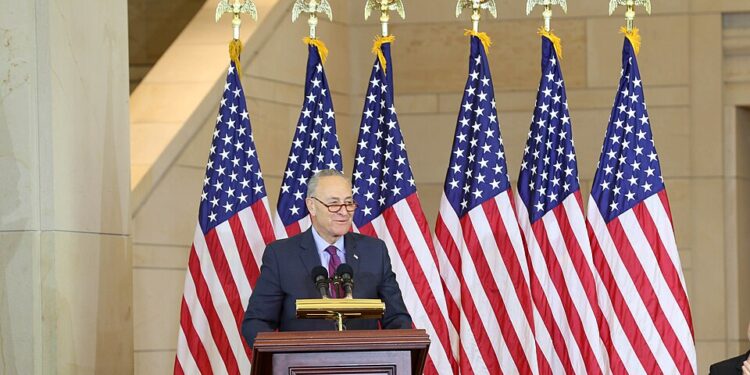
Senate Democratic Leader Chuck Schumer is facing a growing rebellion within his own party, with several newly elected Democrats openly refusing to support him as their next Senate leader.
The unexpected challenge comes just days after Democrats secured major victories in the 2026 midterm elections, reclaiming control of the Senate and positioning themselves to challenge President Donald Trump’s agenda during the final two years of his presidency.
Instead of celebrating their victories with a united front, Democrats are already confronting an uncomfortable question about their future leadership.
And for Schumer, the opposition is coming from some of the same incoming senators whose election victories helped deliver his party’s new majority.
Five Democrats Refuse To Support Schumer
At least five newly elected Democratic senators have indicated they will not support Schumer in the upcoming Senate leadership election.
The group includes Adam Hamilton of Kansas, Troy Jackson of Maine, Abdul El-Sayed of Michigan, Juliana Stratton of Illinois, and Peggy Flanagan of Minnesota.
Their opposition creates a political headache for Schumer, who has led Senate Democrats for more than a decade.
The incoming lawmakers represent different parts of the country, but their objections reflect a broader debate about whether the Democratic Party needs fresh leadership following the midterm elections.
Some believe the party should move away from familiar Washington figures and adopt a more aggressive approach to governing.
Others have questioned whether Schumer is the right person to lead Democrats through another confrontation with the Trump administration.
Although the rebellion does not currently appear large enough to remove him, it demonstrates that Schumer’s position is not universally accepted within his own party.
Schumer Pushes Back Against Leadership Revolt
Despite the public criticism, Schumer has shown little concern about losing his position.
During a Wednesday news conference, the New York Democrat confidently predicted that his colleagues would elect him Senate majority leader when the new Congress takes office.
“I’ll be re-elected as majority leader,” Schumer told reporters.
He also attempted to redirect attention away from the leadership dispute, arguing that Democrats should focus on addressing the concerns of Americans who voted in the midterm elections.
Schumer has good reason to feel confident.
Democrats have secured at least 54 Senate seats, including independents who caucus with the party, and he needs only a majority of his caucus to retain leadership.
While several incoming senators have expressed opposition, many established Democrats continue to support him.
Still, the public criticism represents an early test of his authority at a time when Democrats are preparing to exercise substantially more power in Washington.
Incoming Democrats Demand Political Change
Minnesota Senator-elect Peggy Flanagan has been among those calling for new Democratic leadership.
Following her election victory, Flanagan argued that the results reflected a desire for a different political direction.
She pointed to successful candidates who rejected corporate political action committee contributions and campaigned on promises to deliver major changes in Washington.
Flanagan suggested that the party should respond to that message by reconsidering who leads its Senate majority.
Her position reflects growing pressure from Democrats who believe the party’s leadership should better represent the priorities of its newly elected members.
Michigan Senator-elect Abdul El-Sayed has also indicated opposition to Schumer remaining in charge.
The disagreement illustrates how Democrats entering the Senate with different political backgrounds and priorities could create difficulties for party leaders attempting to maintain unity.
For Schumer, managing those competing expectations could become one of his biggest challenges.
Democrats Face Internal Division After Midterm Victory
The leadership dispute comes at a particularly important moment in American politics.
Democrats emerged from the November 3 midterm elections with control of both the House of Representatives and the Senate.
Their victories significantly changed the balance of power in Washington and created new challenges for President Trump.
However, winning elections and maintaining party unity are two different responsibilities.
Democrats must now decide how to use their congressional majorities while managing disagreements among lawmakers representing states with different political priorities.
Some incoming senators won in traditionally Republican states, where voters may expect a more moderate approach to governing.
Others campaigned on progressive policies and promises to challenge established political institutions.
Those differences could influence everything from federal spending negotiations to immigration policy, government oversight, and presidential appointments.
The dispute surrounding Schumer offers an early glimpse of those potential tensions.
Trump’s Agenda Faces New Congressional Obstacles
The leadership controversy also carries significant implications for the Trump administration.
Beginning in January 2027, Democrats will have greater authority to conduct congressional investigations, oversee federal agencies, and challenge the administration’s legislative priorities.
Control of the Senate will also allow Democrats to determine which presidential nominees receive confirmation votes.
That authority is particularly important when it comes to federal judges and potential Supreme Court vacancies.
Schumer has already indicated that Democrats intend to oppose conservative judicial nominees they consider unacceptable.
A Democratic-controlled Senate could therefore complicate President Trump’s efforts to secure additional judicial appointments during the remainder of his presidency.
Democrats will also have greater leverage during negotiations involving federal spending and other major legislation.
However, disagreements within their own ranks could influence how aggressively they pursue those priorities.
And with President Trump retaining his veto authority, major legislation will still require negotiations or sufficient congressional support to overcome presidential opposition.
Schumer Still Holds A Major Advantage
Despite the controversy, Schumer currently appears to have a substantial advantage in the leadership contest.
No formal challenger has emerged, and several prominent Democratic senators have praised his role in helping the party regain control of the Senate.
New Jersey Senator Cory Booker has defended Schumer’s leadership, crediting him for helping Democrats achieve a historic election victory.
Other lawmakers have acknowledged Schumer’s experience with campaign strategy, candidate recruitment, and legislative negotiations.
Those relationships could prove decisive when Senate Democrats hold their internal leadership election.
The vote will be conducted by secret ballot, meaning senators will not be required to publicly disclose their choices.
That process leaves some uncertainty about the final outcome, even if Schumer currently appears likely to win.
For the incoming senators opposing him, however, the leadership vote represents an opportunity to demonstrate that they expect their voices to be heard.
A Bigger Battle Over The Democratic Party’s Future
The controversy surrounding Schumer is about more than one leadership position.
It reflects an ongoing disagreement over the direction of the Democratic Party following its substantial midterm victories.
Some Democrats see the election results as an endorsement of their campaign strategy and established leadership.
Others believe voters delivered a message demanding a more substantial political transformation.
Those competing interpretations could shape how Democrats approach the next two years.
Questions about federal spending, economic policy, immigration enforcement, and government accountability will likely test the party’s ability to maintain a unified position.
Schumer’s experience may help him navigate those disagreements, but the public opposition from newly elected lawmakers suggests he cannot assume that every member of his caucus will follow his lead.
Even if he wins another term, the pressure for change may continue.
Leadership Fight Could Shape The Next Two Years
For now, Schumer remains the favorite to lead Senate Democrats when the new Congress begins.
His party’s election victories have strengthened his standing among many established lawmakers, and the opposition from incoming senators has not produced an organized challenge.
Nevertheless, the rebellion underscores the difficulties Democrats may face as they transition from the minority to the majority.
The party will soon have expanded power to influence federal policy, challenge the Trump administration, and shape congressional priorities.
But exercising that power will require cooperation among Democrats who do not always agree on strategy or leadership.
Schumer believes he has earned another opportunity to guide his party.
Several incoming senators clearly disagree.
With Democrats preparing to take control of Congress, the growing leadership dispute raises a significant question: Will Schumer be able to unite his party, or will the demands for new leadership continue to grow?