
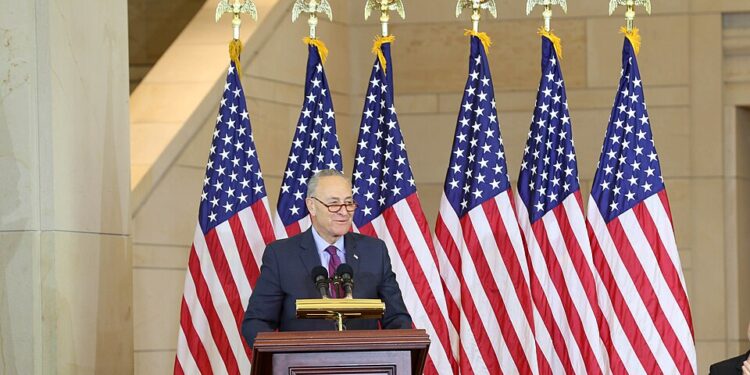
Senate Democratic Leader Chuck Schumer is facing an unexpected political challenge following President Donald Trump’s major setback in the 2026 midterm elections, with several newly elected Democrats openly refusing to support his return to the Senate’s top leadership position.
Despite Democrats winning control of both the House and Senate, Schumer is discovering that his party’s election victories have not eliminated internal disagreements over who should lead Democrats in Washington.
At least five incoming Democratic senators have publicly indicated they will oppose Schumer in the upcoming leadership election, raising new questions about the party’s direction as it prepares to confront the Trump administration.
However, Schumer remains confident that he has enough support to become Senate majority leader when the new Congress takes office in January.
Schumer Faces Opposition From His Own Party
During a Wednesday news conference following the November 3 elections, Schumer was questioned about whether he could secure another term as Senate Democratic leader.
The New York senator initially attempted to focus attention on the election results and the priorities Democrats intend to pursue with their new congressional majorities.
When reporters continued pressing him about his political future, Schumer expressed confidence that his colleagues would return him to the leadership position.
His declaration came despite growing resistance from several Democrats who will join the Senate in January.
Five newly elected senators have publicly opposed his leadership bid: Adam Hamilton of Kansas, Juliana Stratton of Illinois, Troy Jackson of Maine, Peggy Flanagan of Minnesota, and Abdul El-Sayed of Michigan.
Texas Senator-elect James Talarico has also declined to publicly commit to supporting Schumer.
Their positions suggest that the Democratic Party could face internal disagreements even after achieving significant victories at the ballot box.
Democrats Split Over Their Political Future
The opposition to Schumer reflects an ongoing debate over the future of Democratic leadership.
Some members of the party believe experienced congressional leaders are best positioned to manage negotiations, advance legislation, and challenge Republican policies.
Others argue that Democrats need fresh leadership and a different political approach after years of contentious battles in Washington.
Schumer, who has led Senate Democrats since 2017, has extensive experience navigating congressional negotiations and managing competing interests within his caucus.
His supporters see that experience as an advantage as Democrats prepare to assume control of the Senate.
However, several incoming lawmakers have questioned whether the party should continue relying on its established leadership.
The disagreement creates an unusual situation for Democrats, who are celebrating a major political victory while simultaneously debating their own leadership.
Still, Schumer has a significant advantage.
No incumbent Democratic senator has publicly announced opposition to his leadership bid, and no challenger has formally entered the race.
The leadership election will be decided through a private vote among Democratic senators, with a simple majority needed to secure the position.
That means opposition from five newly elected senators, while politically significant, is not currently enough to prevent Schumer from winning.
Trump’s Midterm Loss Reshapes Washington
The leadership dispute comes as Republicans assess the consequences of their disappointing performance in the 2026 midterm elections.
Democrats regained control of both chambers of Congress, ending the unified Republican control that had allowed President Trump and congressional GOP leaders to pursue their legislative agenda.
The results represent a substantial shift in Washington’s political landscape.
For the remainder of Trump’s presidential term, Democrats will have greater influence over congressional investigations, federal spending, and the legislative process.
The Senate’s role in confirming presidential appointments and federal judges will also become particularly important.
Republicans will face new obstacles in advancing legislation that lacks Democratic support.
However, Democratic control of Congress does not mean the party can automatically enact every proposal on its agenda.
Trump will retain his presidential veto authority, and Democrats may need Republican votes to advance certain measures.
The result could be two years of difficult negotiations, political disputes, and competing priorities leading into the 2028 presidential election.
Schumer Signals New Priorities For Democrats
Following the election, Schumer emphasized that Democrats must demonstrate they understand the financial concerns facing American families.
He identified reducing the cost of living as a major priority for the incoming congressional majority.
Household expenses have remained a significant concern for voters, particularly rising energy costs and the broader financial pressures affecting American families.
For retirees and Americans living on fixed incomes, the cost of groceries, utilities, housing, and healthcare can have an especially significant impact on monthly budgets.
Schumer also pointed to government accountability and the ongoing conflict involving Iran as important issues Democrats intend to address.
The war and its effects on energy prices have become major political concerns.
Democrats believe the election results provide an opportunity to pursue a different approach to federal policy.
Nevertheless, Schumer acknowledged that winning an election does not give lawmakers unlimited authority to pursue their own political objectives.
He indicated that Democrats must earn the confidence of voters who supported the party while remaining skeptical of Washington’s political leadership.
That could prove challenging as Democrats balance the expectations of moderate voters with demands from the party’s progressive wing.
Democrats Prepare To Challenge Trump
Another major development involves Schumer’s plans for congressional oversight of President Trump and his administration.
The Democratic leader has indicated that Senate investigations could be pursued when lawmakers believe the administration has violated federal law or exceeded its authority.
Such investigations could become a significant source of conflict between congressional Democrats and the White House.
Republicans may challenge the motives behind those inquiries, particularly if they believe Democrats are using congressional investigations to undermine the president politically.
Democrats, meanwhile, argue that congressional oversight is necessary to hold government officials accountable.
These disagreements could create additional obstacles to bipartisan cooperation.
Issues including government funding, federal spending, healthcare policy, and national security will still require attention regardless of which party controls Congress.
For American voters, the practical consequences of those decisions could be more important than the political battles surrounding them.
What Schumer’s Leadership Battle Means For Republicans
Although the dispute centers on Democratic leadership, its outcome could have important implications for Republicans.
A Senate led by Schumer would likely pursue aggressive oversight of the Trump administration while seeking to advance Democratic legislative priorities.
However, the opposition Schumer faces from incoming members suggests that Democrats may not agree on every major political decision.
Those divisions could complicate negotiations involving federal spending, economic policy, and other controversial issues.
Republicans could also face difficult strategic choices as they adjust to minority status in Congress.
The party must determine when to negotiate with Democrats and when to oppose legislation that conflicts with its priorities.
Meanwhile, President Trump will have to manage a political environment considerably different from the one he faced during the first two years of his second administration.
The outcome of the Democratic leadership election will help determine how the Senate approaches those confrontations.
A Critical Decision Ahead For Senate Democrats
Schumer’s immediate challenge is securing enough votes from his fellow Democrats to remain their leader.
His political experience and established relationships make him the apparent favorite.
Nevertheless, opposition from newly elected senators underscores broader disagreements about the direction of the Democratic Party.
For some lawmakers, the election results demonstrate the importance of maintaining experienced leadership.
For others, the victories represent an opportunity to pursue substantial changes within the party itself.
Schumer must navigate those competing views while preparing for the responsibilities that come with a Senate majority.
The coming leadership election will reveal whether his colleagues are prepared to unite behind him or whether calls for new leadership gain additional support.
For now, Schumer remains confident about his political future, but the emerging resistance shows that Democratic victories in the 2026 midterms have created new challenges as well as new opportunities.
With President Trump preparing to face a Democratic-controlled Congress, the decision over who leads Senate Democrats could help shape Washington’s political battles for the next two years.