
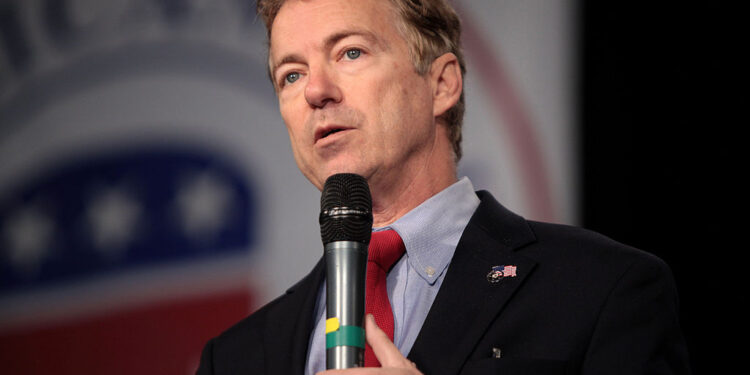
Sen. Rand Paul (R-KY) sparked controversy over the weekend after appearing to criticize President Donald Trump during a nationally televised interview, raising concerns that aggressive political redistricting could deepen divisions and even lead to unrest.
Speaking with NBC News anchor Kristen Welker on Meet the Press, Paul was asked about President Trump’s push to pressure Republican lawmakers in Indiana who opposed a proposed mid-decade redistricting plan that would have favored the GOP. Rather than fully backing the president’s strategy, Paul suggested the approach risks escalating political tensions nationwide.
According to Paul, extreme redistricting—whether carried out by Republicans or Democrats—can leave large portions of voters feeling ignored by their government. He argued that when entire states lack meaningful representation from one party, citizens may begin to believe their votes no longer matter.
Paul pointed to examples in both red and blue states, noting that while Kentucky is overwhelmingly Republican, Louisville remains a Democratic stronghold that still has congressional representation. He suggested that eliminating such districts may benefit one party in the short term but could damage public trust in the long run.
Welker pressed Paul on the seriousness of his comments, asking directly whether he believed redistricting battles could contribute to political violence. Paul responded by warning that a completely one-sided political system could further alienate voters and intensify anger already simmering across the country.
He also cautioned that once one state redraws its maps for partisan advantage, rival states are likely to retaliate, creating a political arms race with no clear end. In Paul’s view, the back-and-forth escalation makes it increasingly difficult to restore balance or de-escalate tensions.
While Paul stressed that his criticism applied to both major parties, his remarks stood out as a rare moment of public pushback against President Trump from within the Republican Party. Many conservatives argue Trump’s aggressive approach is a necessary response to decades of Democratic gerrymandering, judicial interference, and election manipulation—issues that have long frustrated GOP voters.
The exchange highlights growing debates inside the Republican Party over strategy, power, and how far lawmakers should go to secure long-term political gains while preserving voter confidence in the system.