
Most Americans were asleep when President Donald Trump sent a message that immediately grabbed attention across the political world.
Shortly after 4 a.m., Trump took to Truth Social to deliver a blunt statement on election security, voter identification requirements, and the future of one of Washington’s most controversial surveillance programs.
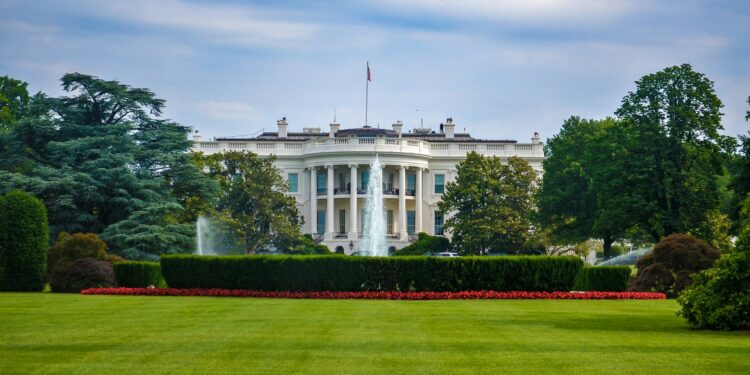
The late-night post came only hours after Trump attended a major UFC event held on the White House grounds as part of the Freedom 250 celebration honoring Flag Day and America’s upcoming 250th birthday festivities.
But while the sporting event drew headlines, Trump’s early-morning message quickly shifted the focus back to politics.
Trump Calls For Major Election Reforms
In his Truth Social post, Trump renewed his support for several election integrity measures that have become central issues for many conservatives.
Among the reforms highlighted by the president were:
- Mandatory photo identification for all voters
- Proof of U.S. citizenship before voting
- Limits on mail-in voting except for military members, travelers, and those with qualifying hardships
- Protecting women’s sports from biological male competitors
- Banning gender-transition procedures for minors
Trump argued that these measures are necessary to restore confidence in American elections and strengthen trust in the voting process.
The president also tied his support for these reforms to ongoing debates surrounding federal surveillance authority.
Trump Targets FISA Debate
A major portion of Trump’s message focused on the Foreign Intelligence Surveillance Act, commonly known as FISA.
The law has long been controversial among conservatives who believe government surveillance powers have been misused against American citizens and political campaigns.
Trump has repeatedly argued that intelligence agencies abused surveillance authorities during investigations connected to his first administration.
In his latest post, Trump said he would oppose extending FISA authorities unless lawmakers also advance broader reforms that address election security and other conservative priorities.
The comments immediately fueled discussion among lawmakers and political observers as Congress faces growing pressure to determine the future of the surveillance program.
Key Surveillance Authority Expires
Trump’s statement comes at a critical moment in Washington.
Section 702 of the Foreign Intelligence Surveillance Act expired after lawmakers were unable to pass legislation extending the program before its authorization ran out.
Supporters of the program argue it provides valuable intelligence tools used to monitor foreign threats and protect national security.
Critics, however, warn that surveillance authorities have not always been properly limited and that stronger safeguards are needed to protect Americans’ constitutional rights.
The debate has become one of the most significant national security battles currently facing Congress.
House Vote Reveals Deep Divisions
Efforts to pass a temporary extension fell short in the House of Representatives.
The measure failed after a coalition of Democrats and several Republicans voted against the proposal, exposing sharp divisions over surveillance reform and government accountability.
The outcome leaves lawmakers facing difficult questions about how to balance national security concerns with privacy protections and civil liberties.
What Happens Next?
With Section 702 now expired, pressure is mounting on Congress to negotiate a new path forward.
Lawmakers are expected to continue debating whether surveillance authorities should be restored, modified, or replaced with new safeguards.
At the same time, Trump’s renewed focus on voter ID laws, proof of citizenship requirements, and election integrity reforms is likely to keep those issues front and center heading into future legislative battles.
For supporters of the president, the message served as a reminder that even after a long night of celebrations, Trump’s attention remains firmly fixed on the issues he believes matter most to the future of the country.
And judging by the reaction online, his 4 a.m. post may end up generating even more discussion than the White House event that preceded it.