
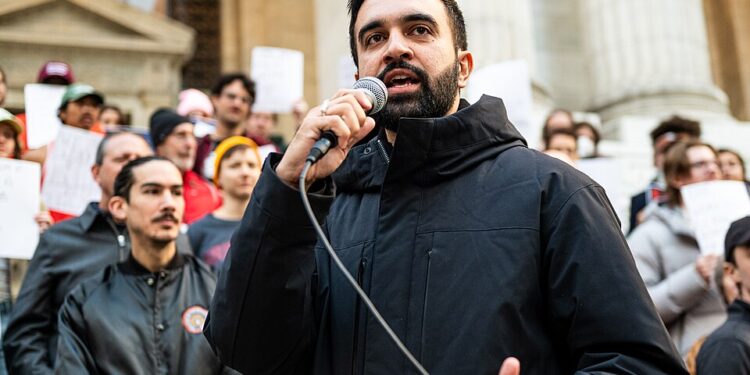
New York City Mayor Zohran Mamdani’s proposal to create city-backed grocery stores is drawing sharp criticism from economists, business leaders, and political opponents who question whether the plan can deliver on its promise of reducing food prices without increasing taxpayer costs.
The proposal would establish five municipally supported grocery stores across New York City’s five boroughs, with the administration claiming shoppers could save as much as 30% on everyday groceries compared with traditional supermarkets.
Supporters say the initiative could help families struggling with high food prices, while critics argue the financial model depends on taxpayer subsidies and could create unfair competition for privately owned grocery stores.
Critics Question How The Savings Would Be Achieved
The announcement immediately sparked debate over whether government-backed grocery stores can consistently sell products at prices significantly below those offered by private retailers.
OutKick founder Clay Travis questioned the economics behind the proposal, arguing that grocery stores typically operate on very slim profit margins.
Travis argued that the proposal is unrealistic, saying it would only work if taxpayers were paying to offset grocery prices. He also noted that supermarkets typically earn very small profit margins, making such steep discounts difficult to sustain without government funding.
Former Small Business Administration Administrator Kelly Loeffler also criticized the proposal, arguing that taxpayers would likely be responsible for both the initial investment and ongoing operating costs.
She said the plan would require public funding to build the stores while also subsidizing lower grocery prices, creating government-backed competition for existing neighborhood supermarkets.
The proposal also generated significant discussion on social media, where some users compared the idea to government-run food programs implemented in other countries, while others questioned whether the model could remain financially sustainable over time.
Fox News contributor Buck Sexton argued that opening five city-supported grocery stores would have little impact in a city already served by thousands of private grocery retailers.
Others expressed concern that taxpayer-funded businesses could make it more difficult for independently owned grocery stores to compete.
Mamdani Says The Plan Will Lower Grocery Bills
Mamdani’s administration maintains that the initiative is designed to address one of the biggest financial pressures facing New York families: rising grocery prices.
City officials estimate shoppers could save approximately $90 each month, or about $1,000 annually, by purchasing groceries from the new stores.
The proposal comes after years of elevated food prices across the United States. According to federal inflation data, grocery prices remain substantially higher than they were before the COVID-19 pandemic, increasing the financial burden on many households.
To reduce prices, the city plans to eliminate several major costs that private grocery stores typically face, including rent and property taxes. Under the proposal, private companies would operate the stores while the city would provide the locations and establish pricing requirements.
Officials also plan to keep prices on many everyday grocery items—including fresh produce, meat, seafood, dairy products, and pantry staples—stable throughout each month rather than allowing prices to fluctuate weekly.
Economists Raise Questions About Long-Term Costs
Several economists remain skeptical that the pricing model can succeed without continued government support.
Richard Stern, vice president of the Plymouth Institute for Free Enterprise at Advancing American Freedom, said taxpayers would likely be responsible for covering the difference between the discounted prices and the stores’ operating costs.
“They’re just going to use New York City budget money to insure the discount,” Stern said.
Adam Lehodey, a policy analyst with the Manhattan Institute, argued that the advertised savings could simply shift grocery costs from the checkout line to taxpayers.
Lehodey argued that the promised 30% savings are misleading because taxpayers would ultimately finance millions of dollars in subsidies. He said the stores would also benefit from government-owned property with little or no rent, meaning New Yorkers would still bear the full cost of the groceries—just through their tax dollars rather than at the checkout counter.
Lehodey also warned that prices set well below market levels could encourage some shoppers to purchase products for resale elsewhere, potentially leading to shortages.
Small Businesses Could Face New Competition
Heritage Foundation Chief Economist E.J. Antoni questioned whether the proposal could remain financially viable given the grocery industry’s traditionally low profit margins.
“A 30% discount at stores with a 2% profit margin is simply a loss for taxpayers who will have to make up the difference,” Antoni said.
He also argued that government-backed grocery stores could place privately owned supermarkets at a competitive disadvantage because independent businesses must cover their own operating expenses without public assistance.
Business advocates say the proposal could create additional challenges for neighborhood grocery stores that already operate in a competitive marketplace.
Five Stores Planned Across The City
The city has allocated $70 million in capital funding to launch the program.
Current plans call for opening one municipally supported grocery store in each of New York City’s five boroughs. The first location is expected to open in Hunts Point in the Bronx by the end of 2027, followed by stores in East Harlem, Brooklyn, Queens, and Staten Island.
Private grocery operators would manage staffing, merchandising, and inventory, while the city would provide the facilities, establish operating standards, and absorb many occupancy costs.
Questions Remain About The Financial Model
While city officials say the proposal could make groceries more affordable for thousands of families, critics continue to question how the promised savings will be maintained over the long term.
Fox News Digital reported that it asked the mayor’s office how officials calculated the projected 30% savings, whether outside economists reviewed the financial assumptions, and what level of ongoing taxpayer support would be required to sustain the stores. According to the report, the administration did not immediately respond to those questions.
As the proposal moves forward, supporters view it as a creative response to persistent inflation and rising food costs, while opponents argue it could expand government spending and place additional burdens on taxpayers. The debate is likely to remain a major issue as New York City considers whether government-backed grocery stores can deliver the savings officials have promised.