
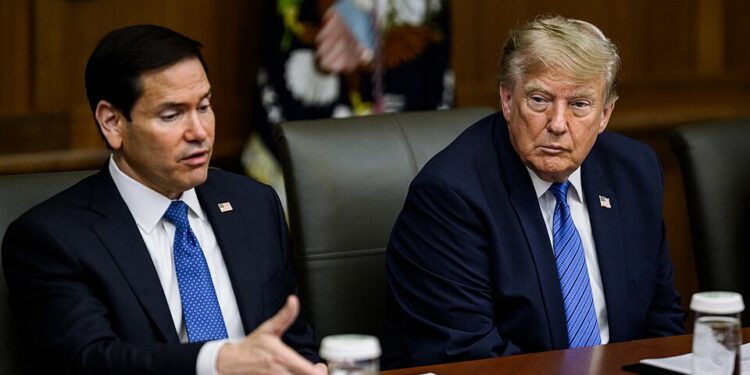
President Donald Trump is calling out Hollywood’s biggest critics after revealing that some entertainment industry figures who have spent years attacking him are now seeking his help to save their struggling business.
During a campaign rally in Florida on Friday, October 30, Trump accused Hollywood celebrities and filmmakers of suddenly changing their attitudes toward him as they pursue federal tax credits to bring movie and television production back to the United States.
The president also took direct aim at actor Robert De Niro, one of his most outspoken political opponents, while questioning why Hollywood figures who regularly criticize his administration are now interested in working with the White House.
The controversy comes as the American entertainment industry faces growing competition from foreign countries offering generous financial incentives to film producers.
Trump Calls Out Hollywood’s Changing Attitude
Speaking to supporters just days before the November 3 midterm elections, Trump described what he sees as a dramatic shift in how certain Hollywood personalities treat him.
According to the president, entertainers and industry representatives who once made harsh public statements about him have become noticeably more respectful when asking for government assistance.
Trump said some individuals who criticized him for years have approached his administration requesting meetings about federal tax incentives.
He expressed amusement at the contrast between their previous political attacks and their current willingness to seek his cooperation.
The president also pointed out that the internet makes it easy to revisit public statements made years earlier, suggesting that he has not forgotten what his Hollywood critics previously said about him.
Although Trump did not identify every individual he was referring to, he made clear that he finds the situation ironic.
Despite the criticism, Trump suggested he would probably support efforts to help the American film industry.
His comments highlighted the unusual relationship between a president frequently criticized by Hollywood and an entertainment industry increasingly interested in his administration’s economic policies.
Robert De Niro Faces Fresh Criticism From Trump
Trump also used the rally to renew his longstanding feud with Robert De Niro.
The Academy Award-winning actor has been among the entertainment industry’s most vocal critics of Trump, repeatedly expressing opposition to the president in interviews, public appearances, and political events.
On Friday, Trump questioned De Niro’s judgment and criticized his performances, suggesting that the actor’s political activism has affected how he views his work.
The president acknowledged that he previously enjoyed some of De Niro’s movies but said his opinion had changed.
Trump also questioned the actor’s ability to perform comedy, adding another personal criticism to their years of public disagreements.
The exchange reflected the increasingly contentious relationship between Trump and some of Hollywood’s most recognizable celebrities.
However, an important distinction remains: Trump did not publicly establish that De Niro personally requested tax credits or sought a private meeting with him.
The president’s broader allegation concerned Hollywood figures whose private requests for assistance allegedly contrast with their public criticism.
Why Hollywood Is Seeking Trump’s Help
Beyond the personal disagreements, the dispute involves a significant economic challenge facing the American entertainment industry.
Movie studios and television production companies have increasingly filmed major projects overseas, where foreign governments offer attractive tax incentives and other financial benefits.
Countries such as Canada and the United Kingdom have successfully attracted productions that might otherwise have been filmed in the United States.
The trend has raised concerns about the future of American entertainment jobs, including positions held by construction workers, electricians, camera operators, costume designers, technicians, and other production professionals.
Trump has repeatedly argued that the United States needs to become more competitive in attracting film and television projects.
His administration has explored ways to encourage studios to bring production back to American communities.
One proposal involves creating a federal tax credit that would make filming in the United States more financially attractive.
The idea has gained attention from entertainment industry organizations and lawmakers in both political parties.
Supporters believe a national incentive could help American productions compete with countries that already offer substantial government-backed benefits.
Jon Voight Helps Bring Hollywood’s Concerns to Washington
One of the most prominent figures supporting the effort is actor Jon Voight, a longtime Trump ally.
Voight has worked with entertainment industry representatives to draw attention to declining domestic film production and the challenges facing American workers.
The actor and his associates have advocated for federal policies that would make American studios more competitive.
In September, Trump publicly supported the idea of a federal film production tax incentive following discussions with Voight.
The proposal has attracted interest from Republicans and Democrats who recognize that entertainment production supports jobs far beyond Hollywood.
States such as Georgia, New York, California, and New Mexico have established significant film and television production operations.
For these communities, retaining entertainment jobs can have a substantial impact on local businesses and employment opportunities.
The effort is therefore about more than helping wealthy actors or major entertainment companies.
It also concerns the thousands of American workers whose livelihoods depend on domestic production.
Trump’s Criticism Highlights Hollywood’s Political Divide
Trump’s remarks have brought renewed attention to Hollywood’s complicated relationship with Republican leadership.
Many prominent entertainers have openly opposed the president, frequently criticizing his policies and political statements.
At the same time, the entertainment industry’s economic interests sometimes overlap with the administration’s stated priorities.
Trump has emphasized domestic employment, American manufacturing, and encouraging businesses to invest in the United States.
Those objectives could align with Hollywood’s effort to bring more film production back to American soil.
The president’s criticism raises questions about how political disagreements influence relationships between Washington and major industries.
While some observers may consider it hypocritical for outspoken Trump critics to seek assistance from his administration, others argue that supporting an economic policy does not require agreeing with a president on every issue.
Regardless of those competing interpretations, Hollywood’s interest in federal tax incentives has created an unexpected area of potential cooperation.
Trump Also Criticizes the Academy Awards
The president did not limit his remarks to individual entertainers.
He also criticized the Academy Awards, arguing that political statements targeting him have diminished the appeal of the annual ceremony.
Trump suggested that the Oscars have become less enjoyable because celebrities increasingly use their appearances to make political arguments.
The president expressed frustration with entertainers who criticize him during nationally televised awards shows.
His comments reflected a longstanding disagreement about the role of politics in the entertainment industry.
For decades, actors and filmmakers have used prominent awards ceremonies to discuss political and social issues.
However, the increasingly polarized political environment has intensified disagreements over whether these events should focus primarily on recognizing artistic achievements.
Trump’s latest remarks indicate that he remains dissatisfied with the entertainment industry’s treatment of him.
According to TheWrap, representatives for De Niro and the Academy did not immediately respond to requests for comment.
Could Trump Help Bring Hollywood Jobs Back to America?
Despite his sharp criticism of Hollywood celebrities, Trump has left open the possibility of supporting legislation designed to strengthen American film production.
The proposed federal tax incentive could become an important issue for lawmakers seeking to protect jobs and stimulate economic activity.
Supporters argue that encouraging studios to film domestically would benefit American workers, small businesses, and communities that depend on entertainment production.
Critics of government incentives may question their costs and whether the potential economic benefits justify the federal spending involved.
Any final proposal would need congressional approval, and its effectiveness would depend on how the program is structured.
Nevertheless, the debate has already produced an unusual political development.
An industry frequently associated with opposition to Trump now sees potential benefits in working with his administration.
For the president, the situation offers another opportunity to emphasize his economic message while challenging the consistency of his Hollywood critics.
As the entertainment industry continues seeking solutions to declining domestic production, the question is whether political rivals can put aside their disagreements to pursue a shared economic goal.
Trump’s latest confrontation with Hollywood demonstrates that even some of his fiercest critics may find themselves supporting policies advanced by the very administration they regularly oppose.