
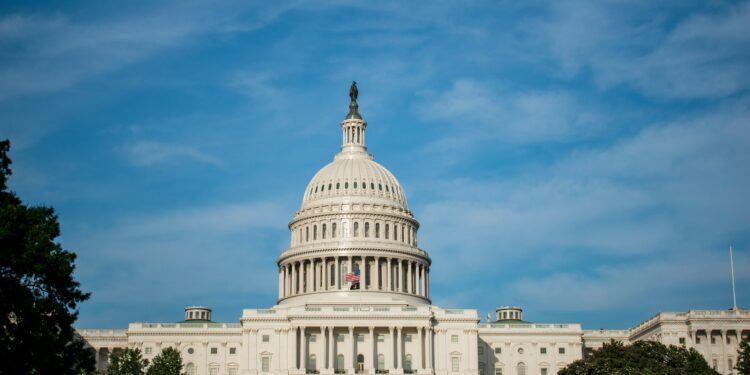
President Donald Trump is facing fresh challenges from within his own party as a growing dispute among House Republicans has stalled legislative business and forced Speaker Mike Johnson to send lawmakers home early for the second consecutive week.
The latest standoff highlights ongoing tensions inside the GOP over election security, border policy, and the party’s strategy for advancing Trump’s legislative agenda ahead of the upcoming midterm election season.
House Republicans Split Over Key Priorities
A group of Republican lawmakers blocked a procedural vote this week, preventing the House from moving forward on several major pieces of legislation, including defense funding and other spending measures.
Several of the lawmakers argued that House leadership failed to honor earlier commitments to bring legislation strengthening border security and election integrity to the floor before the Independence Day holiday.
The internal disagreement has frustrated Republican leaders, who had hoped to keep momentum moving after advancing several high-profile legislative victories earlier this year.
Trump Calls for Party Unity
During a White House dinner Tuesday evening with Republican lawmakers, Trump reportedly questioned Speaker Mike Johnson about which members were responsible for defeating the procedural vote.
According to people familiar with the meeting, Johnson told the president that several members of the House Freedom Caucus were among those who voted against advancing the legislation.
Trump reportedly criticized the move and urged Republicans to stay united, arguing that the party should work together rather than allowing internal disagreements to derail its legislative agenda.
The president also jokingly referred to a small group of holdout lawmakers as the “3 o’clock caucus,” an apparent reference to members he has previously said often require late-night conversations before major votes.
Election Security Bill Remains a Major Flashpoint
One of the biggest issues dividing Republicans is the Safeguard American Voter Eligibility (SAVE) Act, legislation backed by Trump that would require documentary proof of citizenship for voter registration.
Rep. Anna Paulina Luna of Florida emerged as one of the most outspoken opponents of the procedural vote after arguing that the SAVE Act should be directly attached to the annual defense authorization bill.
House leadership attempted to use another legislative process to combine the measures, but Luna argued that approach would make it easier for the Senate to remove the election security language before final passage.
Although Trump recently urged Republicans to stop blocking procedural votes and remain unified, Luna said she believes her position fully supports the president’s priorities.
She said she shares Trump’s frustrations and believes Republicans should move more aggressively to advance his agenda.
Republicans Disagree on Strategy
Not every Republican agrees with the approach taken by the holdout lawmakers.
Several GOP members warned that bringing House business to a standstill only weakens the party’s negotiating position and delays action on important legislation.
Rep. Don Bacon of Nebraska criticized the strategy, saying it makes little sense to halt House operations in an effort to pressure the Senate.
Rep. Tom Cole of Oklahoma also encouraged fellow Republicans to continue advancing House legislation rather than allowing internal disagreements to dominate the agenda.
Speaker Johnson publicly expressed his frustration following the failed procedural vote.
He argued that Republicans should continue making progress in the House instead of stopping legislative work because of opposition in the Senate.
Border Legislation Adds to Internal Frustrations
The SAVE Act was only one source of disagreement.
Several members of the House Freedom Caucus said they opposed the procedural vote because Republican leadership failed to bring legislation forward that would permanently codify many of Trump’s border security policies.
Rep. Chip Roy of Texas said House leaders had previously committed to considering border legislation before Independence Day but did not schedule a vote.
Roy argued that Republicans should focus on turning the administration’s border policies into permanent federal law.
Other Lawmakers Had Separate Concerns
Not every Republican who voted against the procedural measure did so for the same reason.
Rep. Mike Turner of Ohio and several other lawmakers objected after an amendment addressing pension benefits for former Delphi auto workers was left out of the legislation.
Rep. Randy Fine of Florida also opposed the procedural vote over another provision in the defense bill but declined to discuss the details publicly.
Rep. Lauren Boebert of Colorado acknowledged that the measure appeared likely to fail before she cast her vote.
GOP Leadership Faces Another Test
With Republicans holding only a narrow House majority, internal disagreements have repeatedly complicated leadership’s efforts to move legislation through Congress.
In previous disputes, Republican leaders often kept votes open for hours while negotiating with holdout members. This time, however, Johnson chose to adjourn the House and postpone further legislative action.
Some conservative lawmakers argued they would have preferred to remain in Washington to continue negotiations rather than suspend House business.
Others blamed the standoff for handing Democrats a political opportunity.
Rep. Don Bacon argued that the internal conflict allows Democrats to portray Republicans as divided at a time when the party is trying to advance its legislative priorities.
Democrats Criticize the Gridlock
Democrats quickly pointed to the Republican infighting as evidence that the House is struggling to govern effectively.
Rep. Alexandria Ocasio-Cortez said prolonged legislative delays can slow action on routine but important government programs, including healthcare, infrastructure, and energy funding.
Meanwhile, Rep. Kevin Kiley of California argued Democrats also share responsibility for the stalemate, saying they could have supported procedural votes instead of unanimously opposing them.
What’s Next for House Republicans?
The latest dispute raises new questions about whether House Republicans can pass additional legislation before Congress begins its August recess.
Republican leaders have expressed interest in advancing another reconciliation package that would include Pentagon funding, anti-fraud initiatives, and grants for states that adopt election reforms similar to the SAVE Act.
However, with only a limited number of legislative days remaining before the summer break, many lawmakers acknowledge that timeline is becoming increasingly difficult.
Despite growing criticism, Speaker Mike Johnson rejected suggestions that he has lost control of the Republican conference.
“We have full control of the conference,” Johnson said. “People get very emotional about things, and sometimes they make irrational decisions.”
As Congress prepares to return, Republican leaders will face renewed pressure to bridge internal divisions while advancing the party’s legislative priorities during a critical election year.