
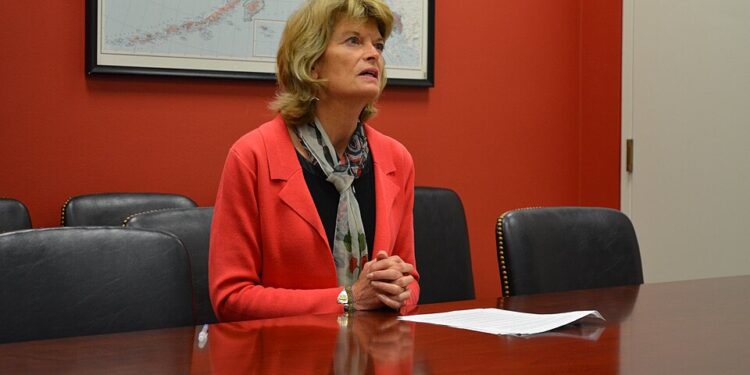
President Donald Trump is once again clashing with Republican Sen. Lisa Murkowski of Alaska after she joined Democrats and another GOP senator in opposing one of the president’s most important nominees.
The latest confrontation erupted Saturday following the Senate’s narrow confirmation of Todd Blanche as attorney general. Blanche was approved in a 50-49 vote, giving Trump a major victory as his administration moves forward with its agenda at the Department of Justice.
Murkowski and Republican Sen. Susan Collins of Maine were the only GOP senators to vote against Blanche.
Trump wasted little time responding.
The president posted several messages focusing on Murkowski and her record, including her previous support for Merrick Garland, who served as attorney general under former President Joe Biden.
Trump also reposted a particularly harsh message from another social media user that described Murkowski as a “traitor.”
The remark was written by the social media user and amplified by Trump, rather than issued as an official White House statement.
The episode is the latest sign that the bitter political relationship between Trump and Murkowski remains very much alive.
Murkowski Breaks With Trump Again
Murkowski announced Friday that she would not support Blanche’s confirmation, raising concerns about whether Trump’s nominee would exercise sufficient independence while running the Justice Department.
“The country needs an Attorney General who will check the worst impulses of this administration,” Murkowski said in announcing her opposition.
She said she hoped Blanche would be capable of doing that but added that she lacked confidence that he would.
Murkowski also criticized what she described as the growing “politicization” and “weaponization” of the Justice Department.
Her comments immediately attracted attention because Republicans could afford very few defections during the confirmation vote.
Blanche nevertheless survived.
Murkowski and Collins ultimately joined Democrats in opposing the nomination, while the remaining Republican support was enough to push Blanche across the finish line.
Trump Highlights Murkowski’s Garland Vote
Trump responded by focusing attention on Murkowski’s previous vote to confirm Garland during the Biden administration.
The president posted a video of Garland discussing his personal approval of the decision to seek a warrant that resulted in the FBI search of Trump’s Mar-a-Lago residence in Florida.
That 2022 search remains a major source of anger for Trump and many Republican voters.
Trump and his allies have repeatedly cited the investigation as evidence of what they believe was the political weaponization of federal law enforcement against the former president and his supporters.
Democrats and other critics have rejected that argument, maintaining that federal investigators were pursuing legitimate legal matters.
Regardless of the competing interpretations, Trump clearly wanted voters to notice the contrast between Murkowski’s support for Garland and her opposition to Blanche.
The president also reposted a message from a social media account criticizing Murkowski over those votes.
“Murkowski is owned. Traitor,” the user wrote.
Trump did not write those words himself, but his decision to share the post further demonstrated the intensity of his frustration with the Alaska Republican.
Why Todd Blanche Matters To Trump
Blanche is not an ordinary attorney general selection.
Before entering the administration, he served as one of Trump’s personal attorneys and represented him through some of the biggest legal battles of his political career.
That history has made Blanche a controversial figure among Democrats and some Republicans, who have questioned whether his previous representation of Trump could affect his independence at the Justice Department.
Supporters offer a different argument.
They point to Blanche’s extensive legal experience and say the Justice Department needs leadership willing to confront longstanding Republican concerns about politically motivated investigations and unequal treatment within the federal government.
Those competing views helped turn what might otherwise have been a routine confirmation into a major Senate showdown.
Bill Cassidy Delivers Crucial Vote
Republican Sen. Bill Cassidy of Louisiana emerged as one of the most important figures in the confirmation battle.
Cassidy has also had a difficult relationship with Trump and lost his Republican primary earlier this summer after failing to receive the president’s endorsement.
Despite that history, Cassidy announced during a dramatic Senate floor speech Friday that he would support Blanche.
His decision helped ensure the nominee had enough Republican votes for confirmation.
Cassidy acknowledged concerns surrounding the Justice Department and spoke about what he described as episodes of apparent “lawfare.”
He also addressed controversy surrounding a proposed $1.8 billion fund that was intended to compensate alleged victims of government “weaponization.”
The proposal has since been abandoned.
Blanche had signed the settlement establishing the fund but later indicated that it would not move forward.
Cassidy ultimately concluded that Blanche’s experience outweighed his concerns.
Cassidy argued that even Blanche’s detractors acknowledge his strong legal knowledge and practical, hands-on approach to leadership.
He also cited Blanche’s work with U.S. attorneys in Louisiana.
That support proved critical.
The Justice Department Remains A Major Issue For Republicans
The confirmation fight comes against a much larger political backdrop.
For years, Republican lawmakers and conservative voters have expressed concerns about the conduct of the FBI, Justice Department and other federal agencies.
Those concerns intensified dramatically during the investigations and prosecutions involving Trump.
The FBI search of Mar-a-Lago became one of the most politically explosive examples.
Trump has consistently argued that federal law enforcement was weaponized against him because of his political beliefs and his position as the leading figure in the Republican Party.
His opponents strongly dispute that characterization.
The debate is unlikely to disappear now that Blanche has been confirmed.
In fact, his leadership of the Justice Department could place even greater attention on questions involving political independence, prosecutorial discretion and the relationship between the White House and federal law enforcement.
Trump And Murkowski Have A Long History
The latest confrontation should come as little surprise to anyone who has followed the Republican Party over the past several years.
Murkowski has repeatedly broken with Trump on major votes and policy questions.
Their political relationship became particularly hostile after Murkowski voted to convict Trump during his second impeachment trial in 2021.
Trump has criticized her repeatedly since then, while Murkowski has continued portraying herself as an independent Republican willing to vote against her party when she believes it is necessary.
That approach has made her a frequent source of frustration for Trump’s supporters.
Her Blanche vote has now provided another example.
For conservatives who believe the Justice Department needs major reform, Murkowski’s decision to oppose Trump’s nominee while having previously supported Garland is likely to receive particular scrutiny.
For Murkowski’s supporters, however, the vote demonstrates her willingness to judge nominees independently rather than automatically supporting a Republican president.
A Narrow Victory For Trump
Despite the Republican defections, the final outcome went Trump’s way.
Blanche was confirmed 50-49 and will lead the Justice Department on a permanent basis.
The close vote demonstrates just how much individual senators can matter when Republicans are working with a narrow majority.
Had another Republican joined Murkowski and Collins, the outcome could have been dramatically different.
Instead, Trump secured the attorney general he wanted.
The confirmation also gives the administration an opportunity to pursue its priorities at the Justice Department under a leader Trump knows well and trusts.
Blanche will now face the difficult task of running an agency that has become one of the biggest political flashpoints in Washington.
What Happens Next?
The immediate confirmation battle is over, but the political fight surrounding the Justice Department is almost certainly not.
Democrats are expected to closely scrutinize Blanche’s decisions because of his history as Trump’s personal attorney. Republicans, meanwhile, will be watching to see whether the new attorney general addresses their concerns about political bias and alleged weaponization inside the federal government.
Murkowski’s vote could also have consequences within the Republican Party.
Trump remains the dominant figure in the GOP, and Republican lawmakers who openly oppose his major nominees can quickly find themselves facing criticism from conservative voters and Trump allies.
Murkowski has survived those battles before.
Whether this latest confrontation changes her relationship with Republican voters remains to be seen.
One thing is already clear: Trump has not forgotten Murkowski’s previous clashes with him, and her decision to oppose Blanche has brought their feud back into the national spotlight.
The Bottom Line
President Trump got his attorney general, but not without another high-profile Republican revolt.
Murkowski once again demonstrated that she is willing to break with Trump, even on a nomination that carries enormous importance for his administration. Trump responded by highlighting what he sees as an inconsistency in her record—supporting Biden Attorney General Merrick Garland while rejecting Todd Blanche.
Blanche’s narrow confirmation gives Trump an important victory, but it also sets the stage for another major Washington battle over the future of the Justice Department.
For voters, the bigger question may be what comes next.
Will Blanche restore confidence among conservatives who believe federal law enforcement has become politicized? Or will concerns about the relationship between the White House and Justice Department grow even stronger?
Those questions are likely to follow Trump’s new attorney general from his first day on the job.