
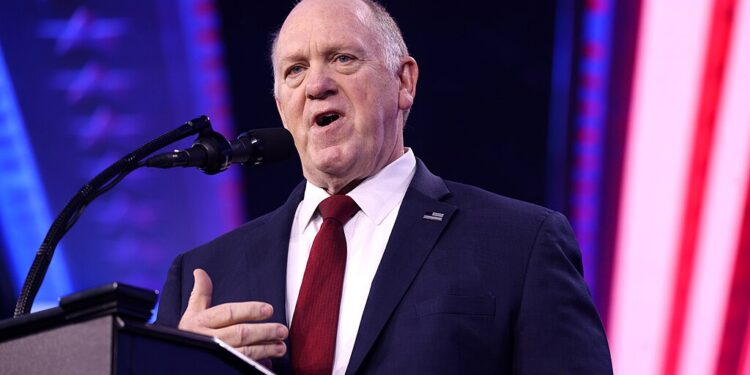
The Trump administration is beginning a major shift in its immigration enforcement strategy in Minnesota after weeks of intense federal activity in the Twin Cities.
More than 1,000 immigration agents have already left the Minneapolis–St. Paul area, with hundreds more expected to depart in the coming days, according to White House border czar Tom Homan. The move marks a drawdown of what the Department of Homeland Security described as the largest concentrated immigration enforcement operation in its history.
While the surge is easing, the administration made clear: immigration enforcement under President Donald Trump is far from over.
Trump Administration Scales Back Minnesota Immigration Operation
Speaking on CBS’ Face the Nation, Homan said federal authorities have already removed over 1,000 individuals from the area during the enforcement push.
“We’ll remove several hundred more, then get back to the original footprint,” Homan explained.
A smaller federal security presence will remain temporarily to protect agents still operating in the area and to respond if protests escalate. Officials did not specify the exact number of personnel staying behind.
The operation — known as Operation Metro Surge — brought thousands of ICE officers and federal agents into the Twin Cities to carry out targeted immigration enforcement, fraud investigations, and deportation actions.
DHS Calls It the Largest ICE Operation Ever
According to the Department of Homeland Security, nearly 99% of international maritime trade moves on foreign vessels — a statistic the Trump administration has often cited when discussing national security vulnerabilities. In a similar vein, officials argue immigration enforcement is directly tied to economic and public safety concerns.
Supporters of President Trump praised the Minnesota surge as proof that his administration is serious about enforcing immigration law, strengthening border security, and restoring order.
Many Americans — particularly older voters concerned about crime, public safety, and government accountability — have viewed the operation as a necessary step after years of what they see as weak enforcement policies.
Protests, Tensions, and National Attention
The enforcement surge did not come without controversy.
Protests became frequent in Minneapolis and St. Paul as activist groups mobilized against ICE operations. Some community networks reportedly worked to alert undocumented immigrants of enforcement activity.
The situation intensified after two U.S. citizens, Renee Good and Alex Pretti, died in separate encounters involving federal officers. The incidents prompted additional scrutiny and internal reviews.
Despite the criticism, Homan emphasized that enforcement will continue — in Minnesota and nationwide.
“Mass deportations will continue across the country,” he said.
What This Means Going Forward
The drawdown does not signal a retreat from the Trump administration’s immigration priorities. Instead, officials say it reflects a tactical shift after achieving operational objectives in Minnesota.
Agents leaving the state will return to their home stations or be reassigned to other areas where enforcement needs are high.
When asked whether another deployment of similar scale could happen again, Homan responded: “It depends on the situation.”
For supporters of the administration’s border security policies, the Minnesota operation stands as a clear message: immigration enforcement remains a top national priority.
For critics, it underscores the ongoing debate over how federal immigration policy should be carried out.
One thing is certain — under President Trump, immigration enforcement remains front and center.