
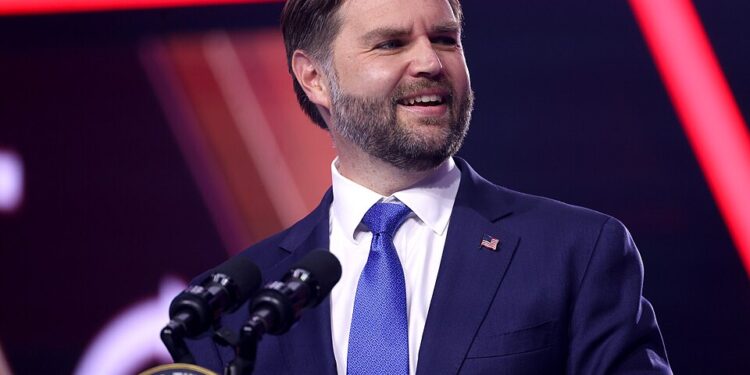
President Donald Trump is raising new questions about the Republican Party’s future after suggesting that Vice President JD Vance might not run for president in 2028.
The surprising statement comes as Republicans face the aftermath of major defeats in the 2026 midterm elections, leaving party leaders to consider what went wrong and how to move forward.
Vance has been widely viewed as a leading potential successor to Trump. However, the president’s latest remarks suggest that the race for the 2028 Republican presidential nomination could be more uncertain than previously expected.
With the next presidential election approaching, Trump’s comments are drawing fresh attention to the vice president’s political future.
Trump Makes Unexpected Remark About JD Vance
During a conversation with reporters Wednesday, Trump was asked whether he had discussed the 2028 presidential election with Vance.
The president declined to provide a definitive answer about his vice president’s political plans.
Instead, Trump suggested that several Republicans could eventually enter the race, while acknowledging that the field remains undecided.
“I speak to him about a lot of things, but I mean, we’ll see what happens,” Trump said.
The president then made a particularly noteworthy observation.
“Maybe he won’t run, I don’t know who’s gonna run,” Trump added.
The statement immediately raised questions about whether Vance remains the president’s preferred choice to lead the Republican Party after his second term.
However, Trump did not announce that Vance was withdrawing from consideration, and the vice president has not publicly ruled out a presidential campaign.
Republican Midterm Defeats Raise New Concerns
Trump’s comments followed a difficult election night for Republicans, who suffered significant losses in the November 3 midterm elections.
Democrats captured control of Congress, delivering a major political setback to the president and his party.
The election results have prompted renewed debate about Republican priorities, voter concerns, and the challenges facing the GOP in future elections.
One particularly important issue is the ongoing conflict involving Iran.
The war has become a major political concern, particularly as higher energy costs and economic uncertainty continue affecting American households.
For many voters, the cost of gasoline, groceries, utilities, and other everyday necessities remains a central issue.
Those financial pressures have also become part of the broader discussion about why Republicans struggled at the ballot box.
JD Vance Addresses Republican Election Losses
Following the midterm defeats, Vance offered his assessment of the factors that contributed to the Republican Party’s disappointing performance.
The vice president pointed to the conflict with Iran and its economic consequences as important concerns for voters.
His remarks drew attention because they appeared to place greater emphasis on the political consequences of the war than Trump’s own public statements.
When reporters asked Trump about Vance’s assessment, the president indicated that he understood the vice president’s position.
Trump said he considered Vance’s remarks acceptable but continued defending his administration’s military actions.
The president maintained that the conflict was necessary to prevent Iran from obtaining nuclear weapons.
He also made clear that he did not regret the decisions surrounding the military campaign.
“As far as that war is concerned, I would have done nothing different,” Trump said.
The exchange illustrated the different ways Trump and Vance are approaching the political consequences of the election.
While Vance has emphasized voter frustration and economic concerns, Trump continues to defend his administration’s decisions.
Whether those differences will affect the vice president’s future political ambitions remains uncertain.
Will Trump Endorse JD Vance in 2028?
Another important question involves Trump’s potential endorsement in the next Republican presidential primary.
Vance has previously expressed confidence that the president would support him if he decided to run for the White House.
During an October interview, the vice president suggested that Trump’s endorsement would likely follow a decision to enter the race.
However, Vance also acknowledged that he had not discussed the matter directly with Trump.
The president has repeatedly praised Vance’s abilities while stopping short of formally endorsing him for 2028.
Trump has also spoken positively about other prominent Republicans, including Secretary of State Marco Rubio.
Rubio has emerged as another potential contender in discussions about the party’s future.
Although Vance holds the advantage of serving as vice president, the Republican presidential nomination is not automatically reserved for the current administration’s second-in-command.
Other candidates could enter the race, potentially setting up a competitive Republican primary.
What the 2028 Election Could Mean for Republicans
The 2028 presidential election will present Republicans with a significant challenge.
Trump’s second term ends in January 2029, meaning the party must select a new standard-bearer for the next presidential contest.
Whoever receives the Republican nomination will face the task of maintaining support among Trump’s political coalition while also appealing to voters who may have moved away from the party.
The 2026 midterm results demonstrated the difficulties Republicans could face without Trump himself appearing on the ballot.
Economic concerns, government spending, immigration enforcement, foreign policy, and national security are all likely to influence the next presidential campaign.
Vance’s role in the current administration gives him valuable experience and national recognition.
However, his close association with Trump’s policies could also become an important issue during the campaign.
Republican voters will ultimately decide whether they want a candidate who closely follows Trump’s approach or someone offering a different direction for the party.
Is JD Vance Really Out of the Presidential Race?
Despite the speculation surrounding Trump’s remarks, there is currently no confirmation that Vance has abandoned his presidential ambitions.
The vice president has not officially announced a 2028 campaign, nor has he publicly declared that he will stay out of the race.
Trump’s comments appear to reflect uncertainty about the future Republican field rather than a definitive statement about Vance’s intentions.
Nevertheless, the president’s refusal to identify a preferred successor could encourage other prominent Republicans to consider their options.
With the party recovering from substantial midterm losses, questions about future leadership are likely to become increasingly important.
For now, Republicans are left with several unanswered questions.
Will Vance seek the presidency? Will Trump eventually endorse his vice president? Or could another Republican emerge as the party’s leading candidate?
Trump’s latest remarks have made one thing clear: The 2028 Republican presidential nomination remains unsettled, and even the vice president’s place in the race is not guaranteed.