
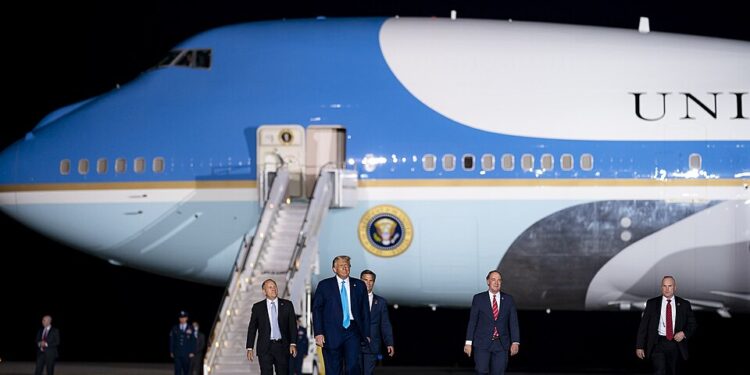
Boeing says it is investing heavily to complete the next generation of Air Force One aircraft after revealing another major financial loss tied to the high-profile presidential plane program.
During its latest earnings call, the aerospace giant announced an additional $280 million charge, pushing total losses on the Air Force One project to more than $3 billion since the contract was signed.
Boeing CEO Kelly Ortberg acknowledged the latest setback while emphasizing that delivering the aircraft remains one of the company’s highest priorities.
Ortberg acknowledged the additional cost was disappointing but said Boeing understands the importance of meeting its customer’s timeline. He added that the company is increasing its investment and resources to stay on track for delivering the aircraft in 2028.
According to Ortberg, Boeing has added engineers, technicians, and testing resources to accelerate production and reduce risks during the aircraft’s certification and flight-testing process.
Trump Contract Leaves Boeing Paying The Bill
President Donald Trump negotiated a fixed-price $3.9 billion contract with Boeing in 2018 to replace the aging presidential fleet.
Unlike many government contracts, the agreement requires Boeing—not American taxpayers—to absorb any cost overruns. As development costs have climbed, the company has been forced to cover billions of dollars in unexpected expenses.
By the end of 2024, Boeing had already reported roughly $2.8 billion in losses on the program. The newly announced charge pushes those losses even higher.
Years Behind Schedule
The Air Force One replacement program has also experienced significant delays.
Boeing originally expected to deliver the first aircraft by late 2024. However, a recent Government Accountability Office report found the project is now nearly three years behind schedule.
The company currently expects to deliver the first presidential aircraft in mid-2028, with the second scheduled for mid-2029.
Until the new planes are completed, the United States will continue relying on the two Boeing 747-200 aircraft that have transported American presidents since the early 1990s.
Why Air Force One Costs So Much
Although Air Force One is based on the Boeing 747, the aircraft is extensively modified before entering service.
Each plane is equipped with highly secure communications systems, classified defensive technology, missile protection, electromagnetic shielding, and the capability to serve as a flying command center during a national emergency. Those specialized military upgrades make the aircraft among the most sophisticated airplanes ever built.
Trump Has Repeatedly Pressured Boeing
President Trump has frequently criticized Boeing over the project’s rising costs and repeated delays, arguing that the company should honor the agreement it signed and deliver the aircraft as quickly as possible.
While upgrades to the new fleet continue, Trump has also used a luxury Boeing 747 donated by Qatar for official travel. The aircraft was temporarily removed from service earlier this month to receive additional defensive upgrades before returning to presidential use.
Bottom Line
Boeing’s latest $280 million charge underscores the enormous technical and financial challenges of replacing the Air Force One fleet. Because of the fixed-price contract negotiated during Trump’s first term, the company—not taxpayers—is responsible for covering the billions of dollars in additional costs as it works toward its revised 2028 delivery target.