
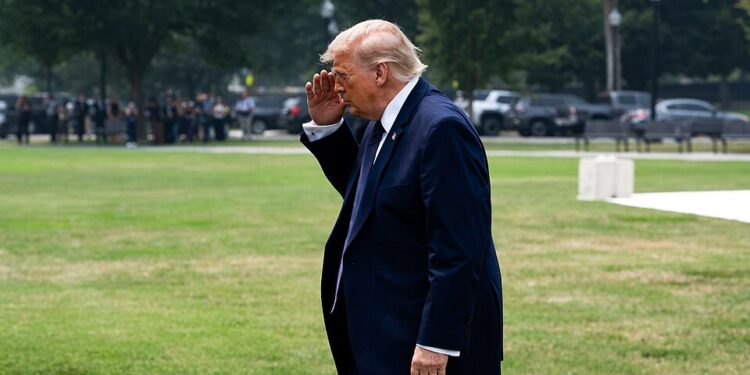
President Donald Trump’s proposed $1.8 billion anti-weaponization fund is drawing fresh attention after a heated television interview raised questions about who could qualify for compensation if the government wrongly targets an American.
The debate unfolded Sunday during CNN’s “State of the Union,” where House Judiciary Committee Chairman Rep. Jim Jordan (R-Ohio) was repeatedly pressed over whether former Olympian David Hearn should be eligible for compensation after federal prosecutors dropped criminal charges accusing him of damaging the Lincoln Memorial Reflecting Pool.
The exchange highlighted one of the biggest unanswered questions surrounding Trump’s proposal: Who should receive compensation when government investigations or prosecutions fall apart?
Trump’s Anti-Weaponization Fund Explained
The proposed anti-weaponization fund is designed to compensate individuals who supporters believe were unfairly targeted by politically motivated investigations or government misconduct.
Backers argue the fund would provide financial relief for Americans who suffered legal expenses, reputational damage, or other hardships after being caught up in investigations that ultimately proved to be unjustified.
Supporters say the proposal reflects President Trump’s long-standing criticism that parts of the federal government have been used as political weapons against ordinary Americans and political opponents.
While the proposal has generated strong support among many conservatives, lawmakers continue debating how claims would be evaluated and who would ultimately qualify for compensation.
CNN Presses Jim Jordan On David Hearn
During the interview, CNN anchor Dana Bash turned the conversation toward the criminal case involving former Olympian David Hearn.
Before questioning Jordan, Bash aired a clip of Interior Secretary Doug Burgum, who defended the government’s original position that damage to the Reflecting Pool resulted from acts of vandalism.
Burgum said investigators had gathered photographs and other evidence that he believed supported those conclusions.
Bash then pointed out that the Justice Department later dismissed the criminal case after determining the damage was instead linked to a rushed and poorly executed renovation project rather than vandalism.
She asked Jordan directly whether Hearn should be eligible to receive money through Trump’s anti-weaponization fund if prosecutors wrongly accused him.
Jordan Refuses To Give A Direct Answer
Jordan declined to commit either way.
Instead, he repeatedly emphasized that any future compensation decisions would be made by the independent board overseeing the fund rather than by members of Congress.
The Ohio Republican also said he had not reviewed all of the evidence surrounding the case and did not want to reach conclusions before learning every fact.
Despite several follow-up questions from Bash, Jordan continued saying the decision would belong to the board responsible for administering the program.
His reluctance to offer a personal opinion became one of the most notable moments of the interview.
Conversation Shifts To Past Justice Department Cases
Rather than focusing exclusively on Hearn’s case, Jordan broadened the discussion by pointing to previous controversies involving the Justice Department.
He argued that Americans have witnessed multiple examples in recent years where government power appeared to be used unfairly.
Jordan specifically referenced former FBI official Peter Strzok, saying he disagreed with financial settlements awarded in previous legal disputes involving government officials.
He also pointed to several investigations conducted during the Biden administration that Republicans have long criticized as examples of political weaponization.
Jordan maintained that concerns about fairness inside federal law enforcement remain one of the primary reasons many Republicans support reforms.
Bash Raises Questions About Government Accountability
Bash continued pressing Jordan, arguing that if prosecutors attempted to imprison an innocent man based on incorrect allegations, it would represent a serious failure of the justice system.
She referenced statements from U.S. Attorney Jeanine Pirro announcing that prosecutors had dropped the criminal charges after concluding the available evidence did not support the original accusations.
Bash suggested the situation raised broader concerns about government accountability and whether innocent Americans deserve compensation when cases collapse.
Jordan responded that if those facts ultimately prove accurate, the situation would certainly be troubling.
However, he maintained throughout the interview that he wanted to review the complete record before offering a final judgment.
Why The David Hearn Case Matters
The Hearn case has quickly become one of the first real-world examples critics and supporters alike are using to debate how Trump’s anti-weaponization fund might operate.
Supporters argue that if someone is falsely accused by the government and forced to defend themselves against criminal charges, compensation should at least be considered.
Others caution that every case must be carefully reviewed to determine whether government misconduct actually occurred before taxpayer dollars are distributed.
That debate is expected to continue as lawmakers work through the details of the proposal.
Supporters Say The Fund Could Restore Public Trust
Conservatives backing the proposal argue the fund represents an important safeguard against future government abuse.
They believe Americans should have confidence that if federal agencies make serious mistakes or pursue weak cases, there should be a process for addressing the harm caused.
Supporters also argue that stronger accountability could help restore public trust in federal institutions while discouraging politically motivated investigations in the future.
Critics, meanwhile, continue questioning how the program would be administered and whether difficult legal disputes could create disagreements over who deserves compensation.
What’s Next For Trump’s Proposal?
The proposal remains under discussion, and numerous details—including eligibility requirements, oversight, and the claims review process—have yet to be finalized.
The exchange between Jordan and Bash illustrates how quickly questions about individual cases could become central to the national debate once the fund moves forward.
Whether the David Hearn case ultimately qualifies under any future compensation program remains uncertain.
What is clear is that Trump’s anti-weaponization fund is already generating significant debate over government accountability, wrongful prosecutions, and how far Washington should go in compensating Americans who believe they were unfairly targeted by federal authorities.
As lawmakers continue shaping the proposal, cases like Hearn’s may become an early test of how the fund would function in practice—and whether it fulfills its goal of addressing claims of government overreach while maintaining public confidence in the justice system.