
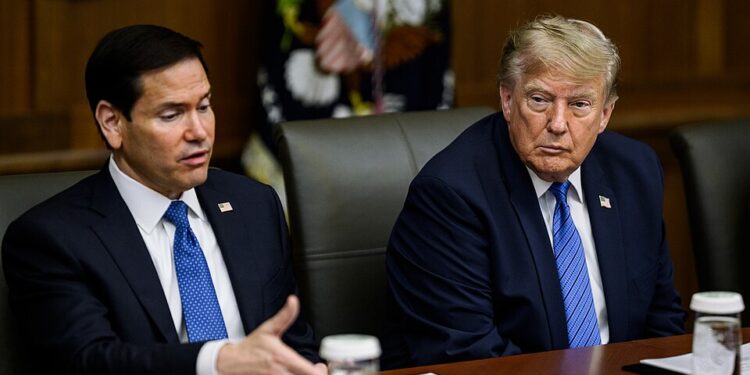
President Donald Trump and congressional Republicans are facing a serious political challenge as the 2026 midterm elections approach, with a major Republican strategy designed to protect the party’s House majority falling short of its original expectations.
With Election Day set for November 3, new reports suggest that the GOP’s ambitious redistricting effort has failed to deliver the overwhelming advantage Republican strategists once anticipated.
Instead of providing a clear path to expanding their congressional majority, the strategy has left Republicans spending nearly $100 million to compete in districts that were supposed to become more favorable to the party.
The developments are raising fresh questions about whether Republicans can maintain control of the House of Representatives during the final two years of Trump’s presidency.
Trump’s Redistricting Strategy Faces Major Obstacles
Republican strategists entered the 2026 election cycle with an ambitious plan to overcome one of Washington’s most persistent political trends.
Historically, the party controlling the White House tends to lose seats in Congress during midterm elections.
Republicans hoped to change that pattern by redrawing congressional boundaries in several states, creating new opportunities to win additional House seats.
Initially, the strategy appeared promising.
Political operatives identified approximately 13 to 14 potential Republican pickup opportunities resulting from the redistricting efforts.
However, according to reporting from Punchbowl News, only about five of those districts now appear reliably favorable to Republicans.
The remaining nine have become expensive political battlegrounds, requiring considerable financial investment and campaign resources.
Since September 1, Republican candidates and supporting political action committees have reportedly spent nearly $100 million advertising in those competitive districts.
The unexpected spending has raised concerns among some GOP strategists who believed the new congressional maps would make winning additional seats considerably easier.
Republican Leaders Confront A Difficult Political Reality
The growing uncertainty surrounding the redistricting effort comes at a particularly important moment for President Trump.
Republicans are fighting to maintain control of the House while Democrats attempt to regain the majority and increase their influence over the federal government.
A Republican-controlled House would allow Trump to continue working with congressional allies on major legislative priorities.
Those priorities include immigration enforcement, tax policy, federal spending, government reform, and economic initiatives.
A Democratic majority, however, would create new political challenges for the administration.
Democrats could use their control of congressional committees to conduct investigations, challenge administration policies, and influence the legislative agenda.
That possibility has made the November election a central focus for Republican leaders.
Despite the challenging political environment, GOP officials maintain that their candidates can still win enough competitive races to preserve the majority.
Texas And Florida Create Unexpected Problems
Some of the biggest concerns surrounding the Republican strategy involve Texas and Florida, two states that played major roles in the redistricting effort.
Republican operatives originally believed congressional map changes in those states could create approximately nine additional pickup opportunities.
However, shifting political conditions have complicated those plans.
One significant factor involves Hispanic and Latino voters, whose support has become increasingly important in congressional elections.
Trump made substantial gains among these voters during the 2024 presidential election, helping Republicans become more competitive in communities that had traditionally supported Democrats.
Some Republican strategists believed those gains would continue into the 2026 midterms.
But political consultants are now questioning whether the party placed too much confidence in a single election cycle.
One Republican consultant reportedly warned that strategists may have overestimated the durability of Trump’s 2024 improvements among Latino voters.
Economic conditions, immigration policy, and local political concerns could influence how these voters approach the upcoming elections.
For Republicans, maintaining support among working-class and Hispanic voters could prove essential to holding several competitive districts.
Democrats Believe The GOP Made A Costly Mistake
Democratic leaders are increasingly arguing that the Republican redistricting effort has created more problems than advantages.
Democratic Congressional Campaign Committee Chairwoman Suzan DelBene has criticized the strategy, suggesting that Republicans made several newly drawn districts more competitive than expected.
She has pointed to heavy Republican spending in Texas and other states as evidence that the party is struggling to secure victories in districts originally considered favorable.
Some Democratic strategists have described the situation as a potential “dummymander.”
The term refers to a redistricting strategy that backfires when a political party spreads its voters across too many districts, unintentionally creating additional opportunities for its opponents.
Democrats believe that possibility could help their candidates compete in areas where Republicans expected comfortable victories.
However, Republican redistricting officials strongly reject those claims.
Adam Kincaid, executive director of the National Republican Redistricting Trust, maintains that the new maps were carefully designed to protect Republican incumbents while creating additional opportunities.
Kincaid argues that the effectiveness of redistricting cannot be judged solely by early polling or campaign spending.
Ultimately, candidates must still earn the support of voters.
Republicans Defend Trump’s Midterm Election Strategy
Despite growing concerns among political analysts, Republican leaders are refusing to concede that their redistricting strategy has failed.
National Republican Congressional Committee spokesperson Mike Marinella has argued that Republicans remain well-positioned to retain control of the House.
He also contends that Democrats face significant political challenges of their own, particularly in districts that supported Trump during the previous presidential election.
Republicans believe those districts could provide valuable opportunities for GOP candidates to defeat vulnerable Democratic incumbents.
House Republican Conference Chairwoman Lisa McClain has also expressed confidence in the party’s ability to compete nationwide.
McClain has emphasized Republican candidates, campaign momentum, and the party’s legislative priorities as reasons the GOP could still perform better than current projections suggest.
Meanwhile, Republican leaders acknowledge that capturing every district originally targeted through redistricting may be unrealistic.
That does not necessarily mean the broader effort will produce no benefits.
Even a handful of additional Republican victories could make a significant difference in a closely divided House.
Election Forecasts Raise Concerns For The GOP
Recent congressional election ratings illustrate why Republican leaders are paying such close attention to competitive House races.
According to the Cook Political Report’s September 25 assessment, Democrats were favored in 208 congressional districts, compared with 205 districts favoring Republicans.
Another 22 seats were classified as toss-ups.
Those competitive races could ultimately determine which political party controls the House of Representatives.
With 218 seats required for a majority, neither party can afford to overlook close contests.
Political forecasts are not guarantees, however.
Polling numbers can shift as Election Day approaches, particularly when undecided voters begin making their final decisions.
Republicans also point to previous elections in which their candidates performed better than some surveys suggested.
The GOP continues to benefit from substantial campaign fundraising and an established network of political organizations supporting competitive House races.
Republican leaders hope those resources, combined with voter turnout efforts, will help the party overcome the challenging political environment.
The Economy Could Determine The Midterm Elections
Beyond congressional redistricting, economic concerns remain an important factor in the upcoming elections.
Many Americans continue to focus on household expenses, inflation, mortgage rates, and the overall cost of living.
For families living on fixed incomes, including retirees, changes in everyday expenses can have a significant impact on financial security.
Republicans are emphasizing their economic policies and arguing that continued GOP leadership will support long-term growth and stability.
Democrats, meanwhile, are attempting to connect current economic frustrations to the Trump administration’s policies.
Both parties recognize that voters’ personal financial situations could play an important role in determining the outcome of competitive congressional races.
Immigration, government spending, public safety, and healthcare costs are also expected to influence voter decisions.
For Republican candidates, the challenge will be convincing voters that maintaining GOP control of Congress offers the strongest path forward.
Could Republicans Still Keep Control Of Congress?
Although current election forecasts present obstacles for Republicans, the battle for the House remains unresolved.
Several competitive districts could shift before November 3, and strong voter turnout may prove decisive.
Republican strategists also argue that redistricting was intended to create opportunities rather than guarantee election victories.
Kincaid has defended the effort as a necessary step to prevent Democrats from gaining an advantage through their own congressional map changes.
From that perspective, Republican leaders believe the new districts could provide political benefits beyond the 2026 election cycle.
Still, the immediate challenge is clear.
Republicans must win enough competitive races to overcome historical midterm trends and maintain their narrow congressional advantage.
That task has become more difficult than many party strategists anticipated.
November Election Could Shape Trump’s Presidency
The stakes of the 2026 midterm elections extend far beyond individual congressional districts.
For President Trump, the outcome could determine how effectively his administration advances its legislative priorities during the remainder of his second term.
Republicans believe retaining the House is essential to continuing their work on economic policy, immigration, national security, and federal spending.
Democrats view the election as an opportunity to regain congressional power and provide stronger oversight of the administration.
Both parties are investing substantial resources in competitive districts, recognizing that even a small number of victories could determine control of Congress.
While the Republican redistricting strategy has not produced the clear advantage many initially expected, GOP leaders insist they still have a path to victory.
With Election Day approaching, President Trump and congressional Republicans face a decisive political test. Whether their strategy ultimately succeeds or fails will depend on the voters who head to the polls on November 3.
For now, the fight for control of the House remains competitive, and the outcome could have lasting consequences for the direction of the country.