
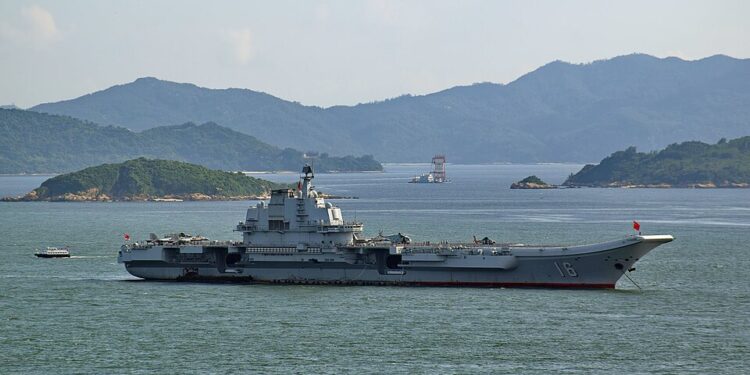
President Donald Trump’s Navy is pouring hundreds of millions of dollars into a new technological battle as the United States races to maintain its military advantage over China.
The competition for control of the world’s oceans is becoming increasingly expensive, and American military leaders are searching for ways to keep the nation’s warships ready for action.
Now, the Navy has dramatically expanded a major defense technology agreement, raising its maximum value to $300 million.
But the latest investment doesn’t involve traditional missiles, fighter jets, or battleships.
Instead, the Navy is betting on artificial intelligence and advanced robotics to solve a costly problem that could determine America’s military readiness in a future confrontation.
Navy Makes Massive $300 Million Move
According to Fox News, the U.S. Navy has expanded its agreement with Pennsylvania-based Gecko Robotics from an initial $71 million ceiling to $300 million.
The announcement, made October 20, represents a major expansion of the military’s investment in automated ship inspections and maintenance technology.
The original agreement was announced in March 2026, making the rapid increase particularly noteworthy.
Gecko Robotics develops specialized machines that inspect military ships for corrosion, structural weaknesses, and other forms of damage.
These inspections are important because American warships endure years of exposure to saltwater, harsh weather, and demanding operating conditions.
Even relatively small maintenance problems can become expensive when they force a military vessel out of service.
The company’s technology is designed to identify those problems sooner, allowing repair crews to complete necessary work more efficiently.
The ultimate goal is to keep more American warships at sea instead of sitting in repair facilities.
The $300 million figure is the agreement’s maximum spending ceiling, not a confirmation that the entire amount has already been paid.
China’s Growing Navy Puts America Under Pressure
The expanded agreement comes as military competition between Washington and Beijing continues to intensify.
China has spent years building up its naval capabilities, raising concerns about America’s ability to maintain its traditional advantage in the Pacific.
Although the United States operates some of the world’s most sophisticated warships, China possesses a larger navy when measured by the number of vessels in its battle force.
Beijing also benefits from extensive shipbuilding infrastructure that allows it to produce new vessels at a substantial pace.
For American military planners, the challenge involves more than simply building additional ships.
Existing vessels must remain operational, properly maintained, and capable of responding when national security emergencies arise.
A destroyer undergoing lengthy repairs cannot perform the same missions as a destroyer deployed at sea.
That reality makes military maintenance a critical part of America’s broader defense strategy.
And with tensions surrounding Taiwan and other areas of the Indo-Pacific, maintaining a dependable naval presence remains an important priority.
The Navy’s robotics investment is intended to improve that readiness while potentially reducing unnecessary maintenance expenses.
New Technology Could Save Taxpayers Millions
One of the most significant claims surrounding the expanded deal involves potential savings for American taxpayers.
Gecko Robotics estimates that its equipment could save the Navy as much as $8 million in repair costs per ship.
The company also says its technology can identify certain structural problems up to 50 times faster than traditional inspection methods.
That could shorten inspections that previously required months into processes lasting days.
These estimates come from the company itself, and actual savings will depend on how the equipment performs across Navy operations.
Nevertheless, the potential financial impact is substantial.
Traditional ship maintenance frequently requires extensive inspections before crews can determine which parts of a vessel need repairs.
Workers may need to remove protective materials, examine difficult-to-reach areas, and conduct numerous tests before repairs can begin.
The new robotic equipment is designed to identify specific problem areas without requiring as much preliminary work.
That means fewer unnecessary repairs, potentially lower labor costs, and less time spent waiting for inspections to finish.
For taxpayers concerned about federal spending, the promise of achieving better military readiness while reducing waste is particularly important.
Navy Unveils Powerful New Robot
A central component of the expanded agreement is a robotic inspection system called Komodo.
Unlike traditional maintenance equipment, Komodo can examine steel beneath thick protective coatings commonly used on military ship decks.
Those coatings help protect vessels against harsh maritime conditions, but they can also make it difficult to inspect the underlying metal.
Ordinarily, maintenance crews might need to remove portions of the protective material to determine whether corrosion or structural damage exists.
Komodo is designed to conduct those inspections without stripping away the coatings.
The robot collects information about corrosion and metal thickness, allowing maintenance teams to create detailed maps of a ship’s condition.
Artificial intelligence software then helps analyze the collected information and identify areas requiring attention.
This could allow technicians to prepare repair plans before a vessel enters dry dock.
That represents a significant advantage because unexpected repairs can delay a warship’s return to active duty.
By identifying maintenance needs earlier, military officials hope to reduce costly surprises and return ships to service more quickly.
Trump’s Navy Targets Major Readiness Goal
The Navy’s broader objective is to increase the percentage of its fleet available for military operations.
The service has established a goal of reaching 80% fleet readiness by 2027.
Meeting that target would require improvements across maintenance operations, shipyard scheduling, workforce availability, and other areas affecting naval performance.
Under the original Gecko Robotics agreement, the company was scheduled to begin work involving 18 vessels in the U.S. Pacific Fleet.
Those ships included several types of military vessels responsible for conducting missions around the world.
The expanded contract provides a mechanism for the government to deploy robotic inspection technology more widely.
For the Navy, improving maintenance efficiency could help ensure that existing vessels remain useful while the military continues developing its future fleet.
That matters because constructing new warships is an expensive and time-consuming process.
Keeping current ships in service can help the military maintain its capabilities without waiting years for replacement vessels.
However, robotic inspections alone will not solve every maintenance challenge facing the Navy.
Shipyard capacity, skilled labor shortages, supply chains, and equipment availability remain important factors.
Will The $300 Million Investment Pay Off?
The expanded agreement raises an important question about military spending.
Can a larger investment in artificial intelligence actually save the federal government money over time?
Supporters of the technology believe faster inspections and more accurate repair assessments could produce meaningful savings.
If the company meets its performance projections, the Navy could potentially reduce expensive maintenance delays and make better use of its existing fleet.
But those benefits are not guaranteed.
The government will need to evaluate whether the technology delivers reliable results as additional vessels begin using the systems.
Contract oversight will also be important because a $300 million spending ceiling represents a substantial federal commitment.
The challenge is ensuring that taxpayer dollars translate into measurable improvements rather than simply financing another expensive government program.
With China’s naval expansion presenting an ongoing strategic concern, military officials face pressure to improve readiness without allowing costs to spiral unnecessarily.
America Faces A New Kind Of Military Competition
The Navy’s investment underscores how dramatically modern military competition is changing.
For generations, naval superiority was closely associated with the number of aircraft carriers, destroyers, submarines, and other warships a country could deploy.
Those capabilities remain essential.
But the ability to maintain and repair military equipment is increasingly important as well.
A technologically advanced warship offers limited strategic value when it is unavailable for deployment.
By introducing artificial intelligence and robotic inspection systems into maintenance operations, the Navy hopes to make America’s existing fleet more dependable.
The competition with China is therefore extending beyond weapons and shipbuilding into technology, maintenance, and operational efficiency.
That does not mean the United States has entered a new shooting war. The latest agreement concerns military preparedness during an ongoing strategic rivalry.
For President Trump and the Pentagon, the stakes involve American military strength, national security, and the responsible use of federal funds.
The real test will be whether this $300 million agreement delivers faster repairs, greater fleet readiness, and meaningful savings for American taxpayers.
As China continues expanding its naval capabilities, keeping America’s warships ready for action could prove just as important as building new ones.