
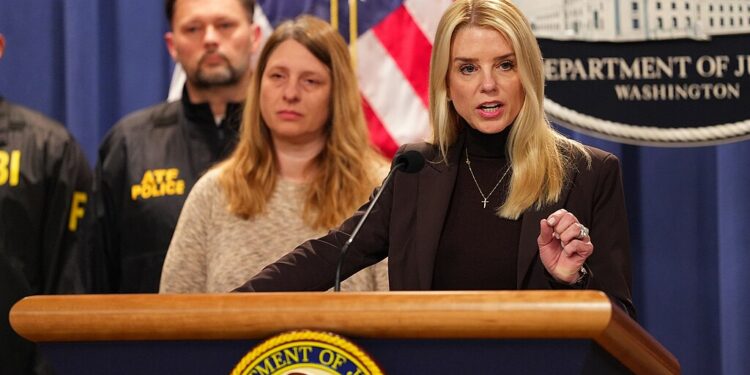
Attorney General Pam Bondi announced Tuesday night that Lindsey Halligan will step down as interim U.S. attorney for the Eastern District of Virginia, citing procedural roadblocks imposed by Senate Democrats.
The announcement comes as tensions continue to rise between the Department of Justice and the federal courts over the limits of executive authority. At issue is Halligan’s interim appointment, which a federal judge recently ruled did not meet statutory requirements—a conclusion the Justice Department strongly disputes.
Halligan, a former White House adviser with no prior prosecutorial background, was appointed to the role in September 2025 during President Donald Trump’s second term. Her appointment immediately drew scrutiny, highlighting ongoing disagreements over how vacancies should be filled when the Senate fails to act on nominees.
In a statement posted on X, Bondi said Democratic senators effectively blocked Halligan from continuing in the role by using the Senate’s “blue slip” process. According to Bondi, that maneuver made it impossible for Halligan to remain in office once her 120-day interim appointment expired. She described the situation as “deeply misguided” and argued it reflects political obstruction rather than a good-faith effort to ensure stable leadership within the Justice Department.
Federal law generally requires U.S. attorneys to be nominated by the president and confirmed by the Senate. When vacancies occur, the attorney general may appoint an interim U.S. attorney for up to 120 days. If the Senate does not act within that timeframe, a federal district court is authorized to appoint a temporary replacement until the position is formally filled.
On Tuesday, U.S. District Judge David J. Novak—who was appointed by President Trump in 2019—issued an order removing the title “United States Attorney” from an indictment signed by Halligan. The judge also barred her from presenting herself as the U.S. attorney in his courtroom and warned that continued use of the title could result in further action.
Halligan responded in a statement reported by a Guardian journalist, arguing that the court’s actions went beyond what was necessary. She said the ruling treated her as if she had already been removed from office, while the court declined to appoint a replacement—leaving the position effectively vacant despite declaring her appointment unlawful.
The Eastern District of Virginia has announced it will begin accepting applications for a new interim U.S. attorney through February 10. Appeals related to Halligan’s appointment remain ongoing, setting the stage for continued legal debate over executive authority, Senate confirmation powers, and the future of interim appointments.