
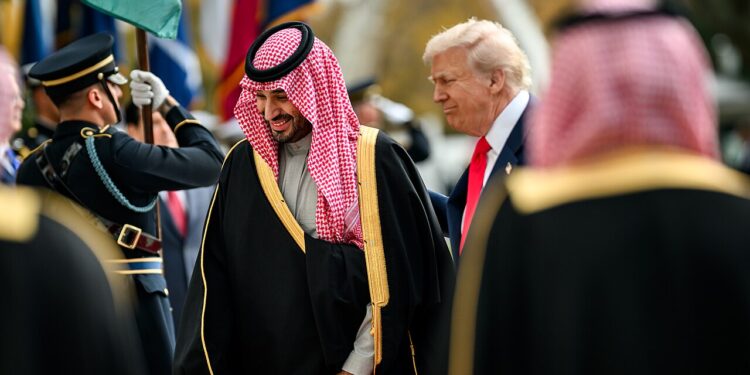
A powerful U.S. ally is reportedly urging President Donald Trump to stay the course—and even escalate—in the ongoing confrontation with Iran, according to a new report that is raising serious questions about what comes next.
Saudi Crown Prince Mohammed bin Salman has been privately pressing President Trump to continue aggressive action against Iran’s regime, warning that backing off too soon could have dangerous long-term consequences for the Middle East and global stability.
According to sources cited in The New York Times, the Saudi leader believes Iran’s leadership remains a serious and ongoing threat to the Gulf region, and has encouraged the Trump administration to weaken Tehran before any conflict is brought to an end.
Behind-the-Scenes Pressure On Trump
Multiple officials familiar with the discussions say the crown prince has argued strongly against winding down military operations prematurely. Instead, he has reportedly pushed for continued strikes—especially targeting Iran’s energy infrastructure, which is considered the backbone of the regime’s power.
This kind of pressure highlights the high stakes involved—not just for the region, but for America’s national security and energy interests.
Even more concerning, the report suggests that ground operations have been discussed as a possible next step.
One option under consideration includes targeting Kharg Island, Iran’s critical oil export hub. Military analysts warn that any such operation—whether involving airborne troops or a Marine amphibious assault—would be extremely risky and could significantly escalate the conflict.
White House Keeps Quiet
When asked about the report, White House Press Secretary Karoline Leavitt declined to comment, emphasizing that private conversations between President Trump and foreign leaders remain confidential.
That silence has only fueled more speculation about how serious these discussions may be behind closed doors.
Trump Signals Possible Endgame
Despite outside pressure, President Trump has indicated that the conflict may be nearing a turning point.
In recent statements, Trump said the war is moving faster than expected and confirmed that negotiations are underway with what remains of Iran’s leadership.
Over the weekend, Trump issued a strong ultimatum, demanding Iran fully reopen the Strait of Hormuz within 48 hours—a critical global shipping route responsible for a large portion of the world’s oil supply.
He warned that failure to comply would result in direct strikes on Iran’s power infrastructure.
However, after what he described as “very good” and “productive” talks, Trump chose to pause escalation and extend the deadline by five days—signaling a possible path toward de-escalation.
Why This Matters To Americans
For millions of Americans—especially those watching gas prices, retirement savings, and national security concerns—this conflict hits close to home.
- Rising tensions could impact energy costs nationwide
- Escalation risks dragging the U.S. deeper into another prolonged conflict
- A strong resolution could reinforce America’s leadership under Trump
The Bottom Line
President Trump now faces a critical decision:
continue applying maximum pressure—or secure a deal to bring the conflict to a close.
With allies pushing for tougher action and negotiations still unfolding, the coming days could determine not only the outcome of this conflict—but the future stability of the entire region.