
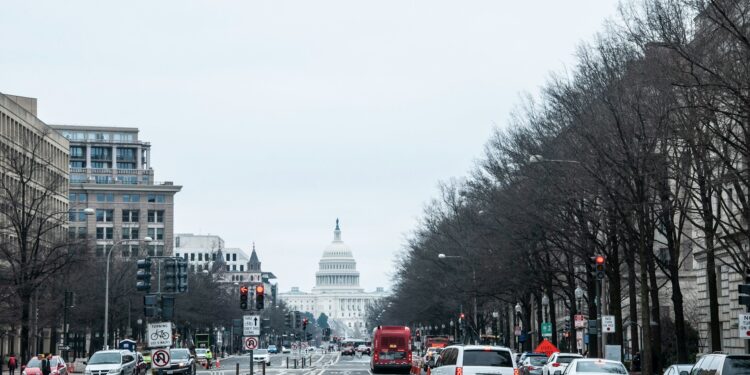
President Donald Trump’s efforts to strengthen security in Washington, D.C., are facing a new challenge as Democrats push to remove hundreds of National Guard troops from the nation’s capital.
Following Tuesday’s elections, Democratic officials are calling on newly elected governors in five states to withdraw military personnel currently participating in Trump’s federal law enforcement operation.
The move could result in approximately 628 National Guard members leaving Washington, reducing the manpower available for an operation the administration says is essential to maintaining public safety.
The developing dispute is raising new questions about presidential authority, crime prevention, federal spending, and the role of state governments in national security operations.
Democrats Move To Withdraw National Guard Troops
D.C. Council member Brooke Pinto, who chairs the council’s public safety committee, announced plans Thursday to contact incoming Democratic governors in Georgia, Iowa, Nevada, Ohio, and Texas.
All five states elected Democratic governors in Tuesday’s midterm elections, giving opponents of Trump’s National Guard deployment a potential new opportunity to challenge the operation.
Pinto intends to ask the governors to recall their states’ troops immediately after assuming office in January.
The request follows earlier efforts to persuade Republican governors to withdraw their National Guard personnel.
Those attempts encountered resistance, with several Republican leaders continuing to support the federal mission.
Now, Democratic officials believe the recent election results could help them accomplish what previous requests could not.
However, no withdrawal has been finalized, and each incoming governor would need to decide whether to participate.
Trump’s National Guard Mission Faces Potential Setback
Approximately 3,100 National Guard members are currently stationed in Washington as part of Trump’s security initiative.
The operation began in August 2025 under a federal mission called “Making the District of Columbia Safe and Beautiful.”
Its purpose includes supporting law enforcement, protecting federal facilities, deterring criminal activity, and improving public safety throughout the capital.
According to deployment figures, approximately 2,341 troops came from states and territories, while nearly 760 belong to the D.C. National Guard.
Georgia represents the largest potential withdrawal.
The state currently has 514 National Guard members participating in Washington’s security mission.
Iowa contributes another 110 personnel, while Nevada, Ohio, and Texas each have only a small number of troops deployed.
Together, the five states account for approximately 628 Guard members.
If all five governors agree to bring their troops home, Trump’s operation could lose roughly one-fifth of its personnel.
That would represent a significant reduction, although thousands of National Guard members could remain in the capital.
Trump Administration Expands Security Operations
The Democratic effort comes as the Trump administration is expanding equipment available to National Guard personnel serving in Washington.
Defense Secretary Pete Hegseth recently approved additional resources intended to support the federal security mission.
The authorization includes up to 60 marked patrol vehicles, military tactical vehicles, boats, and additional lighting equipment.
Those resources could provide greater flexibility for personnel working alongside federal and local law enforcement agencies.
The administration has defended the National Guard deployment as an important part of its broader effort to address crime and maintain order in Washington.
Trump initiated the operation after declaring that stronger federal intervention was necessary to improve security in the city.
Supporters argue that an increased federal presence can help deter criminal activity, assist law enforcement officers, and provide additional protection around government buildings and popular public areas.
Critics question whether the military presence is necessary, particularly given that crime had already been declining before the operation began.
The disagreement reflects a broader debate over how far the federal government should go when addressing public safety concerns.
Democrats Raise Concerns About Military Presence
Pinto and other Democratic officials have expressed opposition to the continued presence of National Guard personnel in residential neighborhoods and public spaces.
Some local residents have raised concerns about armed troops operating near schools, transportation facilities, and other areas used by families.
Pinto has also criticized the decision to expand the equipment available to Guard personnel, arguing that it could make military operations more visible throughout the city.
Supporters of the deployment maintain that the National Guard can provide valuable assistance to law enforcement without replacing local police departments.
Under the current mission, Guard personnel generally do not possess the same arrest powers as sworn civilian police officers.
Their responsibilities primarily involve supporting security operations, monitoring assigned locations, and assisting law enforcement agencies when necessary.
The dispute has placed the administration’s public safety objectives in direct conflict with the concerns of local Democratic leaders.
Congress Could Increase Pressure On Trump
The National Guard controversy could become more complicated when Democrats assume control of Congress in January.
Pinto has urged incoming Democratic congressional leaders to increase oversight of federal law enforcement activities in Washington.
Proposals under discussion include requiring federal officers to display identifying information, use body cameras, and follow additional transparency requirements.
Democrats could also examine federal spending connected to the security mission.
The National Guard operation has required substantial financial resources, creating another potential area of disagreement between the administration and congressional lawmakers.
Congressional oversight could result in hearings, investigations, or proposals to restrict certain activities.
Nevertheless, Congress would need to navigate existing federal laws and presidential authority before making major changes to the mission.
Legal Battle Over National Guard Deployment Continues
The political dispute is unfolding alongside an ongoing legal challenge to Trump’s use of National Guard personnel in Washington.
D.C. officials have questioned whether the administration has the authority to bring troops from other states into the capital for the current mission.
The administration has defended its actions, arguing that federal law provides the necessary authority to support security operations.
A federal appeals court has been reviewing the legal arguments.
The outcome could influence how future presidents deploy National Guard personnel during domestic emergencies or other security operations.
Washington presents a unique legal situation because the federal government exercises authority over the D.C. National Guard.
That differs from the National Guard units of individual states, which normally operate under their governors unless federalized.
As a result, recalling troops from Georgia, Iowa, Nevada, Ohio, and Texas would not automatically end the president’s control over the D.C. National Guard.
What Happens Next For Trump’s National Guard?
The next significant developments could come in January, when the newly elected Democratic governors take office.
Their decisions will determine whether hundreds of National Guard personnel remain in Washington or return to their home states.
Georgia and Iowa will be particularly important because their combined deployments account for nearly all the troops targeted by the withdrawal effort.
Even if those states recall their personnel, the administration could continue operating with the remaining National Guard units.
The mission is currently scheduled to continue through January 2029, although legal decisions, federal policy changes, or additional troop withdrawals could affect that timeline.
For now, the dispute highlights a growing confrontation between the Trump administration and Democratic officials over the federal government’s responsibility for public safety in America’s capital.
With Democrats preparing to exercise greater influence in state governments and Congress, the future of Trump’s National Guard deployment could become a major political and legal issue in the months ahead.
Whether the administration maintains its current security operation or faces substantial reductions may depend on decisions made by governors, federal judges, and congressional lawmakers.