
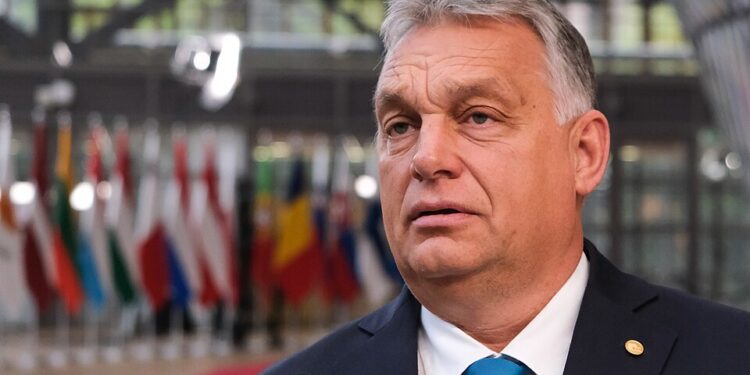
Vice President JD Vance admitted this week he was disappointed after the election loss of Hungarian Prime Minister Viktor Orbán—a key international ally of President Donald Trump.
The stunning political upset marks the end of Orbán’s 16-year leadership, as opposition figure Péter Magyar and his Tisza Party secured a decisive victory, taking control of Hungary’s government and البرلمان.
Vance Defends Trip Despite Election Loss
Speaking in a televised interview, Vance made it clear the Trump administration never viewed the trip to Hungary as a political gamble—but rather as a show of loyalty.
“We didn’t go because we thought Viktor Orbán would win easily,” Vance said. “We went because he stood with us for years—and it was the right thing to do.”
The vice president described Orbán’s legacy as “transformational,” especially praising his tough stance on immigration and willingness to confront the European Union’s growing influence.
Trump Praises Orbán’s Leadership
Although President Trump did not attend the rally in Budapest, he addressed supporters by phone—sending a clear message of support.
Trump applauded Orbán’s immigration policies and credited him with keeping Hungary “strong” during a time of global instability.
For many conservatives, Orbán has long represented a model of national sovereignty—prioritizing borders, culture, and independence over globalist pressure.
A Setback for Populist Movements?
Behind the scenes, some political insiders acknowledged the loss could signal broader challenges.
One ally close to Vance noted similarities between Orbán’s defeat and shifting political momentum worldwide, especially as international tensions rise.
Still, the source emphasized that core principles—like skepticism of the European Union—are not going anywhere.
“Euro-skepticism isn’t fading,” the ally said. “If anything, it’s becoming more relevant.”
Republican Pushback Emerges
Not all Republicans are on the same page.
Senator Mitch McConnell criticized Orbán’s record, arguing that some conservatives have painted an overly rosy picture of Hungary.
In a recent opinion piece, McConnell pointed to concerns about government control, economic favoritism, and declining cultural trends.
He also raised concerns about Orbán’s relationship with Vladimir Putin, particularly Hungary’s resistance to European sanctions and its stance on Ukraine.
What This Means for Trump and Global Politics
Orbán’s defeat could mark a turning point in Europe—especially for leaders aligned with Trump-style policies.
But for now, the Trump administration appears unmoved, doubling down on its support for strong borders, national identity, and independence from global institutions.
As Europe shifts, one question remains:
Is this a temporary political setback—or the start of a larger global realignment?