
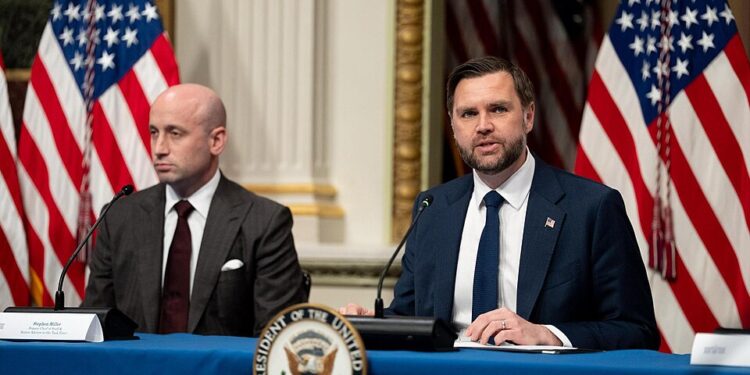
Vice President JD Vance is striking a noticeably different tone than President Donald Trump when it comes to the administration’s ongoing negotiations with Iran.
While Trump recently suggested a nuclear agreement could be reached within days, Vance indicated Americans may have to wait much longer before a final deal is completed.
The differing timelines are drawing attention as the administration works to secure what officials hope will be a historic agreement aimed at preventing Iran from ever obtaining a nuclear weapon.
Speaking during an interview with CBS News, Vance expressed confidence that the United States is making substantial progress. However, he stopped short of predicting an immediate breakthrough.
According to Vance, the administration’s objective goes far beyond a short-term political victory.
Instead, he said the goal is to create a lasting solution that protects America for generations and permanently blocks Iran’s path to a nuclear weapon.
Vance argued that negotiators are closer than ever to achieving that outcome.
“We’re very close,” he said.
Still, the vice president acknowledged that significant work remains before any agreement can be finalized.
That assessment stands in contrast to comments Trump made earlier this week.
The president told reporters that negotiations appeared to be entering their final stages and suggested a deal could emerge within just a few days.
Vance, meanwhile, offered a much broader timeline.
He said an agreement could come together next week. But he also warned that negotiations could continue for months before a final resolution is reached.
The comments come at a critical moment for U.S. foreign policy.
Tensions in the Middle East remain elevated following reports that Iranian forces shot down a U.S. Apache helicopter near the Strait of Hormuz.
The incident prompted a sharp response from President Trump, who vowed that America would respond to the attack.
Fortunately, both crew members were rescued safely and escaped without injury.
Military officials described the recovery effort as a groundbreaking operation involving advanced drone technology.
Despite the latest confrontation, Vance pushed back on concerns that Iran is simply trying to delay negotiations.
Many critics have argued that Tehran has a long history of dragging out diplomatic talks while continuing to advance its strategic objectives.
Vance disagreed with that characterization.
He suggested that Iran’s political system often moves slowly and requires lengthy internal consensus before major decisions can be finalized.
The vice president also emphasized Trump’s negotiating approach.
According to Vance, the president does not rely on trust when dealing with foreign adversaries.
Instead, he relies on strong enforcement measures, verification requirements, and America’s negotiating leverage.
The administration believes those safeguards can ensure any future agreement is actually enforced rather than simply promised on paper.
For Trump supporters, the stakes could not be higher.
A successful agreement could deliver a major foreign policy victory while reducing the threat of a nuclear-armed Iran.
A failed agreement, however, could increase instability across the Middle East and place additional pressure on U.S. military forces operating in the region.
For now, administration officials remain optimistic.
But Vance’s comments suggest that while progress is being made, the finish line may not be quite as close as some had hoped.
The coming weeks could determine whether Trump’s diplomatic strategy produces a lasting breakthrough—or whether one of America’s longest-running foreign policy challenges continues far into the future.