
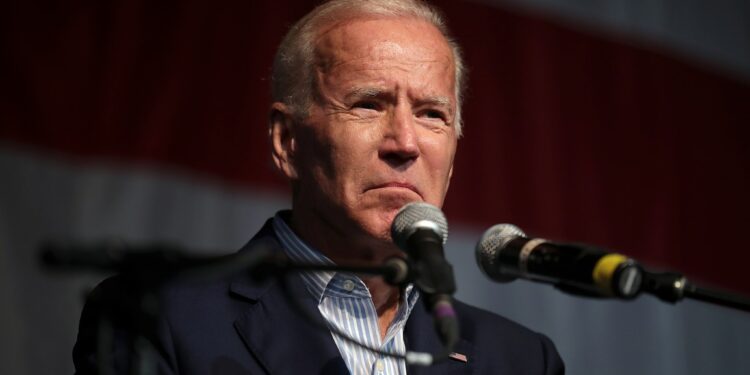
A newly uncovered White House memo is raising fresh questions about the Biden administration’s immigration strategy during its final days in office. The internal document reveals officials discussed expanding Temporary Protected Status (TPS) to more than 3.1 million additional migrants, a move critics say could have made President Donald Trump’s deportation agenda significantly more difficult to carry out.
The memo, obtained by Sen. Eric Schmitt (R-Mo.), offers a rare behind-the-scenes look at the immigration proposals Biden advisers considered before President Trump returned to the White House after campaigning on stronger border security and expanded deportations.
While the proposals were never fully implemented, the document is expected to intensify the ongoing debate over executive authority, immigration policy, and the future of the TPS program.
What the Biden Memo Revealed
According to the memo, senior White House advisers recommended expanding Temporary Protected Status to cover millions of additional foreign nationals from several countries.
TPS is intended to provide temporary protection from deportation to people whose home countries are experiencing armed conflict, natural disasters, or other extraordinary conditions. Critics, however, argue that repeated extensions have transformed what was meant to be a temporary humanitarian program into a long-term immigration policy.
Sen. Schmitt said the memo demonstrates that the outgoing Biden administration was preparing an aggressive last-minute effort to make it more difficult for the incoming Trump administration to carry out its immigration agenda.
Sen. Eric Schmitt told Fox News Digital that his investigation found the outgoing Biden White House attempted to use the Temporary Protected Status (TPS) program to allow millions of people who were in the country illegally to remain.
He argued that the proposal ignored the outcome of the 2024 election, in which Trump pledged to strengthen border security and increase deportations of those in the country illegally.
“After the American people voted for President Trump’s promise to end the TPS scam, the Biden administration tried to subvert the will of the American people,” Schmitt said. “This was mass amnesty by decree.”
Plan Could Have Covered More Than 3 Million People
One of the most significant sections of the memo estimated how many additional migrants could qualify if new TPS designations were approved.
The projections included approximately:
- 1.5 million Guatemalans
- 600,000 Ecuadorians
- 464,000 Nicaraguans
- 455,000 Venezuelans
- Smaller populations from Ukraine, Afghanistan, and Sudan
Combined, the proposal could have made more than 3.1 million people eligible for temporary deportation protections.
Schmitt described the proposal as an attempt to create what he called a “deportation shield” before Trump returned to office, arguing it would have delayed enforcement efforts through years of expected court challenges.
Memo Anticipated Legal Battles With Trump
The document acknowledged that many of Trump’s first-term efforts to end TPS protections were blocked in federal court after lawsuits were filed by immigration advocacy groups.
According to the memo, advisers believed new TPS designations would likely survive legal challenges because similar cases had previously prevented the Trump administration from terminating protections for several countries.
The memo also acknowledged that earlier court decisions were influenced by weaknesses in the factual record presented during those cases, suggesting a future administration could attempt to address those legal shortcomings.
Even so, Biden advisers believed expanding TPS could significantly complicate Trump’s plans to carry out mass deportations.
Biden Expanded TPS Before Leaving Office
Although the broader recommendations were never fully approved, Schmitt noted that the Biden administration did extend TPS protections for nearly 1 million noncitizens during its final days in office.
He argued that action reflected many of the broader immigration goals outlined in the internal memo.
Schmitt said he obtained the document from Archivist of the United States Edward Forst through his authority as chairman of the Senate Judiciary Subcommittee on the Constitution.
He also pointed to what he described as an apparent dating error, saying the memo was labeled January 2024 even though it was prepared during Biden’s final weeks before Trump’s January 2025 inauguration.
Democratic Lawmakers Requested Additional TPS Actions
The document pointed out that Biden had already approved new TPS designations or extended existing protections for people from Cameroon, Afghanistan, Burma, Ethiopia, Ukraine, Lebanon, Venezuela, and Haiti.
It also noted that federal courts had blocked previous Trump administration efforts to terminate TPS protections for countries including Haiti, El Salvador, Nepal, Honduras, Nicaragua, and Sudan.
The document further stated that several Democratic senators urged the White House to consider additional TPS-related actions before Trump took office.
Among those mentioned were Sens. Michael Bennet (D-Colo.), Catherine Cortez-Masto (D-Nev.), Cory Booker (D-N.J.), Dick Durbin (D-Ill.), Mazie Hirono (D-Hawaii), Ben Ray Luján (D-N.M.), Tammy Duckworth (D-Ill.), and Alex Padilla (D-Calif.).
It also noted that advocacy organizations were encouraging the administration to designate Ecuador and Guatemala for TPS protections before the presidential transition.
Supporters and Critics Remain Divided
Supporters of Temporary Protected Status argue the program provides critical humanitarian relief for individuals whose home countries remain unsafe because of war, political instability, or natural disasters.
Critics, however, contend that repeated extensions have allowed many temporary protections to become effectively permanent, exceeding the original intent of the program and encouraging additional illegal immigration.
That disagreement is expected to remain a central issue as the Trump administration continues pursuing its broader immigration enforcement agenda.
Immigration Debate Is Far From Over
Although the largest TPS expansion proposals outlined in the memo were never implemented, the newly disclosed document provides one of the clearest looks yet at the immigration options Biden advisers considered during the administration’s final weeks.
The memo is likely to fuel renewed debate over executive authority, border security, and the future of Temporary Protected Status as President Trump moves forward with efforts to tighten immigration enforcement and reduce the use of executive immigration programs.