
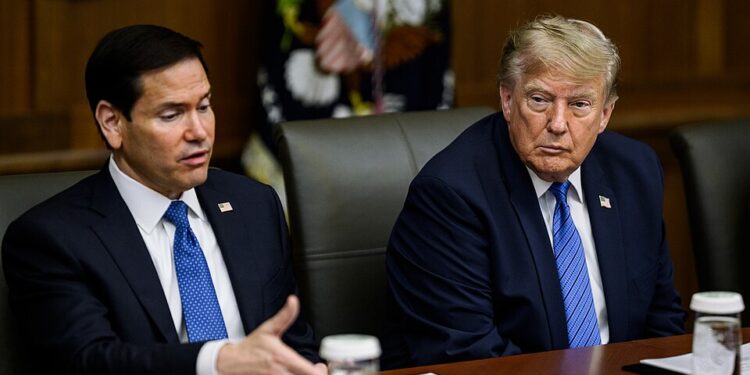
Defense Secretary Pete Hegseth is coming under growing pressure from members of his own party as Republican senators raise new questions about leadership at the Pentagon, America’s military readiness and the continuing war with Iran.
But President Donald Trump is making one thing clear: He is standing behind his defense secretary.
The developing split has created an unusual situation in Washington. Trump continues to publicly praise Hegseth and his record at the Department of Defense, while several prominent Republican lawmakers are openly voicing concerns.
Sen. Thom Tillis of North Carolina delivered perhaps the strongest criticism yet, declaring that Hegseth has “lost my confidence.”
Tillis has pointed to the departure of experienced senior military leaders and criticized what he considers excessive micromanagement at the Pentagon.
He’s not alone.
Sen. Susan Collins of Maine, who chairs the powerful Senate Appropriations Committee, described the departures of senior military officials as “deeply troubling.”
Republican Sens. Shelley Moore Capito of West Virginia and Joni Ernst of Iowa have also raised concerns as Americans wait for a resolution to the conflict with Iran.
The criticism is putting a renewed spotlight on Hegseth at a critical moment for the Trump administration.
Trump Comes To Hegseth’s Defense
Despite the Republican criticism, Trump isn’t abandoning Hegseth.
Quite the opposite.
The president publicly defended his defense secretary Thursday and dismissed reports of internal turmoil as “false and completely unfounded rumors.”
In a Truth Social post, Trump said he was “extremely happy” with Hegseth’s performance leading the Pentagon.
Trump pointed to his administration’s military operations involving Venezuela and Iran as evidence of Hegseth’s leadership.
The president also praised what he described as major improvements inside the Pentagon, including eliminating diversity, equity and inclusion initiatives and improving military recruitment.
Those changes have been priorities for Trump and many conservatives who argued that the U.S. military needed to refocus on combat effectiveness, recruitment and national defense.
Trump’s endorsement is especially important because Hegseth has already survived several political controversies without losing the president’s support.
Yet while his position inside the administration appears secure for now, his standing with the American public presents a more complicated picture.
New Poll Raises Warning Signs for Hegseth
A new Marquette Law School poll shows Hegseth struggling with U.S. adults as questions surrounding the Pentagon and Iran continue.
The survey, conducted July 22-29, found that just 23% of respondents had a favorable opinion of Hegseth.
Another 45% viewed him unfavorably.
That left the defense secretary with a net favorability rating of negative 22 percentage points, tying Trump for the lowest net rating among the administration figures included in the poll.
There is an important caveat.
Hegseth was also the least familiar official tested.
About 32% of respondents said they had not heard enough about him to form an opinion, meaning a substantial portion of Americans still haven’t made up their minds about the defense secretary.
Earlier polling also showed a much different picture among Republican voters.
Hegseth Had Stronger Support Among Republicans
A Marquette poll conducted May 20-26 found Hegseth in considerably stronger territory with Republicans.
At the time, 55% of Republicans viewed him favorably while 19% viewed him unfavorably.
That translated into a positive net favorability rating of 36 points.
Even then, Hegseth ranked behind the other Republican figures included in that particular survey.
Marquette has not released an updated Republican-only breakdown comparable to the May numbers, so the latest survey does not establish how much Hegseth’s standing has changed specifically among GOP voters.
However, the poll revealed another number Republicans may be watching closely ahead of November’s midterm elections.
Only 30% of Republicans said they were “very enthusiastic” about voting, down from 36% in May.
Republicans also trailed Democrats when voters were asked how certain they were to cast a ballot.
Sixty-five percent of Republicans said they were certain to vote, compared with 70% of Democrats.
With control of Congress potentially at stake, even a modest enthusiasm gap could become important.
But Hegseth’s political problems aren’t limited to polling.
A much bigger controversy involves America’s military arsenal.
Are America’s Weapons Stockpiles Running Low?
Questions surrounding U.S. munitions have become one of the most consequential issues facing the Pentagon as the Iran war continues.
The Washington Post reported that Trump’s frustration allegedly spilled over during a recent gathering at Camp David.
According to two people familiar with the exchange cited by the newspaper, Trump confronted Hegseth and demanded answers about reported shortages of critical U.S. military munitions.
The report claimed Trump believed the problem “had been fixed” and questioned why he had not received a clearer picture of America’s available weapons.
The report also alleged that Hegseth placed responsibility on Deputy Defense Secretary Stephen Feinberg for issues surrounding the weapons stockpile and for not adequately keeping the president updated.
Those allegations were quickly and forcefully denied by the Trump administration.
White House Says Report Is ‘Fake News’
White House press secretary Karoline Leavitt disputed The Washington Post’s account and said she was personally present at Camp David.
Leavitt called the report “100% fake news” and said the alleged confrontation “literally never happened.”
She added that Trump maintains “the utmost confidence” in Hegseth.
Pentagon chief spokesman Sean Parnell issued a similar denial.
Parnell said Hegseth “did not mislead anyone about our munitions posture” and rejected the claim that the defense secretary blamed Feinberg.
Trump then entered the dispute himself.
Writing on Truth Social, the president insisted the United States has “massive amounts” of munitions available.
Trump said additional weapons are being manufactured and shipped as needed and lashed out at people accused of leaking information about America’s military capabilities.
The conflicting accounts have nevertheless put a spotlight on an issue that matters far beyond Washington politics.
How prepared is America’s military for a prolonged conflict?
U.S. Military Has Used Huge Amounts of Ammunition
The Iran conflict has reportedly consumed significant quantities of some of America’s most sophisticated weapons.
The Washington Post reported that U.S. forces fired more than 850 Tomahawk cruise missiles during the first month of fighting.
American forces also reportedly used more than 1,000 Patriot and Terminal High Altitude Area Defense interceptors.
More than 1,300 Army tactical ballistic missiles were reportedly fired as well.
These aren’t ordinary supplies that can simply be replaced overnight.
Modern precision-guided weapons and missile-defense interceptors can require substantial amounts of money, specialized manufacturing capacity and time to replenish.
That means the debate over Hegseth is increasingly becoming part of a much larger discussion about America’s defense industrial base, military spending and national security.
Pentagon Wants Another $67 Billion
Hegseth, Feinberg and Joint Chiefs Chairman Gen. Dan Caine have asked Congress for approximately $67 billion in additional funding to replenish America’s weapons stockpiles.
Senate Republicans have yet to approve the request.
The decision could become increasingly important as lawmakers weigh federal spending against the Pentagon’s need to maintain sufficient weapons for U.S. forces.
Supporters of additional defense spending can argue that America cannot afford to allow critical stockpiles to fall dangerously low, particularly while facing threats around the world.
Fiscal conservatives, meanwhile, may want detailed answers about where the money will go and how quickly manufacturers can actually replace the weapons being consumed.
Either way, Congress may soon be forced to make a major decision involving billions of taxpayer dollars.
Tillis Had Warned Hegseth Before
The latest Republican criticism isn’t entirely new.
Months before saying Hegseth had lost his confidence, Tillis had already raised questions about the defense secretary’s management of senior military personnel.
In May, reports emerged that Gen. Chris Donahue, commander of U.S. Army Europe and Africa, could be sidelined as part of a larger Pentagon restructuring.
Tillis responded with unusually sharp criticism.
The North Carolina Republican warned against what he characterized as “impulsive decisions not grounded in reality or good judgment.”
He also encouraged Hegseth to surround himself with experienced military professionals instead of “yes-men.”
Those remarks demonstrated that concerns among some Republicans predated the latest controversy surrounding Iran and America’s munitions.
Hegseth Has Survived Controversies Before
This isn’t the first time Hegseth’s future in the Trump administration has become a subject of Washington speculation.
The defense secretary previously faced intense scrutiny over the Signal messaging controversy that became known as “Signalgate.”
Hegseth survived that episode.
His standing also appeared to strengthen following the successful operation to capture former Venezuelan leader Nicolas Maduro.
Through the controversies, one factor has remained remarkably consistent: Trump has continued publicly supporting him.
That remains true today.
Pentagon spokesman Sean Parnell has said Hegseth “isn’t going anywhere” and will continue working alongside Feinberg.
Still, Republican criticism coming from Capitol Hill cannot be dismissed entirely.
Republicans Face a Bigger Question
The political battle over Hegseth could eventually be overshadowed by a far more important national security question.
Does the United States have enough weapons to meet its current military commitments while remaining prepared for another major international crisis?
That question has enormous consequences.
America must maintain sufficient military strength not only for ongoing operations but also to deter potential adversaries and protect U.S. troops and allies around the world.
Rebuilding missile and ammunition inventories could require billions of dollars and years of expanded production.
The Pentagon’s $67 billion request could therefore become one of the most consequential defense spending debates facing Congress.
And it puts Republicans in a difficult position.
They must determine how aggressively to scrutinize Hegseth while simultaneously supporting a Republican administration engaged in an ongoing military conflict.
Trump’s Support Could Be the Deciding Factor
For all the controversy surrounding Hegseth, his immediate future appears to depend primarily on one person: President Trump.
And Trump is still firmly in his corner.
The president has rejected reports that Hegseth is in serious trouble, praised his leadership and defended the Pentagon’s handling of America’s military stockpiles.
That could be enough to keep Hegseth securely in his position.
But Republican lawmakers are asking increasingly pointed questions about military leadership, Pentagon management and America’s weapons supply.
Those concerns are unlikely to disappear simply because the White House disputes reports of internal conflict.
The coming weeks could prove critical.
Congress must decide what to do with the Pentagon’s request for billions in additional defense funding. Republicans must prepare for November’s midterm elections. And the Trump administration must continue managing a costly conflict with Iran while assuring Americans that the military remains prepared for whatever comes next.
For Hegseth, the message from Trump couldn’t be clearer: The president still has his back.
Whether skeptical Republicans on Capitol Hill ultimately fall back in line could be another matter.